

Key takeaways
- The best flatweave rugs for easy-care style are low-pile wool for balanced comfort and durability, synthetic for the strongest stain resistance, cotton for lightweight washability, and jute for natural texture in relatively dry, lower-spill areas. Our top picksTop pickScandilivin Homes…
The best flatweave rugs for easy-care style are low-pile wool for balanced comfort and durability, synthetic for the strongest stain resistance, cotton for lightweight washability, and jute for natural texture in relatively dry, lower-spill areas.
Our top picks



As an Amazon Associate we earn from qualifying purchases at no extra cost to you. Ratings are shown as listed on Amazon.
Best flatweave rugs by room and priority
| Construction | Typical thickness | Approx. weight, 5 × 8 ft | Texture and feel | Shedding | Stain resistance | Best use |
|---|---|---|---|---|---|---|
| Wool | 0.15–0.3 in | 18–30 lb | Springy, dry, moderately soft | Low to moderate at first | Good, if spills are blotted quickly | Living rooms, dining rooms, hallways |
| Cotton | 0.1–0.2 in | 8–16 lb | Soft, flexible, casual | Low | Fair; absorbs liquids readily | Bedrooms, playrooms, small dining areas |
| Synthetic polypropylene or polyester | 0.1–0.25 in | 10–22 lb | Smooth to slightly crisp | Minimal | Very good, depending on the finish | Entryways, family rooms, rentals, busy homes |
| Jute | 0.2–0.4 in | 20–35 lb | Firm, nubby, visibly natural | Low fiber shedding; may release dust | Weak against moisture and oily stains | Dry sitting rooms and covered spaces |
These figures are useful comparison ranges rather than guarantees. Weave density, backing, border construction, and size all affect a rug’s actual weight and thickness. A true flatweave has little or no raised pile, but some products marketed this way include a slightly textured surface or attached backing.
Wool versus synthetic: the strongest head-to-head choice
Choose wool for comfort and long-term resilience
Wool is the most balanced option when a rug needs to look substantial without becoming difficult to live with. Its naturally springy fibers recover from light furniture pressure, and the lanolin-rich surface gives many wool rugs some resistance to initially absorbing watery spills. That does not make wool stain-proof: coffee, wine, grease, and muddy water still need prompt treatment.
Flatwoven wool generally sheds less than a new tufted wool rug because it has no deep cut pile, although loose fibers can appear during the first weeks of vacuuming. Expect a firmer feel underfoot than a plush rug and a higher price, commonly about $150–$900 for a 5 × 8 ft rug depending on fiber quality, pattern, and craftsmanship.
Wool is particularly effective in a living room or dining room where the rug receives daily foot traffic. It is less convenient if the rug must be frequently machine-washed, since many wool rugs require professional cleaning or careful spot treatment.
Choose synthetic fiber for spills and hard use
Polypropylene is usually the practical winner for entryways, family rooms, and homes with frequent food or drink spills. The fiber absorbs little water, so many fresh stains can be lifted with diluted detergent and a clean cloth. Polyester can also be stain resistant and color-rich, though some polyester surfaces show crushing or oily marks sooner than polypropylene.
Synthetic flatweaves are often lighter and less expensive than wool, with a typical 5 × 8 ft market range of $70–$350. Their drawbacks are a less naturally springy feel, possible static, and a tendency for fine grit to remain on the surface until vacuumed. A low price should not be confused with easy ownership if the rug has a slippery backing or poorly finished edges.
Cotton versus jute: easy handling or natural texture?
Cotton is the flexible, washable-feeling option
Cotton rugs are soft, lightweight, and easy to rotate or move for cleaning. Some are machine washable, but check the care label, maximum washer capacity, and whether the backing is washable before assuming so. A 5 × 8 ft cotton rug can weigh roughly 8–16 pounds dry, yet it becomes much heavier when saturated.
Cotton absorbs spills quickly and can develop discoloration around a wet spot if it dries unevenly. It may also wrinkle or shift more readily than wool or a backed synthetic rug. Use a rug pad with a cotton flatweave, particularly on smooth floors. Cotton is a sensible choice for a bedroom, nursery, or small dining space where spills are manageable and occasional laundering matters more than maximum durability.
Jute delivers texture but needs a dry environment
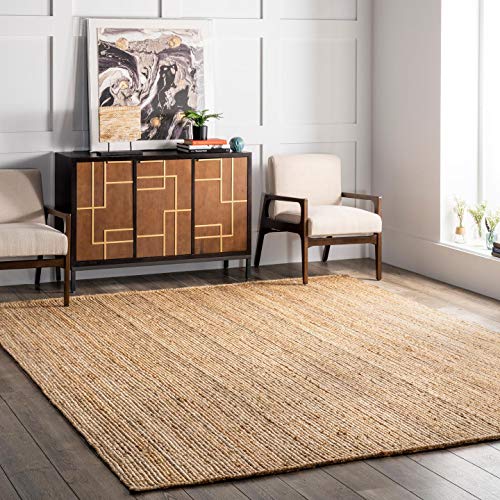
Jute is the choice for a strongly organic look: chunky yarns, visible variation, and a firm texture that hides minor dust. It can make a large room feel grounded without adding much visual pattern. However, jute fibers are absorbent and can darken, stiffen, or develop an odor after repeated wetting. They also dislike aggressive scrubbing.
Use jute in a sitting room, home office, or covered porch that stays dry. Avoid it near a back door exposed to rain, under a messy high chair, or in a kitchen where oil and water are common. Vacuum with a gentle setting, blot rather than saturate, and accept that the surface will feel more textured than soft.
Decision matrix: match the rug to your situation
| Your situation | Best construction | Why | Trade-off |
|---|---|---|---|
| Heavy daily traffic and frequent spills | Polypropylene synthetic | Low absorption, easy spot cleaning, moderate price | Less natural feel and may flatten visually |
| Long-term living-room rug with moderate traffic | Wool | Resilient fibers, attractive texture, good visual aging | Higher purchase price and more careful cleaning |
| Limited storage or frequent room changes | Cotton | Light to lift, fold, and rotate | Absorbs stains and can shift without a pad |
| Lowest-cost large-area natural look | Jute | Distinctive texture and broad size availability | Poor tolerance for moisture and oily marks |
| Dining room with chairs moving daily | Low-profile wool or synthetic | Chair legs move more easily over a thin, dense surface | Flatweaves provide less cushioning for dropped items |
Thickness, sizing, and furniture fit
Flatweaves are useful where doors, robot vacuums, and chair legs need clearance. Most measure roughly 0.1–0.4 inches before adding a rug pad. A pad can add another 0.1–0.25 inches, so measure the door gap rather than judging from the rug alone. A low profile does not eliminate tripping risk: curled corners and unsecured edges are common causes of problems.
For a seating area, aim for at least the front legs of the sofa and chairs to sit on the rug. A common 5 × 8 ft rug works for a compact sofa arrangement, while an 8 × 10 ft rug is more likely to hold the front portions of a larger sofa and two chairs. In a dining room, add about 24–30 inches to each table dimension so chairs remain on the rug when pulled out. For example, a 36 × 60 inch table needs a rug of approximately 84 × 108 inches, making an 8 × 10 ft rug a practical near-match.
Cleaning and ownership realities
- Vacuum both sides or the floor beneath during the first month. Flatweaves allow grit to work through the weave, and grit is more damaging than ordinary foot traffic.
- Use low suction or a hard-floor setting. A rotating brush can pull loops, catch fringe, or roughen cotton and jute.
- Blot spills immediately. Press with white towels from the outside toward the center; rubbing spreads the stain and can distort the weave.
- Test any cleaning solution in a hidden corner. Natural dyes and jute may react differently from synthetic fibers.
- Dry the rug completely. Do not leave a damp rug on wood, laminate, or carpet. Elevate it or improve airflow until both sides are dry.
- Rotate it every three to six months. Rotation distributes fading and wear, especially where a sofa, doorway, or sunny window affects one section.
The areas that usually wear first are the bound edges, corners, and pathways between doors and seating. A quality rug pad reduces sliding and abrasion, but an overly soft pad can make a thin flatweave feel unstable. Choose a pad designed for the floor type, trim it slightly smaller than the rug, and replace it if it becomes brittle or loses grip.
Final recommendation
For the best all-around combination of easy care, comfort, and durability, choose a dense wool flatweave if your budget allows. Choose polypropylene when stain resistance and low maintenance outrank natural materials. Choose cotton when light weight and washability are central, and choose jute when texture matters most in a dry, lower-risk room. Whichever construction you buy, prioritize a tightly finished edge, a compatible rug pad, and a size that keeps furniture properly anchored; those details often matter more in daily use than the fiber label alone.



Write Your Review
No reviews yet. Be the first to share your experience!