

Key takeaways
- The best indoor outdoor rugs for most homes are low-pile polypropylene rugs: they resist moisture, clean easily, and offer enough pattern variety for patios, kitchens, entryways, and sunrooms. The right choice still depends on where the rug will live. A…
The best indoor outdoor rugs for most homes are low-pile polypropylene rugs: they resist moisture, clean easily, and offer enough pattern variety for patios, kitchens, entryways, and sunrooms.
The right choice still depends on where the rug will live. A covered porch can use a softer woven flatweave, while an exposed patio needs fast drying, color stability, and a backing that will not trap water against the floor. Indoors, the priorities shift toward comfort, low shedding, and compatibility with doors, furniture, and vacuum cleaners.
Our top picks
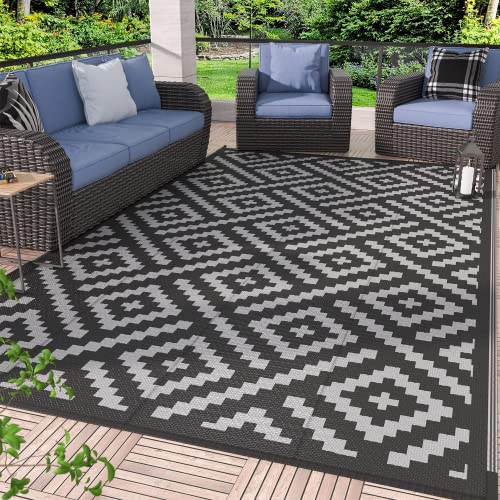


As an Amazon Associate we earn from qualifying purchases at no extra cost to you. Ratings are shown as listed on Amazon.
Best indoor outdoor rugs by situation
| Situation | Best material and construction | Practical size | Why it fits |
|---|---|---|---|
| Exposed patio or poolside | UV-treated polypropylene, flatweave | 5 x 7 ft or 6 x 9 ft | Dries quickly and tolerates frequent rinsing |
| Covered porch | Polypropylene or recycled PET, woven | 6 x 9 ft or 8 x 10 ft | More texture is possible because rain exposure is lower |
| Kitchen or dining room | Low-pile polypropylene, tightly woven | Runner, 5 x 7 ft, or 6 x 9 ft | Handles crumbs, spills, and chair movement |
| High-traffic entryway | Flatwoven polypropylene with a separate rug pad | 2.5 x 7 ft runner or 3 x 5 ft | Low profile reduces door interference and trip risk |
| Comfort-focused sunroom | Low-pile PET or polypropylene with a soft weave | 8 x 10 ft or larger | Feels less utilitarian while remaining easy to maintain |
Material comparison: polypropylene, PET, and natural fibers
Polypropylene: the safest all-purpose choice
Polypropylene is the most practical starting point for an indoor outdoor rug. The fibers absorb very little water, so a hose rinse does not leave the rug saturated for long. The material is also resistant to many common outdoor stains and is available in tightly woven, braided, and printed designs.
Its limitations are mostly about appearance and heat. Very dark colors can become hot in direct sun, and inexpensive printed patterns may fade sooner than solution-dyed fibers. Look for UV-resistant or solution-dyed polypropylene when the rug will sit in full sun. The fiber can also feel less plush than an indoor-only wool or cotton rug.
Recycled PET: soft texture with good moisture resistance
Recycled PET, usually made from polyester, can provide a softer hand and a more textile-like appearance than basic polypropylene. It suits covered patios, balconies, and interiors where comfort matters. It is generally moisture resistant, but its drying speed depends heavily on the weave and thickness.
PET is not automatically the better outdoor choice. On an exposed deck, a very dense PET rug can hold water longer than a thin polypropylene flatweave. Choose it when the rug is sheltered and you value softness over the fastest possible drainage.
Natural fibers: attractive, but usually not truly outdoor-ready
Jute, sisal, seagrass, and untreated cotton bring appealing texture indoors, but repeated rain and prolonged dampness can cause swelling, mildew odors, staining, or fiber breakdown. Some rugs with a natural-fiber look use synthetic fibers instead; check the fiber content rather than relying on the visual style.
Natural fibers work best in dry interior rooms, covered spaces with minimal exposure, or as decorative layers over a more weather-tolerant base. They are rarely the best choice for an uncovered patio.
Weave and pile: what changes in daily use?
Flatweave
Flatweave rugs have little or no raised pile, often measuring about 0.1 to 0.25 inches thick. They are the most versatile option for doors, dining chairs, rolling carts, and outdoor furniture. Dirt is less likely to disappear deep into the rug, and most can be shaken or vacuumed easily.
The trade-off is a firmer feel. Edges may curl after storage, and loose furniture can slide more readily unless the rug has a suitable pad or grippy underside.
Woven and braided designs
Woven and braided rugs add visible texture and can make a porch feel more finished. Their thickness commonly ranges from about 0.2 to 0.4 inches. They are comfortable enough for casual indoor seating but may have more seams, loops, or edge details that catch on sharp furniture feet.
Low pile
A low-pile rug around 0.25 to 0.5 inches offers more cushioning than a flatweave without the maintenance burden of a shag. It is a good compromise for a living room, nursery-free family area, or covered sunroom. Confirm the door clearance before placing one near an exterior door: a rug that is 0.4 inches thick may still bind if the door sweeps tightly across the floor.
High pile and shag
Shag and deep-pile rugs are usually poor performers outdoors. They retain more water, hide grit, dry slowly, and are harder to rinse thoroughly. They can work in a dry interior, but the “indoor outdoor” label should not override the practical disadvantages of a tall pile.
How to choose the correct size
For a dining area, measure the table and add at least 24 inches to each side. A 36 x 60-inch table therefore needs approximately a 7 x 9 ft rug: the rug should allow chairs to remain on the rug when pulled out. For a seating group, place at least the front legs of the sofa and chairs on the rug; a larger arrangement looks more intentional when all furniture legs fit.
For a balcony or small patio, leave roughly 6 to 12 inches of visible floor around the rug where possible. This border helps the rug look fitted rather than undersized and gives water a route away from the textile. Measure the usable floor, not the full footprint, if railings, drains, planters, or door swings reduce the available area.
As a quick coverage calculation, a 6 x 9 ft rug covers 54 square feet. If a patio is 10 x 12 ft, its total area is 120 square feet, so the rug covers 45 percent of the floor. That is enough to define a dining or lounge zone while leaving a substantial perimeter for circulation.
Cleaning and maintenance that extend rug life
- Remove loose grit first. Shake the rug, sweep it, or vacuum on a suitable setting before adding water. Grit left in the weave acts like sandpaper under foot traffic.
- Spot-clean promptly. Blot spills rather than rubbing them outward. Use mild soap diluted in water and test an inconspicuous area before treating the full stain.
- Rinse when needed. For compatible synthetic rugs, rinse both sides with a garden hose. A gentle spray is preferable to forcing dirt deeper into the fibers.
- Dry completely. Hang the rug over a clean railing or drape it over several supports so air can reach both sides. Do not return it to a floor while the underside is damp.
- Rotate periodically. Rotate a regularly used rug 180 degrees every one to three months. This distributes fading and wear, particularly where chair legs or entry traffic concentrate.
Check the care label before using a washing machine. Smaller lightweight rugs may be washable, but a large wet rug becomes extremely heavy and can damage a household washer or stretch during handling. Avoid chlorine bleach, high heat, and aggressive pressure washing unless the manufacturer specifically permits them.
Durability realities buyers often miss
The top surface is not always the first part to fail. On outdoor rugs, fading at the sunniest edge, curling corners, broken binding, and moisture trapped beneath the rug are common earlier problems. On indoor rugs, chair movement can flatten texture and cause edge wear long before the center looks dirty.
Placement matters as much as fiber. Do not lay a rug over standing water, an obstructed drain, or a constantly damp concrete slab. Lift it occasionally to sweep beneath it and inspect for trapped moisture. On wood or composite decking, confirm that the rug’s backing will not leave marks or hold water against the boards.
A rug pad can improve comfort and reduce sliding indoors, but not every indoor pad belongs outdoors. For a patio, use a breathable outdoor-rated pad or gripper designed for the surface. Avoid impermeable rubber sheets that create a moisture sandwich beneath the rug.
Final buying recommendation
Choose a low-pile, UV-resistant polypropylene flatweave for the broadest indoor outdoor use, especially on an exposed patio or in a high-traffic kitchen. Select a woven recycled PET rug for a covered porch or sunroom when a softer feel is worth slightly more attention to drying. Choose a natural-fiber look only when the fibers are synthetic or the rug will remain in a reliably dry interior.
Before buying, verify the actual fiber content, pile height, care instructions, edge construction, outdoor UV guidance, and return dimensions. A rug that matches the weather, traffic, and furniture layout will usually outlast a more attractive rug chosen on appearance alone.





Write Your Review
No reviews yet. Be the first to share your experience!