

Key takeaways
- For a dining table: Choose a flatweave rug extending at least 24 inches beyond every chair position, so chairs remain on the rug when pulled out.
- For a conversation set: Use a rug large enough for the sofa and chairs’ front legs to rest on it. A low-pile 8-by-10-foot rug is a common fit for a medium seating group.
- For a small balcony: Pick a 5-by-7-foot or 6-by-9-foot rug with a thin, flexible weave that can be rolled and stored easily.
- For uncovered, rainy patios: Prioritize drainage, quick drying, UV resistance, and a rug that can be lifted without becoming excessively heavy when wet.
- For windy locations: Look for a heavier flatweave, a tightly finished edge, and a separate rug pad designed for outdoor use rather than an indoor non-slip pad.
- For seasonal storage: Select a reversible, low-pile rug that can be washed, completely dried, rolled, and stored in a breathable bag.
The best outdoor rugs for patio use are low-pile, quick-drying polypropylene or recycled-plastic rugs sized to sit beneath at least the front legs of your furniture without blocking doors, drains, or walking paths.
Our top picks
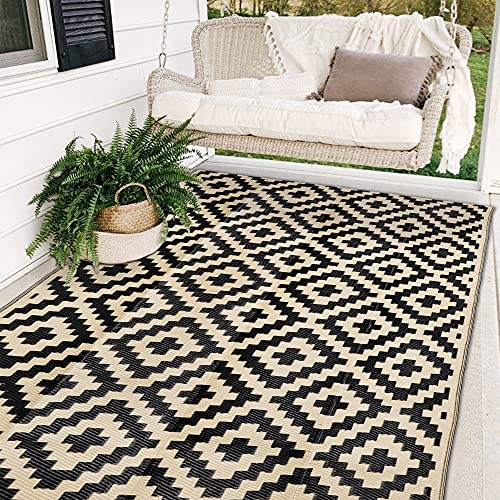
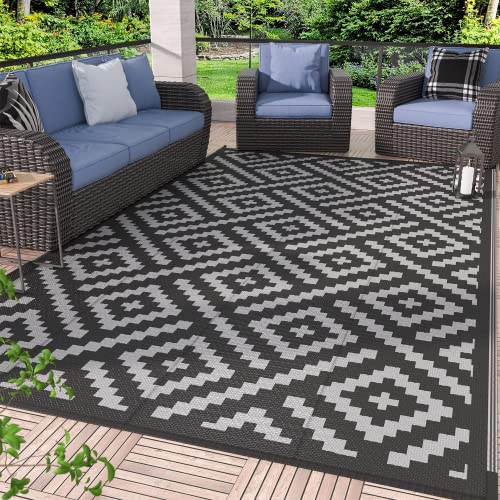


As an Amazon Associate we earn from qualifying purchases at no extra cost to you. Ratings are shown as listed on Amazon.
Quick picks by patio situation
- For a dining table: Choose a flatweave rug extending at least 24 inches beyond every chair position, so chairs remain on the rug when pulled out.
- For a conversation set: Use a rug large enough for the sofa and chairs’ front legs to rest on it. A low-pile 8-by-10-foot rug is a common fit for a medium seating group.
- For a small balcony: Pick a 5-by-7-foot or 6-by-9-foot rug with a thin, flexible weave that can be rolled and stored easily.
- For uncovered, rainy patios: Prioritize drainage, quick drying, UV resistance, and a rug that can be lifted without becoming excessively heavy when wet.
- For windy locations: Look for a heavier flatweave, a tightly finished edge, and a separate rug pad designed for outdoor use rather than an indoor non-slip pad.
- For seasonal storage: Select a reversible, low-pile rug that can be washed, completely dried, rolled, and stored in a breathable bag.
What to look for in an outdoor patio rug
Material: polypropylene is the practical default
Solution-dyed polypropylene is a strong all-purpose choice because it resists moisture, dries relatively quickly, and is available in flatweave and low-pile constructions. “Solution-dyed” means the color is incorporated into the fiber rather than applied only to its surface, which can improve resistance to fading and wear.
Recycled-plastic rugs, often made from recycled PET, can also perform well outdoors. They are usually flat and easy to sweep, although some feel slightly crinkly underfoot. Natural-fiber rugs made from jute, sisal, seagrass, or untreated cotton are less suitable for an exposed patio because they can retain moisture, develop mildew odors, or become brittle with repeated wet-dry cycles. They may work in a covered, dry porch with good airflow, but they require more protection.
Pile height: flatter is usually better outside
For most patios, choose a pile under 0.25 inch. A flatweave with little or no pile is easier to clean, less likely to hold water, and safer for chair legs, rolling serving carts, and door thresholds. A low pile around 0.25 to 0.4 inch provides a softer feel but may dry more slowly and catch more leaves.
A plush outdoor rug can feel comfortable at first, but its extra material increases drying time and can trap food, pollen, and moisture beneath furniture. Avoid thick shag or deeply tufted designs unless the rug is on a covered porch and you can regularly move it for cleaning.
Size the rug around the furniture, not the empty floor
The correct size depends on how the area is used. For a dining table, measure the table and add at least 48 inches to both the length and width. This allows approximately 24 inches of rug beyond the table on every side.
For example, a 60-by-36-inch dining table needs roughly:
(60 + 48) by (36 + 48) = 108 by 84 inches
That is 9 by 7 feet, so a 9-by-12-foot rug would provide comfortable clearance, while an 8-by-10-foot rug may be tight for chairs on the short sides. If your dining chairs have wide legs or are frequently pulled back, choose the larger practical size.
For lounge furniture, place at least the front legs of the sofa and chairs on the rug. A rug that ends just inside the furniture can make the arrangement look disconnected and creates a raised edge where feet catch. If you cannot fit a large rug, use a smaller one centered beneath the coffee table and keep all furniture legs consistently either on or off the rug.
| Patio arrangement | Useful rug size | Recommended construction | Key caution |
|---|---|---|---|
| Small bistro set | 5 by 7 ft | Flatweave, under 0.25 in pile | Check that the door can open over the edge |
| Two-seat sofa and coffee table | 6 by 9 ft | Low-pile polypropylene | Keep the front legs on the rug |
| Medium conversation group | 8 by 10 ft | Dense flatweave or low pile | Allow space for chair movement |
| Four- to six-seat dining table | 8 by 10 or 9 by 12 ft | Flatweave with reinforced edges | Add about 24 in beyond pulled-out chairs |
| Large sectional | 9 by 12 ft or larger | Heavier low-pile synthetic weave | Verify delivery, storage, and drying space |
Head-to-head: flatweave versus low pile
Flatweave
Flatweave rugs are the better choice for exposed patios, dining areas, and high-traffic walkways. Their thin profile reduces trip risk, lets chairs move more easily, and makes sweeping simple. They also take up less storage space. The trade-off is less cushioning and a greater tendency to shift if the rug is lightweight.
Low pile
Low-pile rugs offer a softer feel and can visually soften a concrete or composite deck. They suit covered patios and seating areas where comfort matters more than rapid drainage. Their edges may curl after being rolled, and their fibers can hold more grit. Give them additional drying time after rain and vacuum or shake them regularly.
For most buyers, the decision is simple: choose flatweave for maximum weather tolerance and low pile for a covered area where barefoot comfort is the priority.
Edge stability matters more than the pattern
Many patio rugs fail first at the perimeter. Look for tightly bound, stitched, or woven edges rather than a loose fringe. Fringe can catch on chair legs, collect leaves, and unravel when dragged. Inspect the corners before buying: a corner that lies flat is less likely to become a trip point.
On smooth concrete, an outdoor rug pad can improve stability and airflow. Choose a pad made for exterior use and cut it slightly smaller than the rug so it remains hidden. Do not use a thick indoor foam pad on a wet patio; it can retain water underneath the rug and mark some surfaces. On textured pavers, small outdoor rug clips or corner weights may help, but avoid anything that creates a hard bump underfoot.
Decision matrix for choosing quickly
| Your situation | Best specification | Why it fits |
|---|---|---|
| Limited budget and occasional use | 5-by-7-ft polypropylene flatweave | Lower material cost, simple cleaning, easy storage |
| Daily dining and frequent chair movement | 8-by-10-ft or larger, low-profile woven rug | Provides clearance and avoids chair-leg snags |
| Heavy rain or poor roof coverage | Open, flat synthetic weave with reinforced edges | Less water retention and faster drying |
| Strong wind | Heavier rug plus exterior-rated pad or corner anchors | Reduces lifting, folding, and edge curling |
| Small storage closet | Thin reversible rug, rolled rather than folded | Uses less space and avoids permanent crease lines |
| Covered porch and comfort priority | Low pile up to about 0.4 inch | Offers more softness while remaining manageable |
Cleaning and seasonal storage
- Remove loose debris first. Shake, sweep, or vacuum the dry rug before adding water. Wet leaves and grit are harder to remove and can grind against the fibers.
- Spot-clean promptly. Blot spills rather than rubbing them deeper into the weave. Use mild soap diluted in water and test a hidden section before treating a visible area.
- Rinse thoroughly. Soap residue attracts dirt. A hose can work for many synthetic rugs, but follow the care label and avoid forcing water through delicate backing.
- Dry both sides. Hang or prop the rug so air reaches the underside. Do not return it to the patio while the center or backing is damp.
- Store it correctly. At the end of the season, clean and dry the rug completely, roll it with the patterned side outward if the manufacturer recommends that orientation, and place it in a breathable fabric or mesh cover.
Never store an outdoor rug damp in plastic. Trapped moisture can create mildew odors and discoloration even when the fibers themselves resist water. Also avoid folding a large rug sharply for months; rolling reduces persistent creases and edge memory.
Ownership realities buyers often miss
UV exposure usually fades the highest, sunniest areas first, while furniture legs can leave compression marks on low-pile rugs. Rotate the rug a quarter turn every few months if the layout allows. Rubber, metal, or painted furniture feet may also stain or transfer color, so use protective feet and inspect the rug after rain.
A dark pattern hides soil but can become noticeably hot in direct sun. Very pale rugs make pollen, food, and muddy footprints visible sooner. A medium-tone pattern is often the easiest compromise for a frequently used patio.
Finally, include storage and drying space in the buying decision. A 9-by-12-foot rug may look ideal under a sectional, but it is cumbersome to lift alone after a storm. If you cannot move it safely, choose a smaller rug or divide the seating area with two lighter rugs that can be handled separately.
Final recommendation
For the broadest range of patios, choose a solution-dyed polypropylene flatweave, under 0.25 inch thick, with tightly finished edges and dimensions that extend about 24 inches beyond dining chairs or reach the front legs of lounge furniture. Move up to a low-pile design for a covered, comfort-focused space, and prioritize lighter weight and easy rolling when seasonal storage or frequent storm protection is part of your routine.






Write Your Review
No reviews yet. Be the first to share your experience!