

Key takeaways
- Prioritize an overlapping lid: A lid that extends beyond the walls sheds water more effectively than a flat lid ending at the rim.
- Inspect the rim: A raised lip or compression gasket limits splash entry. A simple decorative lid with a loose edge offers less protection.
- Check the floor: A raised base or feet prevents patio water from entering underneath. Drain holes are helpful if they cannot admit insects and splash.
- Consider the hinge: Continuous hinges and covered hinge gaps generally expose fewer openings than widely spaced external hinges.
- Use an internal liner carefully: A removable waterproof liner can protect cushions, but a fully sealed plastic bag may trap dampness and encourage mildew.
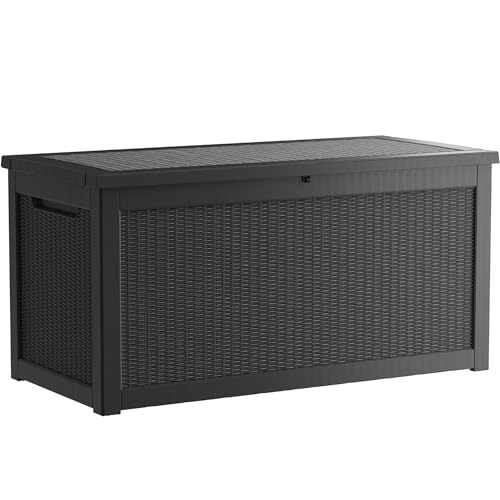
The best outdoor cushion storage bins are weather-resistant deck boxes sized to leave a little spare capacity, with a sealed lid, ventilation, and enough mobility for your patio layout—not simply the largest box you can fit.
Our top picks


As an Amazon Associate we earn from qualifying purchases at no extra cost to you. Ratings are shown as listed on Amazon.
Quick picks by patio situation
| Your situation | Best bin type | Useful target specifications | Why it fits |
|---|---|---|---|
| Small balcony or narrow patio | Compact vertical or slim deck box | 50–80 gallons; depth no more than 20–24 inches | Preserves walking space while holding seat pads and a few back cushions |
| Four-seat dining set | Medium resin or metal deck box | 100–150 gallons; interior length around 40–50 inches | Usually accommodates dining-chair cushions without requiring aggressive compression |
| Large sectional | Extra-large cushion chest | 180–230 gallons; interior length at least 55–65 inches | Provides the volume and long, unobstructed floor needed for multiple pads |
| Frequent daily access | Wheeled resin chest | 100–200 gallons; two or more integrated wheels | Can be moved away from the table or wall without lifting the full load |
| Wet or humid climate | Ventilated resin or powder-coated metal box | Rain-resistant lid, raised base, two vents, and a drainable interior | Controls condensation as well as rain exposure |
How much cushion capacity do you need?
Capacity ratings are usually quoted in gallons, but cushions are stored by usable floor area and height. A box advertised as 100 gallons may not hold 100 gallons of practical cushion volume if its walls taper, hinges occupy space, or the lid slopes sharply.
Measure the cushions while they are dry and relaxed. Record the longest length, widest depth, and total stack height. For a simple estimate, multiply the stack’s length by depth by height, then add 15–25 percent for irregular shapes and air space. For example, a stack measuring 42 by 22 by 18 inches occupies about 18,200 cubic inches. Dividing by 231 gives roughly 79 gallons. Adding 20 percent headroom produces a target of about 95 gallons, so a nominal 100-gallon bin is a sensible minimum.
Do not use the bin’s outside measurements for this calculation. Look for interior dimensions, and allow space for handles, hinges, corner radii, and a liner. If you plan to store throw pillows, outdoor blankets, or seat covers too, move up one capacity category.
Material comparison: resin, metal, and wood
Resin and high-density plastic
Resin boxes are usually the easiest choice for cushion storage. They do not rust, are relatively light, and are commonly molded with faux-rattan or wood-grain finishes. A UV-resistant formulation helps prevent fading and brittleness, although no plastic remains unchanged after years of direct sun.
The weak points are flexing lids, hinge hardware, and thin floor panels. A large box can bow if it is overloaded or placed on an uneven surface. Choose a model with a reinforced lid, a solid base, and a stated load rating if you expect to use the closed lid as a seat.
Powder-coated metal
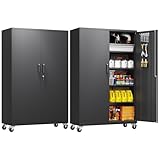
Metal storage chests can provide a rigid frame and strong security provisions, but inspect the coating and drainage design. Scratches around screws, hinges, and the bottom edge are common starting points for corrosion. Metal also becomes hot in direct sun, so it is better positioned in shade or under a cover. A ventilated metal box can work well in damp weather, provided rain cannot enter through the vents.
Wood
Wooden boxes can look integrated with a timber deck, but they demand the most ownership care. Even treated wood needs periodic sealing, and the lid may swell or shift with seasonal humidity. Check that the floor is raised off the patio and that the interior is not raw wood that can transfer moisture or splinters to fabric. Wood is best for buyers who value appearance and accept annual maintenance.
Waterproofing is more than a “waterproof” label
Outdoor cushion boxes are rarely equivalent to watertight containers. A rain-resistant box may keep out ordinary showers but allow water through during wind-driven rain, around the hinge, or when water pools on the lid.
- Prioritize an overlapping lid: A lid that extends beyond the walls sheds water more effectively than a flat lid ending at the rim.
- Inspect the rim: A raised lip or compression gasket limits splash entry. A simple decorative lid with a loose edge offers less protection.
- Check the floor: A raised base or feet prevents patio water from entering underneath. Drain holes are helpful if they cannot admit insects and splash.
- Consider the hinge: Continuous hinges and covered hinge gaps generally expose fewer openings than widely spaced external hinges.
- Use an internal liner carefully: A removable waterproof liner can protect cushions, but a fully sealed plastic bag may trap dampness and encourage mildew.
For valuable cushions, place them inside only after they are dry. A sealed box cannot remove moisture already held in the foam or fabric.
Ventilation versus sealing: which matters more?
In a dry climate with infrequent rain, a tightly lipped box may be the priority. In humid or frequently wet conditions, ventilation becomes equally important because condensation can form even when the lid never leaks. Look for small, screened vents positioned high on opposite sides so air can circulate without creating a direct path for rain.
Ventilation does not make a box weatherproof by itself. The best compromise is a rain-shedding lid, raised base, and screened vents above the likely splash line. Avoid packing cushions tightly against the vents; leave a small air gap and never store wet fabric against the interior wall.
Mobility and patio footprint
A fully loaded cushion bin can weigh far more than its empty product weight suggests. A medium load of foam cushions may add 25–50 pounds, while a sectional load can exceed 70 pounds. Two built-in wheels are valuable when the wheels sit on the rear edge and the opposite end has a comfortable lift handle. Four casters provide easier repositioning but may let the box drift in wind unless they lock.
Measure the available footprint in three directions:
- Measure the maximum width and depth between walls, railings, furniture, and door swings.
- Subtract at least 2 inches from each tight dimension for lid clearance and hand access.
- Confirm that the lid can open fully without hitting a railing, window, tabletop, or overhanging roof.
For a narrow patio, a long low box may offer more usable cushion space than a deep chest because cushions can lie flat without blocking circulation. Keep at least 30–36 inches of clear walking space where people regularly pass, and avoid placing a wheeled box on a slope.
Decision matrix for choosing confidently
| Priority | Choose | Accept the trade-off |
|---|---|---|
| Lowest initial cost | Medium resin box with a basic overlapping lid | Less rigid structure and fewer sealing features |
| Best for beginners | Resin box with clear interior dimensions, hinged lid, and integrated handles | May have a less furniture-like appearance |
| Smallest footprint | 50–80-gallon slim chest or vertical cabinet | Large sectional cushions may need folding, which can stress foam and fabric |
| Daily opening and closing | Wheeled box with gas-assist hinges or a lightweight lid | More moving parts to inspect and keep clean |
| Maximum weather exposure | Rigid box with lid overlap, raised base, screened vents, and a cover | Higher cost and a larger visual presence |
| Built-in seating | Reinforced lid with a clearly stated static load rating | Extra lid strength can increase weight and reduce easy mobility |
Ownership details that affect durability
The first parts to wear are often not the main panels. Hinges loosen, lid struts lose tension, wheels collect grit, and gasket edges flatten. Before buying, check whether hinge pins, wheels, handles, and gas struts appear replaceable rather than permanently molded into the box. Keep the lid from slamming, and do not sit on it unless the manufacturer explicitly rates it for seating.
Clean the exterior with mild soap and water, then rinse away residue. Avoid abrasive pads and strong solvents that can dull resin or damage powder coating. Twice a year, remove every cushion, vacuum leaves and grit from the floor, and inspect corners for standing water. Wash or dry the cushions separately according to their care labels.
Common mistakes include filling the box beyond the lid’s closing line, storing damp cushions after an evening dew, placing a metal box directly on wet soil, and pushing a wheeled chest so close to a wall that ventilation is blocked. A breathable cushion cover inside the box can help organize fabrics, but it should not replace airflow or create a sealed damp pocket.
Bottom line
For most patios, start with a 100–150-gallon resin deck box that has interior dimensions suited to your measured stack, an overlapping lid, a raised base, and screened ventilation. Choose 50–80 gallons only when space is the dominant constraint, and move to 180 gallons or more for a sectional. If the box must move often, prioritize wheels and handles; if it will sit exposed to wind-driven rain, prioritize lid geometry and drainage over decorative finish. The right bin is the smallest model that holds everything with headroom while still opening, ventilating, and moving comfortably.




Write Your Review
No reviews yet. Be the first to share your experience!