

Key takeaways
- Cooking oil bottles commonly need 3–4 inches of clear width and 10–13 inches of height.
- Standard spice jars usually need about 2–2.5 inches of width per jar.
- Coffee pods need shallow, wide storage, while sugar packets and stirrers benefit from narrow compartments.
- Everyday items such as salt, pepper, and a utensil crock need deeper edges or a tray with a raised lip.
Best Kitchen Counter Organizer Trays
The best kitchen counter organizer tray is a washable, non-slip tray sized to your daily routine: choose a compact 12-by-8-inch tray for oils and spices, a divided 15-by-10-inch tray for coffee supplies, or a larger 18-by-12-inch tray when several essentials need to stay together.
Quick picks by kitchen situation
| Kitchen situation | Best tray type | Recommended footprint | Useful capacity | Typical 2026 price range |
|---|---|---|---|---|
| Small counter or apartment kitchen | Raised-edge single-compartment tray | 10–12 x 7–8 in | 3–5 bottles or jars | $10–$25 |
| Everyday cooking oils and seasonings | Turntable or divided condiment tray | 12–14 x 10–12 in | 6–10 containers | $18–$45 |
| Home coffee station | Compartment tray with cable clearance | 15–18 x 10–12 in | 8–14 supplies | $25–$60 |
| Large family kitchen | Deep handled or two-level organizer | 18–24 x 12–14 in | 12–20 items | $30–$80 |
| Rental or frequently rearranged kitchen | Lightweight plastic or bamboo tray | 12–16 x 8–10 in | 5–12 items | $12–$35 |
What to look for before buying
1. Measure the usable countertop footprint
Measure the space between the wall, appliance, and counter edge rather than measuring an empty section of counter. Leave at least 1 inch of clearance on each side so the tray can be lifted, wiped underneath, and moved without scraping neighboring objects.
Our top picks
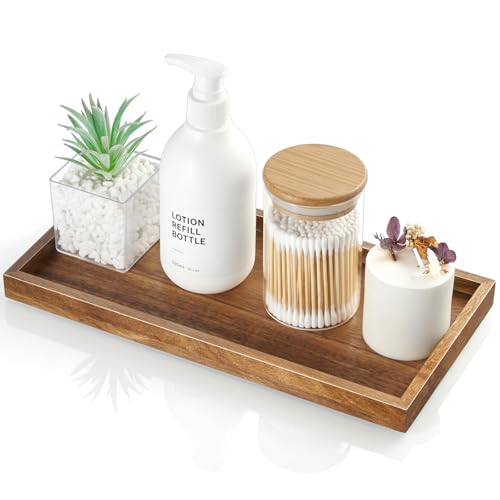


As an Amazon Associate we earn from qualifying purchases at no extra cost to you. Ratings are shown as listed on Amazon.
A tray that is 16 inches wide may look efficient in a product photo but become inconvenient if it leaves only a narrow path beside the stove. For most counters, a footprint between 12 and 15 inches is the practical compromise. Keep oil trays at least several inches away from direct burner heat, where heat can accelerate label damage, plastic deformation, and oil oxidation.
2. Match compartments to the objects, not the other way around
Compartments are useful when they prevent small objects from sliding into one another, but fixed dividers can waste space. Measure your tallest and widest items first:
- Cooking oil bottles commonly need 3–4 inches of clear width and 10–13 inches of height.
- Standard spice jars usually need about 2–2.5 inches of width per jar.
- Coffee pods need shallow, wide storage, while sugar packets and stirrers benefit from narrow compartments.
- Everyday items such as salt, pepper, and a utensil crock need deeper edges or a tray with a raised lip.
For mixed collections, removable dividers or an open tray are usually more flexible than many small fixed sections. A compartment that is only 2 inches wide may fit a spice jar but fail to accommodate a grinder, scoop, or refill container.
3. Choose materials according to mess and cleaning habits
Stainless steel is the most resistant to staining, odor retention, and heat-related wear. It suits oil bottles and busy cooking areas, although smooth metal can allow glass bottles to slide unless the tray has a silicone liner or textured base.
Plastic is light, affordable, and easy to rinse. Look for thick walls, rounded corners, and a non-porous surface. Very thin plastic may flex under a full load, and dark plastic can conceal oil residue until it becomes sticky.
Bamboo and other sealed wood trays add warmth to a coffee station or breakfast counter. They need prompt drying after cleaning because standing water can raise the grain, loosen joints, or discolor the finish. They are better for dry goods than for a tray that regularly catches cooking oil.
Silicone-lined or rubber-footed trays are especially useful on polished stone and laminate. The liner reduces noise and movement, but it should be removable or easy to lift; trapped moisture underneath is a common cause of stale odors and residue.
Head-to-head: the four most useful tray formats
Open raised-edge tray
This is the best general-purpose choice for oils, salt, pepper, and frequently used sauces. It provides the largest usable floor area and lets you lift several bottles at once. Choose one with an edge at least 1 inch high and handles that do not consume too much interior space.
Its limitation is that small objects become mixed together. It is less suitable for a coffee station containing pods, packets, and stirrers unless you add small removable cups.
Divided organizer tray
A divided tray wins when every item has a repeatable location. It works well for coffee supplies, tea, sweeteners, and daily breakfast essentials. The trade-off is reduced flexibility: a compartment designed for pods may be too small for a tall canister, while a large section may be wasted on a single small item.
Lazy Susan or rotating tray
A rotating organizer is the strongest choice when the tray sits in a deep corner or behind taller bottles. A 12–16-inch diameter model can make rear items accessible without unloading the counter. Measure the rotation path, not just the base: handles, walls, and bottle necks must clear nearby objects.
Rotating mechanisms are also the part most likely to collect crumbs or become noisy. A smooth bearing, a stable base, and a removable top are more valuable than decorative detailing.
Two-level organizer
Tiered trays increase vertical capacity without increasing the countertop footprint. They suit small bottles, spice jars, and coffee accessories, but they are less effective for tall oil bottles. Check the clearance between levels and make sure the lower shelf remains visible and reachable.
Decision matrix: which format fits your routine?
| Priority | Choose | Why | Accept the drawback |
|---|---|---|---|
| Lowest cost | Plastic open tray | Simple construction and easy replacement | May flex or stain sooner |
| Fastest daily access | Raised-edge open tray | One lift moves the entire group | Less individual organization |
| Most organized coffee station | Divided tray | Separates pods, packets, and tools | Fixed compartments limit future changes |
| Deep or awkward corner | Rotating tray | Brings rear items forward | Needs clearance to rotate |
| Small footprint with many small items | Two-level tray | Uses vertical space efficiently | Not ideal for tall bottles |
| Warm, decorative appearance | Sealed bamboo or wood tray | Blends with dining and coffee areas | Requires more careful drying |
A simple sizing calculation before purchase
Suppose your daily coffee group contains a coffee canister 5 inches wide, a sugar container 3 inches wide, a mug stack 4 inches wide, and a small spoon cup 3 inches wide. Placing them side by side requires 15 inches before allowing for gaps. Add two 1-inch gaps and a 1-inch border on each side:
15 + 2 + 2 = 19 inches of required tray width.
A 12-inch tray will not solve this problem unless some items are stacked or moved elsewhere. A 19-by-10-inch tray may fit, but only if the available counter depth is at least 11 inches. If the counter cannot spare that footprint, use a two-level tray or divide the station into “prepare” and “serve” zones rather than buying an overcrowded tray.
Setup that stays organized
- Remove everything from the counter. Discard empty packets, duplicate tools, and items used less than once a week.
- Group items by one action. Keep oil, salt, and pepper together for cooking; keep pods, sweetener, and stirrers together for coffee.
- Put the heaviest objects low and near the center. This reduces tipping, particularly on rotating or tiered trays.
- Keep the most-used items at the front. Daily essentials should not be hidden behind occasional ingredients.
- Test the full tray before committing to its location. Lift it, rotate it if applicable, and check that cabinet doors and appliances still open.
Durability and ownership realities
The first parts to show wear are usually the feet, liners, rotating bearings, and finish around the corners—not the tray floor itself. Replace loose rubber feet before the tray begins sliding, and do not overload a rotating model simply because the platform still turns. A practical full-load target is about 8–15 pounds for a medium tray, depending on construction; glass bottles can make that limit arrive quickly.
Clean spills promptly, especially olive oil and flavored syrups. Wash plastic and stainless steel with warm water and mild dish soap, then dry the underside. Avoid soaking sealed wood. For a silicone liner, remove it weekly in a busy cooking area, wash both surfaces, and let them dry completely before replacing them.
Common mistakes include placing a tray directly beside a hot burner, filling every compartment until nothing can be removed easily, and choosing a footprint that cannot be lifted with two hands. The best organizer is not the one with the greatest capacity; it is the one that makes the correct items easy to remove and easy to return.
Final recommendation
For most kitchens, start with a 12–15-inch raised-edge tray with a washable liner and enough height for your tallest bottle. Choose a divided 15–18-inch tray for coffee supplies, a rotating tray for deep corners, and a two-level design when counter width is scarce but vertical space is available. Prioritize measurements, stable construction, and cleaning access over decorative features, because those choices determine whether the organizer remains useful throughout 2026 and beyond.






Write Your Review
No reviews yet. Be the first to share your experience!