

Key takeaways
- Internal height of at least 10 inches, or 12–14 inches for tall flutes and balloon glasses.
- Compartments wide enough for the largest bowl without compression.
- Padded or fabric-wrapped dividers that reach near the lid.
- A rigid base and reinforced handles rated for a full load.
- A flat lid and stable footprint for stacking.
- Removable dividers if the collection includes different glass shapes.
- Washable or replaceable padding for long-term ownership.
The Best Stemware Storage Box for Moving and Storing: Quick Answer
The best stemware storage box for moving and storing is a rigid, stackable glass-pack box with adjustable padded dividers, reinforced carry handles, and enough internal height for your tallest wine glasses without forcing the stems against the lid. For most households, a medium box holding about 12 to 18 glasses is the safest balance between protection, manageable weight, and efficient packing.
Choose a compartmented cardboard glass-pack box if you are moving once on a budget. Choose a reusable fabric-sided or plastic storage case if you store stemware seasonally, move frequently, or own valuable crystal. A large box is not automatically better: excessive empty space lets glasses shift, while a box that is too full increases pressure on rims and stems.
Our top picks
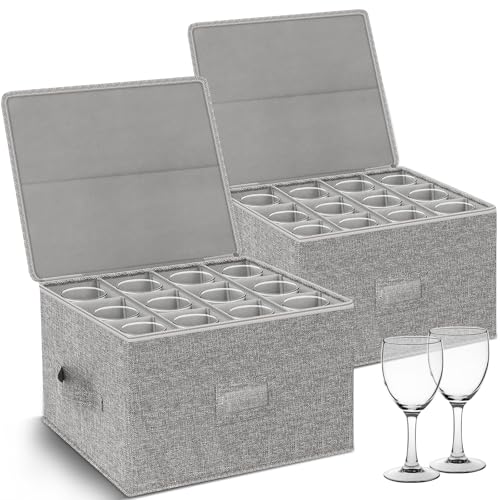


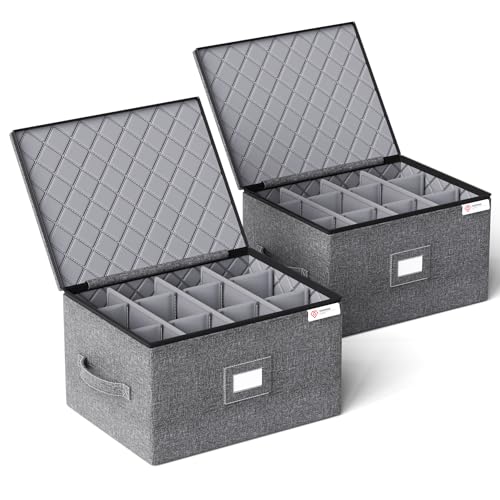
As an Amazon Associate we earn from qualifying purchases at no extra cost to you. Ratings are shown as listed on Amazon.
What Matters Most When Comparing Stemware Storage Boxes
Compartment sizing
Measure the widest part of each glass, not just the bowl opening. Standard red-wine glasses may need roughly 3.5 to 4.5 inches of compartment width, while oversized balloon glasses can require 5 inches or more. Champagne flutes usually need less width but more vertical clearance. A useful box should accommodate your largest glass without compressing it against neighboring dividers.
Look for internal height of at least 10 inches for ordinary wine glasses and 12 to 14 inches for tall flutes or oversized goblets. If the case uses fixed compartments, check whether the cells are square, rectangular, or narrow slots. Rectangular cells can be more efficient for slender champagne glasses, but square cells are usually more forgiving for mixed collections.
Padded dividers
Plain corrugated cardboard separators prevent glasses from touching, but they do little to cushion vibration. Better systems use fabric-wrapped, felt-lined, foam-padded, or thick honeycomb dividers. Removable dividers are especially valuable because they let you change the layout for wine glasses, coupes, tumblers, and small serving pieces.
Padding should be snug rather than thick enough to force the cells smaller than advertised. Avoid loose foam strips that can collapse under stacking weight. Dividers should extend close to the lid, because exposed rims are vulnerable if another box presses down from above.
Handles and lifting safety
Handles are a weak point on inexpensive boxes. Look for cutout handles reinforced with folded cardboard, stitched fabric handles attached to a rigid shell, or molded plastic grips. A full box of glassware can easily weigh 20 to 35 pounds, so two-person lifting handles are preferable on larger cases.
Do not rely on a printed “fragile” label as protection. If the bottom panel flexes when lifted, reinforce it with a second layer of cardboard or choose a smaller load. A box that is easy to lift is less likely to be dropped or tilted.
Stackability and lid design
Stackable boxes should have a flat, rigid lid and a base that resists sliding. Fabric cases with soft tops are convenient for closets but should not carry heavy boxes above them. Plastic cases can stack well, but only when their lids lock securely and their interiors include enough cushioning.
For a moving truck, favor boxes with flat tops and vertical walls. For a closet, a zippered fabric case may use space more efficiently, especially if it fits beneath a bed or on a shelf. In either setting, never stack heavy books, cookware, or appliances directly on a glassware box.
Stemware Storage Box Comparison
| Box type | Typical capacity | Typical internal height | Divider quality | Best use | General price range |
|---|---|---|---|---|---|
| Basic cardboard cell box | 12–18 glasses | 10–12 in | Plain corrugated cardboard | One-time, budget-conscious moves | $10–$25 |
| Padded cardboard glass-pack box | 12–18 glasses | 10–14 in | Felt, foam, or fabric-wrapped inserts | Mixed wine glasses and flutes | $20–$45 |
| Reusable fabric storage case | 12–24 glasses | 10–14 in | Adjustable padded dividers | Seasonal closet storage | $25–$70 |
| Rigid plastic storage case | 12–24 glasses | 11–15 in | Foam or molded compartments | Frequent moves and long-term protection | $45–$120 |
| Custom foam-lined case | 6–12 glasses | Glass-specific | High-density fitted foam | Valuable or unusually shaped stemware | $80–$200+ |
These are practical market ranges and target specifications rather than guarantees for every individual product. Branded moving kits such as U-Haul glass-pack kits can be convenient for a single move, while reusable fabric and rigid cases are usually better value when opened and repacked repeatedly.
Best Choice by Situation
| Your situation | Recommended choice | Why |
|---|---|---|
| Moving once on a tight budget | Padded cardboard glass-pack box | Low upfront cost and adequate separation when packed correctly |
| Owning mixed-size wine glasses | Adjustable-divider fabric case | Cells can be widened for bowls and narrowed for flutes |
| Storing glasses in a basement or attic | Rigid plastic case with gasketed or latching lid | Better resistance to dust, crushing, and incidental moisture |
| Frequent moves or event use | Rigid case with reinforced handles | Survives repeated lifting and repacking better than cardboard |
| Oversized crystal or heirloom glasses | Custom foam-lined case | Provides individual, close-fitting support with minimal movement |
How to Pack Wine Glasses Without Creating New Breakage Risks
- Inspect and clean the glasses. Remove lipstick, residue, and grit before packing. Small particles can scratch delicate surfaces when padding shifts.
- Measure the tallest and widest pieces. Select a box with at least 1 inch of clearance above the rim and enough width to prevent bowl-to-divider pressure.
- Wrap each glass individually. Use acid-free tissue, soft packing paper, or thin bubble wrap. Put extra protection around the bowl and rim, but do not wrap so tightly that the stem bends.
- Place glasses upright. The bowl should sit inside its compartment while the base rests flat. Storing wine glasses on their sides concentrates weight on the rim and can snap stems.
- Fill gaps carefully. Add crumpled paper above the dividers and around the lid area so the contents cannot bounce. Do not use rigid objects as filler.
- Perform a movement check. Close the box and gently rock it. If you hear glass moving, reopen it and add soft filler. If the lid bows, remove items or use a taller box.
- Label the orientation. Mark “fragile,” “this side up,” and the room where the box belongs. Keep it away from boxes likely to be dropped or dragged.
Durability and Ownership Realities
On cardboard boxes, the bottom seam and handle cutouts usually wear first. Moisture, repeated lifting, and overpacking accelerate failure. Replace a box if its base sags, its dividers are crushed, or the lid no longer closes flat. Reusing a structurally weakened moving box is false economy when the contents are breakable.
Fabric cases commonly wear at zippers, corner seams, and divider fasteners. Vacuum or brush out dust before storing them, and let them dry completely before closing. Do not place a fabric case directly on a damp basement floor. A low shelf or plastic riser provides useful protection without requiring a sealed container.
Plastic cases resist crushing, but rigid walls can transmit impact directly to a glass if there is insufficient internal padding. Check the foam periodically for compression and replace inserts that have become permanently flat. Avoid storing glasses in extreme heat, which can deform some foam materials and weaken adhesives.
Value: When a Reusable Case Pays Off
Suppose a padded cardboard box costs $30 and is used once. Its cost is $30 per move. A $75 reusable case used for five moves costs $15 per move, before considering the value of avoiding one broken glass set. If you move only once and have inexpensive everyday stemware, cardboard is sensible. If you entertain often, rotate seasonal glassware, or expect several moves, the reusable case usually earns its higher price.
Final Buying Checklist
- Internal height of at least 10 inches, or 12–14 inches for tall flutes and balloon glasses.
- Compartments wide enough for the largest bowl without compression.
- Padded or fabric-wrapped dividers that reach near the lid.
- A rigid base and reinforced handles rated for a full load.
- A flat lid and stable footprint for stacking.
- Removable dividers if the collection includes different glass shapes.
- Washable or replaceable padding for long-term ownership.
For most people, the winning specification is not the largest capacity but a medium padded box with adjustable cells, a rigid base, and reliable handles. That design protects ordinary wine glasses during a move while remaining compact enough to store safely afterward.





Write Your Review
No reviews yet. Be the first to share your experience!