

Key takeaways
- Bake delicious French cakes in this non-stick round…
- This round cake pan is constructed with carbon…
- If you love Bundt cakes then you will…
The best savarin mold for French ring cakes is a heavy-gauge aluminum pan for crisp browning and frequent baking, while silicone is the easier-release choice for beginners and nonstick steel suits shoppers who want a balance of convenience, shape definition, and moderate durability.
Our top picks
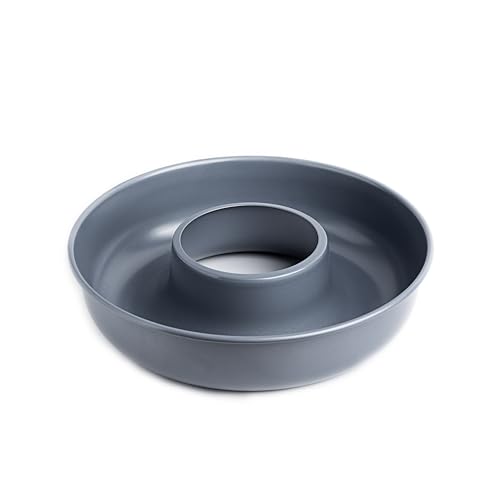 Fox Run French Savarin Cake Mold
- Bake delicious French cakes in this non-stick round…
- This round cake pan is constructed with carbon…
- If you love Bundt cakes then you will…
 Fox Run Non-Stick Kransekake Mold
- This cake ring molds work together to build…
- The graduated rings allow you to build an…
- Maintaining this set is as easy as washing…
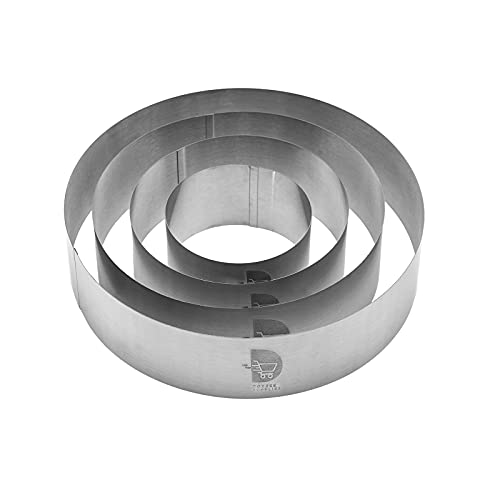 Doyzee Supplies Cake Mold Set
- Ring mold set is made from reusable, easy…
- Cake ring is suitable for cake baking, making…
- Consists of 4 rings: 4" (10.16cm), 6” (15.24cm),…
| Product | Key specs | |
|---|---|---|
| Fox Run French Savarin Cake Mold | Bake delicious French cakes in this non-stick round… This round cake pan is constructed with carbon… If you love Bundt cakes then you will… | Check price |
| Fox Run Non-Stick Kransekake Mold | This cake ring molds work together to build… The graduated rings allow you to build an… Maintaining this set is as easy as washing… | Check price |
| Doyzee Supplies Cake Mold Set | Ring mold set is made from reusable, easy… Cake ring is suitable for cake baking, making… Consists of 4 rings: 4" (10.16cm), 6” (15.24cm),… | Check price |
 DATANYA Cake Rings Mousse Mold Adjustable 6 DATANYA Cake Rings Mousse Mold Adjustable 6 | 【DATANYA Cake Ring Adjustable】🎂Moving away from traditional methods… 【Adjustable Rings From 6 to 12 inch】🎂The adjustable… 【User Friendly Features】🎂Easy to use, please adjust the… | Check price |
As an Amazon Associate we earn from qualifying purchases at no extra cost to you.
Quick picks by baking situation
| Situation | Best mold type | Recommended ring size | Why it fits |
|---|---|---|---|
| First savarin or occasional baking | Flexible silicone | 20–22 cm diameter, 1–1.5 L capacity | Releases easily and tolerates minor overbaking better than thin metal |
| Classic yeast savarin with strong browning | Heavy aluminum | 22–24 cm diameter, 1.2–1.8 L capacity | Conducts heat efficiently and colors the outer crust evenly |
| Simple cakes and frequent weeknight use | Nonstick steel | 20–22 cm diameter, 1–1.5 L capacity | Good structure, easy cleanup, and predictable everyday handling |
| Small household or limited storage | Mini savarin mold | 8–10 cm per ring, 100–180 ml each | Creates individual portions and stacks more easily than one large pan |
Silicone, aluminum, or nonstick steel?
Silicone: the easiest release
Food-grade silicone savarin molds are the most forgiving option when the cake contains syrup, fruit, caramel, or a delicate crumb. The flexible walls can be peeled away from the ring instead of forcing a knife around the center. Look for a mold rated to at least 220°C, with a reinforced rim and a stable metal baking tray or wire support.
The compromise is browning. Silicone transfers heat more slowly than metal, so the outside of a cake may remain pale while the center finishes. Yeast savarins can also develop a softer crust. Place the silicone mold on a preheated, solid baking sheet rather than directly on a cold oven rack; this improves support and gives the base a better chance to color.
- Release: excellent when fully cooled
- Browning: light to moderate
- Cleaning: usually easy, though grease can cling to textured surfaces
- Durability: good if kept away from knives, sharp utensils, and open flames
Aluminum: the best for crust and definition
Aluminum is the strongest choice for a traditional French-style ring cake with a well-colored exterior. It heats rapidly and evenly, helping the narrow inner ring and outer wall bake at a similar rate. A thick pan, roughly 1.0–1.5 mm metal thickness, is less likely to warp than a very light disposable-style pan.
Plain aluminum usually needs a careful coating of softened butter or release spray, followed by flour, sugar, or fine breadcrumbs according to the recipe. Do not unmold immediately: a hot cake is fragile, but a completely cold cake may grip the pan as sugars set. Ten to fifteen minutes of cooling is often a useful middle ground.
Aluminum is not ideal for aggressive dishwashing. Strong detergents can discolor the surface, and acidic ingredients may leave marks. Those cosmetic changes do not necessarily affect baking, but thorough hand washing and prompt drying will preserve the pan better.
- Release: very good with correct preparation
- Browning: best of the three materials
- Cleaning: hand wash preferred
- Durability: excellent when stored without denting or scratching
Nonstick steel: the practical middle ground
Nonstick steel combines a rigid frame with a coated surface. It is less floppy than silicone and generally easier to release than bare aluminum, making it useful for bundt-style savarins, sponge cakes, and simple butter cakes. Steel usually takes longer to heat than aluminum, but it retains heat well and can produce more color than silicone.
Coating quality matters more than a decorative finish. Avoid metal utensils, abrasive pads, and stacking pans directly on one another. Once the coating becomes visibly chipped, rough, or persistently sticky, replacing the mold is safer and more practical than trying to restore it.
- Release: very good when the coating is intact
- Browning: moderate to good
- Cleaning: easiest by hand with a soft sponge
- Durability: high for the steel body, limited by the coating
Choosing the right ring size
Diameter alone can be misleading because savarin molds vary in depth and center-hole width. Capacity is the more useful specification. A 20–22 cm mold holding about 1–1.5 liters is a versatile size for a family cake. A 24 cm mold holding 1.5–2 liters is better for a large yeast savarin, but it requires more batter, a larger serving platter, and more storage space.
For reliable results, fill the mold only one-half to two-thirds full before baking. Yeast dough needs room to rise; a cake batter with baking powder needs slightly less headroom if it expands aggressively. As a practical example, if a recipe produces 1.2 liters of batter, a 1.5-liter mold leaves 300 ml of expansion space, or 20% of its stated capacity. That is safer than filling a 1.2-liter mold to the rim.
| Nominal diameter | Typical capacity | Approximate servings | Best use |
|---|---|---|---|
| 8–10 cm per mini ring | 100–180 ml each | 1 per ring | Individual desserts and gift baking |
| 18 cm | 700–1,000 ml | 6–8 | Small cakes and compact kitchens |
| 20–22 cm | 1,000–1,500 ml | 8–12 | Most everyday recipes |
| 24 cm | 1,500–2,000 ml | 12–16 | Large gatherings and yeast savarins |
Release performance: the details that matter
A nonstick label does not remove the need for preparation. Brush melted or softened butter into the center tube, the base, and every curve of the ring. For aluminum, dust with flour after greasing; for chocolate or cocoa cakes, use cocoa powder instead to avoid pale flour patches. Silicone generally needs only a light coating for the first few uses, but a thin film is sensible for syrup-heavy recipes.
Let the cake cool according to its structure. A delicate sponge may need 10 minutes in the pan, while a dense butter cake may benefit from 15–20 minutes. Run a thin flexible spatula around the outer and inner edges only if the cake has visibly pulled away. Do not twist the cake by the center tube; this is a common way to split the ring.
Oven durability and ownership costs
Check the mold’s maximum temperature before using it under a grill or broiler. Silicone may tolerate normal cake-baking temperatures yet be unsuitable for direct radiant heat. Nonstick coatings also deteriorate faster at extreme temperatures, especially when the pan is empty. Aluminum has the broadest practical lifespan, but it can dent if dropped or crushed in a crowded cupboard.
A simple ownership calculation explains why a durable pan can be economical. Suppose a $35 aluminum mold is used 30 times per year for five years: $35 divided by 150 uses equals about $0.23 per use, excluding ingredients. A $15 silicone mold used 10 times per year for three years costs $0.50 per use. The less expensive purchase is not automatically cheaper if it is used infrequently or replaced after losing shape.
Cleaning and storage mistakes to avoid
- Do not cut stuck cake with a metal knife inside a silicone or coated mold.
- Do not soak uncoated aluminum for long periods; wash and dry it promptly.
- Do not use scouring powder on nonstick steel.
- Do not fold silicone sharply while it is hot, as repeated creasing can weaken the rim.
- Do not stack heavy pans on a coated surface without a cloth or paper separator.
- Inspect the center tube and inner corners after washing, where baked syrup and grease are often missed.
Final recommendation
Choose heavy aluminum if crust color, classic shape, and long service life are your priorities. Choose silicone if effortless release and compact storage matter more than browning. Choose nonstick steel when you want a rigid, everyday pan with convenient cleanup. For most home bakers, a 20–22 cm mold holding about 1–1.5 liters is the best starting size, provided the oven rack, cooling space, and serving platter can accommodate its full diameter.




Write Your Review
No reviews yet. Be the first to share your experience!