

Key takeaways
- Spring clamps: inexpensive and easy to replace, but they can create concentrated pressure points.
- Continuous fabric clamps: distribute tension more evenly and are convenient for long rails.
- Zipper leaders: make loading repeatable and reduce pinning, but require compatible leaders and careful sewing.
- Cloth leaders: economical and adaptable, though they take longer to sew and align.
- Pin-attached rails: flexible for unusual quilt sizes, but more vulnerable to uneven spacing.
Best Quilting Frames for Precise, Comfortable Work
The best quilting frames for 2026 are a sturdy floor frame for frequent full-size quilting, a hoop frame for limited space and free-motion work, a quilting hoop or lap frame for portability, and a simple scroll or quilting frame for beginners working on a budget.
A frame does more than hold fabric. It controls how evenly the quilt is tensioned, determines how often you must advance the layers, and affects whether your shoulders, wrists, and back remain comfortable during a long session. The right choice depends on quilt size, quilting method, available floor space, and how often you work—not simply on the largest frame you can afford.
Our top picks


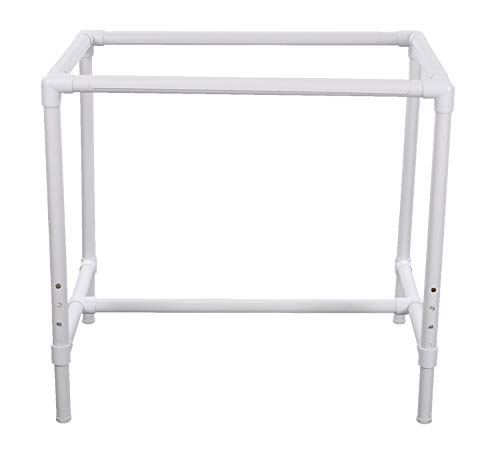

As an Amazon Associate we earn from qualifying purchases at no extra cost to you. Ratings are shown as listed on Amazon.
Quick comparison of quilting frame styles
| Frame style | Typical quilt capacity | Approx. footprint | Typical weight | Best suited to | Common market range |
|---|---|---|---|---|---|
| Hoop frame | Crib to king, advanced in sections | About 36–60 in wide | 12–35 lb | Free-motion quilting, smaller rooms | $150–$500 |
| Four-rail floor frame | Throw to king, often 90–120 in wide | About 30–48 in deep | 25–70 lb | Hand quilting and controlled machine quilting | $250–$1,000 |
| Roller or professional machine frame | Queen to king, commonly 108–120 in wide | About 32–48 in deep | 60–180+ lb | Frequent long-arm or domestic-machine quilting | $800–$5,000+ |
| Lap or tabletop quilting frame | Baby to twin, usually quilted in sections | About 18–36 in wide | 2–12 lb | Portable hand quilting and occasional projects | $40–$250 |
These are practical planning ranges, not universal specifications. A manufacturer may list the rail length rather than the usable quilting area, and some frames need extra clearance for handles, clamps, or a sewing machine.
Best choice by quilting situation
| Your situation | Most suitable frame | Why | Watch out for |
|---|---|---|---|
| First frame and modest budget | Adjustable four-rail frame | Offers useful tension control without committing to a large machine system | Confirm that the rails accept your preferred quilt width |
| Small room or shared workspace | Hoop frame or tabletop frame | Uses less permanent floor space and can be stored between sessions | More frequent repositioning on large quilts |
| Frequent hand quilting | Four-rail frame or sturdy quilting hoop stand | Keeps the layers elevated and supports consistent stitch access | Loose fabric rails can create uneven stitch tension |
| Domestic sewing machine and free-motion quilting | Low-profile hoop frame | Leaves space for the machine arm and permits smaller quilting zones | Check machine throat clearance before buying |
| Weekly queen- and king-size projects | Roller or professional machine frame | Reduces rolling and repositioning while providing broad, consistent support | High cost, heavy construction, and significant floor clearance |
| Occasional travel or classes | Lap frame or collapsible hoop frame | Light enough to transport and quick to pack away | Usually less rigid and slower for oversized quilts |
Hoop frames: the flexible space-saving option
Hoop frames hold a rectangular or oval section of the quilt rather than supporting the entire project at once. They are particularly practical for free-motion work with a domestic sewing machine, because the active quilting area can be kept relatively flat beneath the machine arm.
Look for a hoop with a rigid outer structure, rounded edges, and a reliable clamp or tightening system. A hoop that flexes under ordinary hand pressure will make stitch length and machine movement harder to control. Some systems, such as hoop-style frames from Grace Company, are designed around adjustable quilting areas and stands; the important comparison is the working opening and frame stability rather than the brand name alone.
The trade-off is advancement time. If the usable quilting area is 18 by 24 inches, a 90-by-100-inch quilt contains roughly 20.8 such areas before allowing for overlap. That does not mean exactly 21 repositioning cycles—design layout changes the number—but it illustrates why a hoop frame is convenient for small projects and less efficient for a large quilt.
Four-rail frames: the best all-rounder for many quilters
Four-rail frames support the backing, batting, and quilt top across separate rails. Fabric can be attached with cloth leaders, zippers, pins, or clamps, then advanced as each section is completed. Models such as the Grace Company Start-Right EZ3 and similar adjustable frames represent this category, although construction and included accessories vary.
The key buying details are rail length, usable quilting width, height adjustment, and the method used to secure fabric. A nominal 10-foot rail may not provide 120 inches of usable width once end supports and fabric take-up are considered. Ask whether the listed dimension is overall frame width or actual quilt width.
These frames suit hand quilting and some domestic-machine approaches especially well. Height adjustment is valuable: seated hand quilting generally needs a lower working surface, while standing or machine work may need more clearance. Choose a frame with locking adjustments rather than friction-only telescoping joints.
Roller and professional machine frames
Roller frames are designed for efficient quilting across a wide, continuously supported surface. They are the logical choice when you quilt large projects frequently or use a compatible long-arm machine. Handi Quilter and other established quilting-equipment manufacturers offer frame systems in this category, but compatibility is model-specific.
Before buying, measure the machine’s throat space, carriage width, wheel spacing, and recommended frame dimensions. A frame may physically fit a machine while still producing poor results if the carriage is unstable or the machine’s controls cannot be reached comfortably.
Professional frames are not automatically better for every quilter. They often require a dedicated room, a level floor, electrical access, and enough clearance to walk around the frame. If you complete two small quilts a year, the additional capacity may never repay the space and setup demands.
Clamp tension, leaders, and fabric control
Clamp tension is one of the most important differences between an inexpensive frame and a comfortable, precise one. Clamps should grip the fabric without leaving deep permanent marks, and their pressure should be distributed across enough width to prevent ripples.
- Spring clamps: inexpensive and easy to replace, but they can create concentrated pressure points.
- Continuous fabric clamps: distribute tension more evenly and are convenient for long rails.
- Zipper leaders: make loading repeatable and reduce pinning, but require compatible leaders and careful sewing.
- Cloth leaders: economical and adaptable, though they take longer to sew and align.
- Pin-attached rails: flexible for unusual quilt sizes, but more vulnerable to uneven spacing.
For hand quilting, do not stretch the quilt drum-tight. The layers need enough tension to prevent sagging, but excessive tension can distort pieced blocks and make needle penetration unnecessarily difficult. With machine quilting, test the clamp tension on a practice sandwich before loading the finished quilt.
Setup requirements that affect real usability
Measure the room before ordering. A frame listed as 10 feet wide may need several additional feet at the front and back for advancing fabric or operating a machine. Leave at least 24 inches of walking and working space where possible; professional setups may need more.
- Level the frame: use a firm, level floor and adjust the feet before loading fabric.
- Check every joint: tighten bolts and locking knobs, but avoid overtightening plastic components.
- Square the rails: measure diagonals or use a large carpenter’s square so the frame is not skewed.
- Attach leaders evenly: mark centers and quarter points on both leaders and fabric.
- Load the backing first: keep the grain straight and remove wrinkles without pulling the fabric out of shape.
- Make a test pass: quilt a small sample to check tension, needle clearance, and advance resistance.
Allow roughly 30–60 minutes for a first setup of a simple frame and longer for a roller system or a frame with cloth leaders. After the initial assembly, normal loading may take 15–30 minutes, depending on quilt size and attachment method.
Durability and ownership costs
Frames usually wear first at the contact points: clamp teeth, hook-and-loop strips, rail coverings, carriage wheels, and plastic locking knobs. Replacement parts availability matters more than a small difference in the purchase price. Keep screws, washers, and spare clamps in a labeled container so a minor failure does not stop a project.
Clean wood or metal rails with a dry or lightly damp cloth. Keep lint away from carriage wheels and do not use oily lubricant near fabric, since residue can transfer to the quilt. Inspect clamp edges for burrs and cover sharp or rough areas before loading delicate fabric.
A useful ownership calculation is cost per project. A $400 frame used for 20 quilts costs $20 per quilt before accessories. Add $60 for leaders and replacement clamps, and the total becomes $23 per quilt. A $1,500 roller frame used for 100 quilts costs $15 per quilt, but only if its capacity actually changes how often you quilt. Frequency of use is therefore as important as the initial price.
Final buying recommendation
Choose a lap or tabletop frame for portability, a hoop frame for small spaces and domestic-machine free-motion work, and an adjustable four-rail frame for the broadest mix of hand quilting and medium-to-large projects. Select a roller or professional machine frame only when you regularly quilt large quilts and can provide the room, compatible equipment, and maintenance budget.
The best quilting frames are the ones whose working height, usable width, tension system, and setup routine match the way you actually quilt. Prioritize rigid joints, replaceable contact parts, accurate sizing information, and comfortable access to the quilt over decorative features or maximum advertised capacity.

Write Your Review
No reviews yet. Be the first to share your experience!