

Key takeaways
- The clear width between the crisper walls or shelf supports.
- The front-to-back depth with the door closed.
- The vertical clearance above the container, including the lid and any stacking feet.
The best produce storage container for refrigerator use is one with adjustable ventilation, a raised drainage surface, and dimensions that fit your crisper or shelf; for most households, a medium vented container with a removable basket is the most useful starting point.
Our top picks


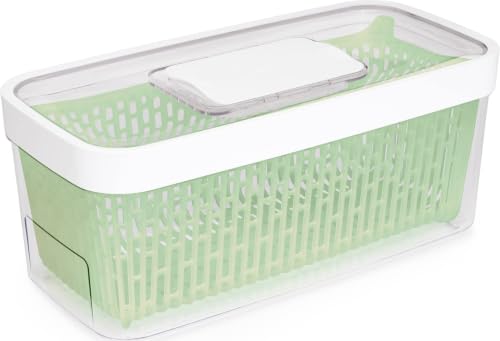
As an Amazon Associate we earn from qualifying purchases at no extra cost to you. Ratings are shown as listed on Amazon.
Quick picks by refrigerator and shopping habits
| Situation | Best container style | Useful capacity | What to prioritize |
|---|---|---|---|
| Small refrigerator or one-person household | Low-profile single container | 1.5–3 quarts | Width under 7 inches, removable basket, adjustable vent |
| Weekly mixed-produce shopper | Stackable modular set | 3–6 quarts per container | Interlocking lids, clear walls, separate sizes |
| Frequent berry and herb storage | Shallow vented containers | 1–2 quarts | Airflow, drainage, and a single layer rather than height |
| Large family or bulk vegetable shopper | Large produce keeper with basket | 6–8 quarts | Usable floor area, strong handles, easy cleaning |
| Lowest-cost solution | Perforated food-storage box plus rack | 2–5 quarts | Replacement availability and dishwasher-safe parts |
What separates a good produce keeper from an ordinary food container?
Produce loses quality when the storage environment is either too dry or too wet. A sealed container can trap condensation around lettuce, berries, and cut vegetables, while a completely open basket can allow delicate greens to wilt. The useful middle ground is controlled airflow combined with a surface that keeps food above collected moisture.
Venting and humidity control
Look for a sliding vent, rotating dial, or vented lid rather than a lid that is simply described as “airtight.” A vent lets you reduce condensation for high-moisture items such as strawberries, spinach, and mushrooms. A more closed setting can help slow moisture loss from leafy greens and cut vegetables.
Humidity-control cartridges or carbon filters can be helpful, but they should not be the deciding factor. They are consumables, and their performance depends on clean, dry produce and an unclogged vent. Check whether replacement filters are sold separately and whether the container remains useful without one.
Drainage and elevated storage
A removable basket or raised insert is more important than a decorative crisper design. It separates food from liquid that settles at the bottom, reducing the chance that one soft berry or bruised leaf spreads moisture through the rest of the container. The insert should have enough open area to drain rather than functioning as a solid tray with a few small holes.
For berries, drainage works best when the fruit is spread in a shallow layer. For carrots, celery, and whole peppers, a deeper container is acceptable because their firm surfaces tolerate stacking better.
Stackability and usable dimensions
Exterior capacity can be misleading. A 5-quart box may lose useful space to thick walls, a raised basket, or a lid that slopes inward. Measure the interior floor, not just the advertised volume. A container that is 11 inches long but only 7 inches wide may hold less lettuce than a shorter, wider model.
Before buying, measure three points in your refrigerator:
- The clear width between the crisper walls or shelf supports.
- The front-to-back depth with the door closed.
- The vertical clearance above the container, including the lid and any stacking feet.
Leave at least ½ inch of side clearance and about 1 inch above a vented lid. This makes it easier to remove the box without scraping the seal or blocking airflow around the refrigerator compartment.
Head-to-head: the main container designs
Dedicated vented produce keepers
Products such as Rubbermaid FreshWorks Produce Savers and OXO GreenSaver containers represent this category. They generally combine a vented lid with a raised basket, and some versions include a replaceable filter or humidity-control component.
These are the strongest all-purpose choice when you buy produce every week. Their weakness is ownership complexity: baskets, seals, and filters create more parts to wash or replace. They can also waste refrigerator space if the container is too tall for the crisper.
Modular produce containers
Modular sets, including containers sold under the Progressive Prepworks line, are useful when you want several matching sizes. Their straight sides usually stack efficiently and make inventory easier to see. They are particularly practical for separating berries, greens, and cut vegetables.
The trade-off is that not every modular container has sophisticated humidity control. Some rely mainly on perforations and a raised tray. That is adequate for many foods, but it may not match a dedicated keeper for very wet leafy greens.
Ordinary airtight food-storage containers
Standard glass or plastic containers are excellent for cut produce, leftovers, and food that needs a tight seal. They are less suitable for freshly washed berries or whole greens unless you add a rack, absorbent liner, or venting method. A fully sealed lid can trap moisture, especially when food enters the refrigerator warm.
Produce bags and perforated liners
Perforated bags are inexpensive and take little space, making them useful for herbs, small quantities, and irregularly shaped vegetables. They do not provide a rigid structure, drainage basket, or dependable stackability. They are a supplement rather than the best produce storage container for refrigerator organization.
Capacity is not the same as usable capacity
Consider a container advertised at 4 quarts. A quart is 57.75 cubic inches, so the nominal volume is approximately:
4 × 57.75 = 231 cubic inches.
If a raised basket, tapered walls, and lid geometry reduce the usable interior by 20%, the practical capacity is closer to 185 cubic inches. That is enough for a large bag of spinach or several small vegetable portions, but not necessarily a full weekly produce haul.
Do not fill a produce keeper to the lid. Air needs to move around the food, and compression bruises berries and delicate leaves. A container filled to roughly two-thirds of its internal height is often easier to organize and clean.
Recommended setup for different foods
- Leafy greens: Remove damaged leaves, dry thoroughly, and use a raised basket with moderate ventilation. Add a clean, dry towel only if the greens still produce visible condensation.
- Berries: Keep them unwashed until needed when possible. Use a shallow container, spread berries in one layer, and select more airflow rather than a tightly sealed setting.
- Carrots and celery: Choose a longer container with enough floor space to avoid bending. Drainage matters, but excessive ventilation can dry cut ends.
- Herbs: Use a small container that prevents crushing. A tall format can be useful for upright herbs, while a shallow vented box is better for delicate leaves.
- Mushrooms: Avoid trapping them in a wet, airtight environment. A vented container or breathable paper packaging is preferable to a sealed plastic box.
- Apples and ethylene-sensitive produce: Store separately when practical. Apples, ripe bananas, and some other fruits can affect nearby produce, so a container cannot replace sensible separation.
Cleaning, durability, and common ownership problems
The first parts likely to wear are silicone seals, sliding vents, and small filter compartments—not the main box. Inspect the lid before purchase: a vent that is difficult to remove or a gasket trapped in a narrow groove will make routine cleaning frustrating.
Wash the container and basket after emptying it, then dry both completely before adding new produce. Pay special attention to corners and the underside of the basket, where leaf fragments and liquid collect. Dishwasher-safe plastic is convenient, but repeated high-heat cycles can cloud plastic or gradually distort thin lids. Use the top rack when the manufacturer allows it.
Common mistakes include putting wet produce into a closed container, mixing a bruised item with sound produce, blocking the vent with a bag, and storing too much food for the basket to circulate air. A container cannot correct poor preparation or an overly warm refrigerator.
Our buying recommendation
Choose a dedicated vented keeper with a removable, elevated basket if you regularly buy leafy greens, berries, and cut vegetables. Choose a modular set if refrigerator organization and stackability matter more than specialized humidity control. Choose an ordinary food container only when your main need is leftovers or already-cut produce.
For most shoppers, the best balance is one medium container in the 3–5-quart range plus one shallow 1–2-quart container. The medium box handles greens and firm vegetables; the shallow box protects berries and herbs without burying them under heavier food. This two-container approach usually provides more usable flexibility than one oversized box.
FAQ
Should produce be washed before storage?
Only if it can be dried thoroughly. Surface water is a frequent cause of premature softening and mold. If you wash produce in advance, use a basket or towel to remove excess moisture before closing the lid.
Are glass containers better than plastic for produce?
Glass is durable, odor-resistant, and useful for cut foods, but it is heavy and less forgiving in a crowded crisper. Plastic is lighter and usually offers more specialized venting shapes. The better material depends on whether weight, visibility, and drop resistance matter most.
Do produce containers eliminate food waste?
No. They can improve airflow, drainage, and organization, but freshness still depends on purchase quality, refrigerator temperature, produce compatibility, and timely use. Buy the size that matches your normal quantity rather than the largest container available.


Write Your Review
No reviews yet. Be the first to share your experience!