

Key takeaways
- Living room: Powder-coated steel suits a moderate-budget focal wall; aluminum is preferable for a very large abstract panel. Leave roughly 6–12 inches between the art and nearby furniture so the piece does not look crowded.
- Dining room: Textured iron or dark steel adds visual weight, but avoid sharp protruding elements near chairs and walkways. A shallow relief design is easier to live with than a deep sculpture.
- Bedroom: Lightweight aluminum is practical above a headboard, especially in earthquake-prone areas or rental homes. Avoid heavy pieces directly over the pillow area unless the mounting system is exceptionally secure.
- Bathroom: Select aluminum, stainless steel, or steel with a fully sealed powder coat. Keep ordinary untreated iron away from steam and splashes.
- Entryway: Steel and iron withstand occasional contact well, but rounded edges and a low-profile design are safer in a narrow passage.
- Covered outdoor area: Aluminum is usually the lowest-maintenance option. Steel can work under a deep roof with sealed edges, while iron requires the most frequent inspection and touch-up.
The best metal wall art decor for most homes is a powder-coated aluminum design: it is light enough for ordinary wall hardware, resists rust better than untreated steel or iron, and can be made in large statement sizes without becoming difficult to install.
That recommendation changes when your priorities are a lower price, a heavy architectural look, or a deeply textured finish. Steel is usually the best value, aluminum is the safest choice for humid rooms and oversized pieces, and iron is best reserved for protected interiors where its weight and maintenance are acceptable.
Our top picks
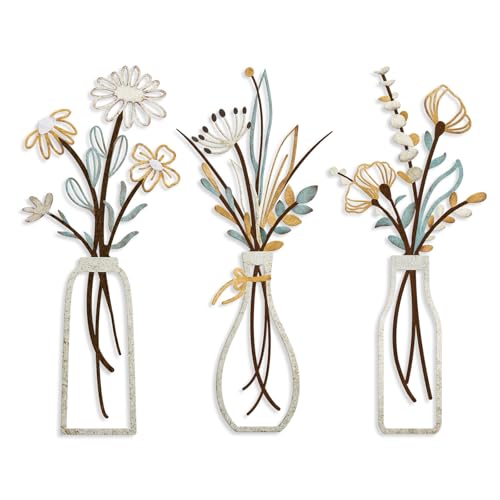


As an Amazon Associate we earn from qualifying purchases at no extra cost to you. Ratings are shown as listed on Amazon.
Steel vs. aluminum vs. iron: the practical difference
| Material | Typical weight at 24 × 36 in. | Rust resistance | Common finish | Best use | Typical market range |
|---|---|---|---|---|---|
| Powder-coated steel | 8–16 lb | Good while coating is intact; exposed edges can rust | Matte, satin, hammered, cutout | Affordable indoor feature walls | $50–$180 |
| Aluminum | 3–8 lb | Excellent; does not form red iron rust | Brushed, painted, anodized, polished | Large pieces, bathrooms, covered outdoor areas | $80–$300 |
| Iron or wrought iron | 12–30+ lb | Moderate to poor unless sealed and maintained | Forged, distressed, blackened, antiqued | Traditional, rustic, and industrial interiors | $100–$500+ |
These are useful planning ranges rather than exact specifications. Thickness, open space in the design, reinforcement bars, and the number of layers can change the final weight substantially. A large openwork panel may weigh less than a smaller solid plaque.
Steel: the value and industrial contender
Steel offers a strong price-to-size ratio and is easy to cut, weld, emboss, or laser-pattern. That makes it common in geometric panels, city maps, botanical silhouettes, and layered industrial designs. Its main weakness is corrosion: a scratch, drilled edge, or unsealed back can eventually develop orange rust, especially in a humid room.
Choose steel for a living room, hallway, office, or dining area when the design has a durable powder-coated finish. Inspect the back as carefully as the front. A front surface can look flawless while raw mounting tabs or cut edges remain vulnerable.
Aluminum: the best choice for weight and moisture
Aluminum is roughly one-third the density of steel, so a large aluminum artwork can often be mounted with fewer or smaller anchors. It naturally forms a protective oxide layer rather than red rust. This does not make every aluminum finish weatherproof: paint can fade, salt air can stain, and poorly sealed fasteners can corrode.
Aluminum is particularly suitable above a console, on a broad bedroom wall, in a bathroom with good ventilation, or on a covered porch. It is also the safer material when you want artwork wider than 48 inches but cannot locate multiple studs. Thin aluminum can dent, however, so look for folded edges, a raised frame, or rear bracing on oversized pieces.
Iron: the texture specialist
Iron delivers the deepest forged, hammered, and distressed appearance. It works well with farmhouse, Mediterranean, Gothic, traditional, and industrial decor. The trade-off is weight. A 36-inch iron sunburst or multi-panel sculpture may require two people to hang and more substantial hardware than a lightweight decorative hook.
Iron should generally stay indoors unless the manufacturer specifies an exterior-grade coating. Even then, inspect it periodically. Rust commonly begins at welds, fastener holes, lower edges where moisture collects, and points where the finish has been scraped during installation.
Choose by room, not just by style
- Living room: Powder-coated steel suits a moderate-budget focal wall; aluminum is preferable for a very large abstract panel. Leave roughly 6–12 inches between the art and nearby furniture so the piece does not look crowded.
- Dining room: Textured iron or dark steel adds visual weight, but avoid sharp protruding elements near chairs and walkways. A shallow relief design is easier to live with than a deep sculpture.
- Bedroom: Lightweight aluminum is practical above a headboard, especially in earthquake-prone areas or rental homes. Avoid heavy pieces directly over the pillow area unless the mounting system is exceptionally secure.
- Bathroom: Select aluminum, stainless steel, or steel with a fully sealed powder coat. Keep ordinary untreated iron away from steam and splashes.
- Entryway: Steel and iron withstand occasional contact well, but rounded edges and a low-profile design are safer in a narrow passage.
- Covered outdoor area: Aluminum is usually the lowest-maintenance option. Steel can work under a deep roof with sealed edges, while iron requires the most frequent inspection and touch-up.
A decision matrix for common buying situations
| Your situation | Best material | Recommended scale | Reason |
|---|---|---|---|
| Renter or frequent mover | Aluminum | 18–36 in. wide | Lower lifting weight and simpler patching when relocated |
| Lowest practical budget | Powder-coated steel | 24–40 in. wide | Usually offers more visual mass per dollar |
| Humid bathroom or coastal home | Aluminum | 18–48 in. wide | Better resistance to red rust and damp air |
| Traditional or rustic interior | Iron | 24–48 in. wide | Forged texture and heavier visual presence |
| Oversized statement wall | Braced aluminum or steel | 48–72+ in. wide | Large coverage without relying on one central hanging point |
How large should metal wall art be?
For art above a sofa, sideboard, or bed, a useful starting point is 60–75% of the furniture width. For example, an 84-inch sofa usually pairs well with a piece or grouped arrangement measuring about 50–63 inches wide. If a single metal panel is 60 inches wide and weighs 18 pounds, plan for its weight to be distributed across at least two mounting points rather than hung from one central hook.
For a narrow wall, measure the clear width after accounting for trim, switches, and door swing. A 36-inch artwork on a 42-inch wall leaves only 3 inches per side, which can look cramped even if it technically fits. A 24–30-inch design may create a more intentional border.
Hanging hardware: the detail that determines safety
Do not assume the included hardware matches your wall. A small aluminum piece may work with a picture hook, while a heavy iron sculpture may need two screws driven into studs or rated hollow-wall anchors. Check four specifications before buying:
- Total weight: Include removable frames, spacers, and decorative overlays.
- Number of attachment points: Two or more points reduce tilting and distribute load.
- Hardware clearance: A rear cleat or keyhole hanger may require several inches of vertical space.
- Wall construction: Drywall, plaster, masonry, and wood paneling require different anchors.
For a 20-pound steel panel with two mounting points, do not automatically choose two 10-pound hooks. Use hardware with a comfortable safety margin, install it correctly, and account for uneven loading when one side is lifted first. On masonry, use appropriate masonry screws or anchors; on drywall, locate studs where possible or use anchors specifically rated for the wall type.
Finish and maintenance: what wears first
Powder coating usually handles everyday dust better than a thin painted finish, but sharp impacts can chip it. Brushed aluminum hides small marks more effectively than glossy metal. Polished surfaces show fingerprints and may need frequent wiping, while hammered or matte finishes disguise dust but can collect it in recesses.
- Dust the surface with a soft microfiber cloth or a clean, soft brush.
- For grime, use lukewarm water with a small amount of mild dish soap.
- Wipe dry, especially around seams, rear brackets, and lower edges.
- Do not use steel wool, abrasive powders, chlorine bleach, or acidic cleaners.
- Inspect outdoor or humid-room pieces twice a year for chips, bubbling, loose fasteners, or discoloration.
If steel or iron develops a small rust spot, remove loose corrosion carefully, dry the area fully, and apply a compatible touch-up coating according to the finish manufacturer’s instructions. Do not paint over active, flaky rust. For outdoor use, never block drainage holes or seal moisture inside a hollow frame.
Final recommendation
Choose aluminum for the best all-around combination of low weight, scale, and rust resistance. Choose powder-coated steel when price and a substantial industrial appearance matter most. Choose iron when forged texture is central to the room’s design and you are prepared for stronger hardware and more maintenance. The best metal wall art decor is not simply the most attractive panel; it is the one whose material, size, finish, and mounting system suit the room where it will actually live.



Write Your Review
No reviews yet. Be the first to share your experience!