

Key takeaways
- 2,700–3,000K: warmer light for relaxed sketching, reading, and evening use.
- 3,500–4,000K: balanced light for general drawing, writing, and mixed home-office work.
- 4,500–5,000K: cooler light that can make fine lines easier to distinguish, especially in a well-lit room.
The best LED drafting desk lamps are adjustable architect lamps with a 30–40 inch reach, a stable clamp or weighted base, neutral-to-cool color control, smooth dimming, and a wide diffuser that lights the whole drawing area without reflecting into your eyes.
Our top picks

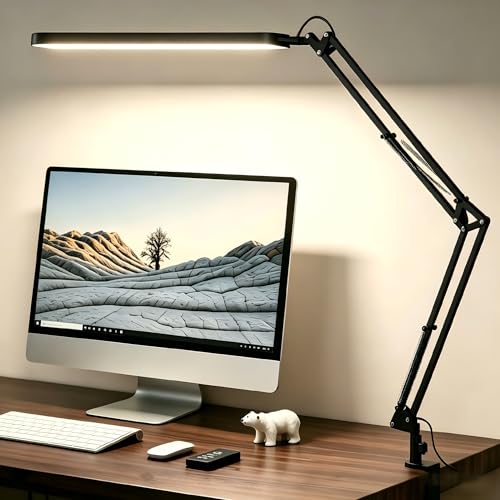

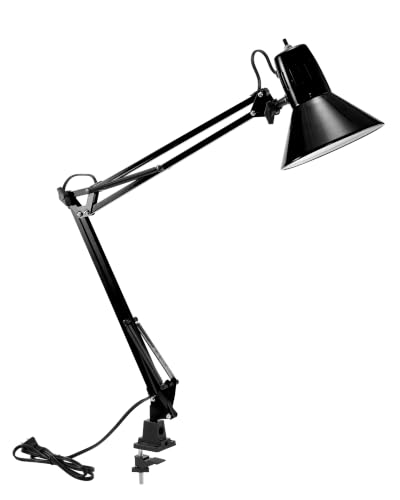
As an Amazon Associate we earn from qualifying purchases at no extra cost to you. Ratings are shown as listed on Amazon.
Quick picks by drafting situation
| Situation | Best lamp type | What to prioritize | Typical 2026 market range |
|---|---|---|---|
| Small desk or shared workspace | Clamp-mounted LED swing-arm lamp | 2–3 inch clamp, short folded depth, 30-inch reach | $35–$90 |
| Large drafting table | Long-reach architect lamp | 36–40 inch reach, broad head, counterbalanced joints | $80–$250 |
| Color-sensitive illustration | High-CRI adjustable LED lamp | CRI 90 or higher, 4,000–5,000K setting, low glare | $70–$300 |
| Occasional sketching on a conventional desk | LED lamp with weighted base | Compact footprint, multiple brightness levels, easy repositioning | $25–$100 |
| Permanent professional workstation | Heavy-duty articulated task lamp | Metal arms, replaceable joints or springs, 40-inch reach | $150–$400 |
What separates a drafting lamp from an ordinary desk lamp?
Detailed work benefits from light that arrives from a controllable angle and covers the entire working plane. A small reading lamp may look bright at its center but leave the far side of a 24-by-36-inch sheet noticeably darker. That unevenness encourages you to lean closer, move the paper repeatedly, or work in your own shadow.
For drafting, illustration, model-making, and technical lettering, look for a lamp head at least 16 inches wide or a diffuser that distributes light broadly. A long head is not automatically better: exposed LED points can create harsh reflections on tracing film, glossy paper, or a tablet screen. A frosted diffuser and recessed LEDs are more useful than maximum lumen output alone.
Arm reach and movement: the head-to-head comparison
Short swing arms
A lamp with approximately 24–30 inches of total reach suits a desk 36–48 inches wide. It is easier to keep stable and takes less room behind the desk, but it may not reach the far edge of a large drafting board. This is the practical choice for small rooms, students, and occasional work.
Long articulated arms
A 36–40 inch reach is more useful on a 30-by-42-inch or larger board. It allows the lamp to sit beside the work rather than directly over it, reducing shadows from your hand. The trade-off is leverage: a poorly balanced long arm can sag when the head is extended. Look for firm friction joints, internal springs, or a counterbalance system rather than relying on a decorative-looking arm.
Gooseneck lamps
Flexible goosenecks are compact and inexpensive, but they are usually less precise for sustained drafting. Repeated bending can loosen the neck, and the lamp may drift toward the paper. They work well for small sketches, repair work, and craft details; they are less suitable for a large drawing surface used for several hours at a time.
Clamp or base installation?
Choose a clamp when desk space matters
A clamp leaves the work surface clear and generally provides better stability for a long arm. Measure the desk edge before buying. A clamp opening of 2–3 inches covers many desks, while thicker countertops, rear cable trays, and beveled edges may require a 3.5-inch opening or a spacer block.
Protect a wood or laminate edge with the supplied rubber pad. Do not overtighten a metal clamp against a hollow-core desk; the edge can crush or deform. A small plywood reinforcement plate under the desk spreads the load when a long lamp is fully extended.
Choose a weighted base when the lamp must move
A base-mounted lamp is better for renters, shared desks, and workstations where clamping is impossible. Stability depends on both weight and footprint. For a long-reach lamp, a base around 6–10 pounds with a footprint roughly 8–12 inches wide is a more useful target than a narrow, tall base.
The disadvantage is lost workspace. A heavy base can occupy the corner where you would otherwise place rulers, tools, or a cutting mat. It also needs to be moved when you change the board angle.
Color temperature, brightness, and color accuracy
Adjustable color temperature is valuable because different tasks benefit from different visual conditions:
- 2,700–3,000K: warmer light for relaxed sketching, reading, and evening use.
- 3,500–4,000K: balanced light for general drawing, writing, and mixed home-office work.
- 4,500–5,000K: cooler light that can make fine lines easier to distinguish, especially in a well-lit room.
For color illustration, prioritize a stated CRI of 90 or higher. CRI is not a complete guarantee of color fidelity, but it is a useful screening specification. If you compare paint swatches, markers, or printed proofs, use the lamp’s neutral setting and avoid mixing it with strongly colored room lighting.
Brightness controls should be continuous or offer at least five useful levels. A lamp advertised as “dimmable” may only provide three abrupt steps. For a typical 24-by-36-inch drawing area, a practical target is roughly 800–1,500 lumens at the lamp, with the ability to reduce output for close-up work or evening use. More light is not always better if it causes reflections or eye fatigue.
Glare control matters more than maximum brightness
Place the lamp to the opposite side of your dominant hand: on the left for a right-handed user and on the right for a left-handed user. Position the head slightly above eye level and angle it across the paper rather than directly toward your face. This reduces the shadow cast by your hand and keeps the LED source out of your line of sight.
Look for a frosted or micro-prismatic diffuser, recessed LEDs, and a head that can tilt independently of the arm. Bare LED dots are particularly troublesome on glossy drafting film. A lamp with a wide head can also create less intense “hot spots” than a narrow high-output lamp.
If you use a screen or light pad, check reflections from your normal seated position before finalizing the clamp location. A lamp that is excellent for paper may create a bright stripe across glass or a tablet.
Recommended product directions
For a classic professional setup: Luxo L-1-style articulated lamps
The Luxo L-1 is a long-established architect-lamp design and a sensible reference point for buyers who value articulated movement, a broad shade, and durable construction. Availability, LED configuration, and mounting options vary by version and seller, so verify the specific model’s light source and control system. Its design direction suits permanent studios better than compact occasional-use desks.
For refined home-office styling: Anglepoise Type 75
The Anglepoise Type 75 is a real, widely recognized articulated desk lamp with a strong design focus and a weighted-base format. It is attractive for a home office or creative desk, but buyers should check the exact LED or bulb configuration, reach, and base dimensions. A weighted base is convenient when you cannot clamp to the desk, though it consumes more surface area than a clamp lamp.
For broad, feature-rich illumination: BenQ e-Reading Desk Lamp
BenQ’s e-Reading Desk Lamp line is designed around a wide light spread and adjustable illumination for desk work. It is a better match for users who want broad coverage across documents and a modern home-office appearance rather than the traditional exposed-spring architect aesthetic. Confirm the current version’s color modes, brightness range, and base or clamp arrangement before purchase, since specifications can differ by market.
For a lower-cost choice: a generic LED architect lamp with measurable specifications
Many unbranded or house-brand lamps can perform well if you evaluate the specifications instead of the marketing name. Target a 30-inch-or-longer reach, a metal arm, a clamp with rubber padding, five or more brightness levels, a 4,000K setting, and a diffuser. Avoid models that list only “daylight LED” without lumens, color temperature, or a clear adjustment mechanism.
A simple coverage calculation before you buy
Suppose your drafting board is 24 by 36 inches. Its area is 864 square inches. A lamp head that effectively covers a 12-by-20-inch region illuminates only 240 square inches directly, or about 28% of the board. You will still get spill light, but the far edges may be visibly dimmer.
For more even coverage, choose either a head approximately 24–30 inches long or a lamp with a wide, diffused beam that the manufacturer specifically describes as covering a large desk. If the lamp is short, position it high and angle it across the board; do not place it close to one corner and expect uniform light across the opposite edge.
Ownership details that affect long-term value
- Joints loosen first: Long arms may sag after repeated adjustment. Tighten serviceable friction knobs gradually instead of forcing them.
- Clamps can damage desks: Keep the rubber pad clean and use a reinforcement plate on soft or hollow surfaces.
- Diffusers collect dust: Unplug the lamp, then wipe the diffuser with a dry or barely damp microfiber cloth. Avoid spraying cleaner into vents or seams.
- LED modules are not always replaceable: A lamp with an integrated LED can be economical to run but may require full replacement if the driver or LED board fails.
- Cables become a nuisance: Route the cord along the rear of the arm with loose loops. A tight cable can restrict movement or pull the lamp toward the desk edge.
- Do not judge by wattage: Wattage indicates energy use, not useful illumination. Compare lumens, diffuser design, adjustment range, and coverage.
Final buying recommendation
For most detailed home drafting, choose a clamp-mounted LED architect lamp with at least a 30-inch reach, a wide diffused head, five or more dimming levels, adjustable 3,500–5,000K color temperature, and CRI 90 or better if color work matters. Select a weighted base when you need portability or cannot clamp to the desk. Spend more on a metal articulated arm and replaceable or serviceable joints if the lamp will be adjusted daily; spend less only when the work area is small and occasional.


Write Your Review
No reviews yet. Be the first to share your experience!