

Key takeaways
- Living Room Ideal Fit: Room length and width should be at least 2 to 3 feet larger than the rug on all sides. A 9×12 needs a minimum room of 11×14 feet to leave 12-18 inches of bare floor visible around the edges. In a 12×18 foot living room, you can place all front legs of the sofa and armchairs on the rug with a centered coffee table.
- Bedroom Ideal Fit: For a queen bed (60×80 inches), a 9×12 placed under the lower two-thirds of the bed leaves 24-30 inches of soft rug on the sides and foot of the bed, which is exactly where your feet land. For a king (76×80 inches), the same placement still leaves about 18-24 inches on each side. If your bedroom is smaller than 11×13 feet, a 9×12 will run wall-to-wall and make the room feel cramped.
- Worked Space Check: Measure your sofa wall. If your sofa is 84 inches wide, center it on the 12-foot side of the rug. That leaves roughly 30 inches of rug beyond each arm (144 inches – 84 inches = 60 inches / 2). If that overhang is less than 12 inches, your rug is too small for the seating grouping.
The best 9×12 area rugs for most living rooms and bedrooms are low to medium-pile rugs in wool or high-quality polypropylene, because they balance softness, durability, and easy cleaning while correctly anchoring standard furniture layouts in rooms measuring 11×14 feet to 14×18 feet.
A 9×12 is the go-to large area rug size for a reason: it’s big enough to unify a sofa, coffee table, and chairs in a living room or to frame a queen or king bed, but not so large that it overwhelms an average American home. The mistake most buyers make isn’t color or pattern, it’s choosing the wrong material and pile height for how the room is actually used. A plush shag that feels great in a low-traffic bedroom will trap crumbs and show wear paths in a busy family room within months.
Our top picks


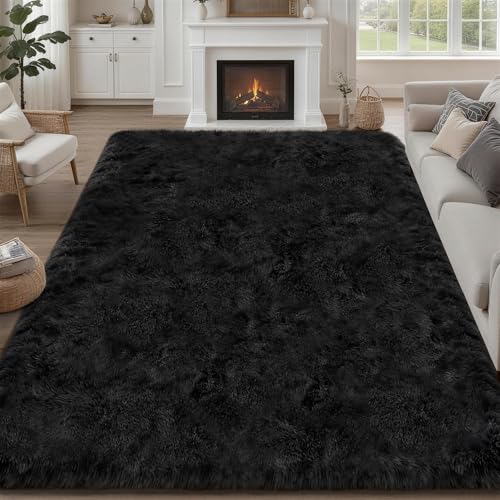
As an Amazon Associate we earn from qualifying purchases at no extra cost to you. Ratings are shown as listed on Amazon.
Material, Pile Height, and Durability: What Actually Matters for 9×12 Rugs
For a rug this large, material determines everything from how it feels underfoot to how it handles spills, pets, and sunlight. Pile height then determines maintenance and longevity.
| Material | Typical Pile Height | Durability (High-Traffic Rating) | Feel & Look | Cleaning Reality | Best For |
|---|---|---|---|---|---|
| Wool | 0.4 – 0.75 inch (10-19mm) | Excellent / 15-20+ years | Warm, resilient, natural luster; hides soil | Naturally stain-resistant due to lanolin but requires professional cleaning; sheds initially | Living rooms, bedrooms where longevity matters |
| Polypropylene / Olefin | 0.25 – 0.5 inch (6-13mm) | Very Good / 5-10 years | Flatweave to soft plush, good color retention | Highly stain and fade resistant; bleach-cleanable, easy to spot clean | Homes with kids, pets, dining areas |
| Polyester (PET / Recycled PTE) | 0.5 – 1.0 inch (13-25mm) | Good / 3-7 years | Very soft, vibrant colors, slight sheen | Resists water-based stains but can mat and crush in traffic lanes; attracts oil | Bedrooms, low-traffic living rooms on a budget |
| Nylon | 0.35 – 0.6 inch (9-15mm) | Excellent / 10-15 years | Most resilient synthetic, excellent bounce-back | Excellent stain resistance when solution-dyed; steam cleaning recommended | Hallways, open-plan high-traffic spaces |
| Jute / Sisal / Natural Fiber | 0.25 – 0.4 inch (6-10mm) | Moderate / 4-8 years | Textured, matte, organic look | Absorbs moisture, prone to staining; dry clean only, not for damp areas | Layering, coastal or casual bedrooms |
| Viscose / Rayon | 0.3 – 0.5 inch (8-13mm) | Poor / 2-5 years | Silky, high sheen, looks like silk | Water spots easily, fibers weaken when wet; professional clean only | Formal, low-traffic sitting rooms only |
Pile height rule for 9×12 rugs: For high-traffic living rooms, stay under 0.5 inch. Low pile and flatweave rugs allow doors to clear, chairs to slide without catching, and vacuums to run efficiently. Medium pile (0.5 to 0.75 inch) is the sweet spot for bedrooms where you want cushion when you step out of bed. High pile over 1 inch looks luxurious in photos but creates two ownership problems at this size: it weighs 40-60 pounds making it hard to move for cleaning, and it compresses permanently where feet and furniture legs sit.
Will a 9×12 Fit Your Room? Measure Before You Buy
A 9×12 rug is not actually 9 feet by 12 feet. Most manufacturers list it as 9′ x 12′ but produce it at 8’10” x 11’10” to 9′ x 11’11” to allow for edging. Always check the exact listed dimensions.
Use this layout formula to avoid the most common sizing mistake, buying too small:
- Living Room Ideal Fit: Room length and width should be at least 2 to 3 feet larger than the rug on all sides. A 9×12 needs a minimum room of 11×14 feet to leave 12-18 inches of bare floor visible around the edges. In a 12×18 foot living room, you can place all front legs of the sofa and armchairs on the rug with a centered coffee table.
- Bedroom Ideal Fit: For a queen bed (60×80 inches), a 9×12 placed under the lower two-thirds of the bed leaves 24-30 inches of soft rug on the sides and foot of the bed, which is exactly where your feet land. For a king (76×80 inches), the same placement still leaves about 18-24 inches on each side. If your bedroom is smaller than 11×13 feet, a 9×12 will run wall-to-wall and make the room feel cramped.
- Worked Space Check: Measure your sofa wall. If your sofa is 84 inches wide, center it on the 12-foot side of the rug. That leaves roughly 30 inches of rug beyond each arm (144 inches – 84 inches = 60 inches / 2). If that overhang is less than 12 inches, your rug is too small for the seating grouping.
Leave at least 18 inches of walkway between the rug edge and walls in high-traffic paths to prevent edge curling and tripping.
Best 9×12 Area Rugs by Situation
Rather than one winner, the best choice depends on traffic, pets, and maintenance willingness.
1. Best Overall for Family Living Rooms: Wool or Wool-Blend Low-Pile
Type to look for: Hand-tufted or machine-woven wool blend from makers like Karastan, Loloi, or Surya in a distressed Persian or subtle geometric pattern.
Why it wins: Wool naturally bounces back from furniture indentations and hides dirt between vacuums. A low-pile wool rug in the 0.4-inch range won’t shed as long as a high-pile version, and patterned designs camouflage everyday crumbs and pet hair. Expect a general market range of $400 to $900 for synthetic wool-look and $900 to $2,200 for 100% wool at this size.
2. Best for Pets and Kids with Spills: Machine-Washable or Polypropylene Flatweave
Type to look for: Low-profile polypropylene flatweave or two-piece machine-washable systems like those from Ruggable or Boutique Rugs with a non-slip pad.
Why it wins: Polypropylene is solution-dyed, so the color goes through the fiber and resists bleaching from cleaners. You can blot red wine or pet accidents without leaving a ring. Washable 9×12 options solve the core problem of this size: you can’t fit a 9×12 in a home washer. Two-piece cover systems allow you to wash the top layer. Choose a pile under 0.3 inch to prevent claws from snagging.
3. Best Soft Plush for Bedrooms: Polyester High-Medium Pile
Type to look for: Shag or cloud-like polyester from Safavieh or Unique Loom with pile around 0.75 to 1.0 inch.
Why it wins: Bedrooms see bare feet, not shoes and chair legs. Polyester is the softest synthetic underfoot and the most affordable way to get a cloud-like feel at 9×12, typically $250 to $600. It is not ideal for living rooms because its fibers lack resilience and will mat in pathways, but under a bed where traffic is light, it stays fluffy for years.
4. Best Natural Texture on a Budget: Jute Blend
Type to look for: Jute or jute-wool blend chunky weave.
Why it wins: Delivers organic texture that works for modern, coastal, and Scandinavian decor. At 9×12, a pure jute rug can feel rough and shed fibers, but a jute-wool or jute-cotton blend softens it. Use it in a bedroom or layered over a larger low-pile rug in a living room. Avoid placing it in dining rooms or under planters where water spills will stain.
5. Best for High-Traffic Open Plans: Solution-Dyed Nylon
Type to look for: Commercial-grade or residential solution-dyed nylon patterned loop.
Why it wins: Nylon has the highest resilience rating of any synthetic and is the standard for hallways and offices for a reason. It resists crushing from heavy sofas and rolling office chairs. While more expensive than polyester or polypropylene, typically $600 to $1,400 for 9×12, it will look new longer in a combined living-dining-kitchen area.
Decision Matrix: Match Your Home to the Right Rug
| Your Situation | Priority | Choose This Material & Pile | Avoid This |
|---|---|---|---|
| Busy family, 2+ kids or dogs, living room is main play area | Washability, stain resistance | Polypropylene flatweave, 0.25-0.4 inch, dark or multicolor pattern | Viscose, jute, high-pile polyester |
| Couple, low-traffic bedroom, want hotel-soft feel | Comfort, warmth | Wool or polyester, 0.6-0.9 inch, high density | Stiff flatweave, sisal |
| Rental apartment, want to protect hardwood and move easily | Light weight, easy to move | Polypropylene or PET, under 35 lbs total weight, with separate rug pad | Heavy hand-knotted wool (50+ lbs) |
| Allergy concerns, need frequent deep cleaning | Low dust retention | Low-pile nylon or polypropylene, tight weave | Long shag, viscose |
| Formal living/dining with occasional guests | Elegance, subtle sheen | Wool with viscose highlights, 0.4-0.5 inch (keep viscose under 20%) | 100% viscose |
Durability and Ownership Realities Most Listings Don’t Tell You
A 9×12 rug is heavy furniture. Plan for ownership, not just purchase.
- What wears first: Not the center, but the traffic lanes between sofa and TV and the 18-inch border where chair legs pivot. Fibers crush and lighten in color there first. Rotating the rug 180 degrees every 6 months evens fading from windows and wear paths.
- Weight and pad are non-negotiable: A 9×12 wool rug weighs 45 to 70 pounds; synthetics weigh 25 to 40 pounds. Add a 9×12 felt plus rubber rug pad (about 10-15 pounds, 0.25 inch thick). Without a pad, the rug will slide on hardwood, wear out 30% faster, and feel thin despite a high pile. The pad also adds cushion so you can buy a durable low-pile rug and still get comfort.
- Vacuuming mistakes: Never use the beater bar on high for wool or viscose, it pulls fibers and causes sprouting. Use suction-only or the lowest beater setting twice weekly in traffic lanes, once weekly elsewhere. For high-pile, vacuum in the direction of the pile to avoid matting.
- Cleaning at this size: You cannot spot-clean a 9×12 by hauling it outside. For wool and nylon, blot spills immediately with plain water and white cloth, no scrubbing. For polypropylene, a mix of mild dish soap and water is safe. Deep clean professionally every 12-18 months for wool, every 18-24 months for synthetics. Washable systems need cover washing every 3-6 months depending on pets.
- Sun and fiber reality: All dyes fade with direct sun, but polypropylene and solution-dyed nylon fade slowest. Viscose and jute fade fastest and show water marks permanently. If your living room has floor-to-ceiling windows, choose a fade-rated synthetic and add window film.
Cost Per Use Calculation
A 9×12 rug’s value becomes clear when you annualize it. Example: A $1,200 wool rug lasting 15 years in a living room costs $80 per year. A $350 polyester rug that mats and is replaced after 4 years costs $87.50 per year, plus disposal and re-shopping. In high-traffic spaces, paying more upfront for resilient fiber costs less over time and keeps texture intact.
Care Checklist to Make a 9×12 Last
Unroll and let it relax flat for 24-48 hours after delivery to remove creases from shipping, which always compresses a 9×12 into a dense 12-inch by 6-foot roll. Place furniture with felt pads, not bare legs, to prevent crushing and dye transfer on light hardwood. Vacuum after the first week to remove loose manufacturing fibers, especially with wool. If fibers sprout, clip them with scissors, never pull them. Keep humidity between 35-55% to prevent jute from becoming brittle and wool from shrinking.
Frequently Asked Questions
Is a 9×12 too big for a standard living room?
In most homes built after 1990, no. A 12×18 or 14×20 foot living room is ideal for a 9×12. In a compact 10×12 foot apartment living room, it is too large and will look wall-to-wall. Measure and tape the outline with painter’s tape before ordering.
What rug pad size do I need for a 9×12?
Buy a pad labeled 9×12 but expect it to be 8’10” x 11’10” or trim a larger pad 1-2 inches smaller than the rug on all sides so the pad doesn’t peek out. Felt and natural rubber is best for hardwood; PVC pads can discolor floors.
Can you put a 9×12 rug on carpet?
Yes, layering a low-pile 9×12 over low wall-to-wall carpet works if you use an anchoring mesh pad designed for carpet-on-carpet and keep the top rug under 0.5 inch pile to prevent buckling. Avoid high pile on plush carpet, it creates a tripping hazard and wrinkles.



Write Your Review
No reviews yet. Be the first to share your experience!