

Key takeaways
- Choose a dry, stable surface. Keep the lamp away from humidifiers, open windows, and drinks. Moisture can make salt sweat or dissolve, and dampness may mark wood or other surfaces.
- Use a protective coaster or tray. A waterproof, non-staining surface is especially useful on painted furniture, unfinished wood, or fabric-covered tables.
- Keep the bulb within its rating. A bulb that is too powerful may overheat the socket or cord. Use only the wattage and bulb type specified by the manufacturer.
- Dust gently and keep it dry. Unplug the lamp, let it cool, then wipe the crystal with a dry cloth. Avoid washing or soaking it; water can dissolve the salt.
- Check it after storage. In a damp room, salt can collect moisture even when switched off. Inspect the stone, base, cord, and nearby surface before plugging it in again.
Best Himalayan Salt Lamps for a Warm Glow
The best Himalayan salt lamp for most rooms is a 5–7 lb model with a stable wooden base, a replaceable 15-watt incandescent bulb, and an inline dimmer; choose a smaller lamp for a desk or a larger one for a broad, softly lit surface. Salt lamps vary more in size, crystal appearance, controls, and upkeep than in the warm light they produce, so match the lamp to where it will sit and how you want to adjust it.
Compare sizes before choosing a style
Salt lamps are carved from natural salt crystal, so color, shape, and translucency vary—even between lamps sold at the same weight. The figures below are practical ranges, not exact specifications: dimensions and bulb recommendations differ by maker.
Our top picks


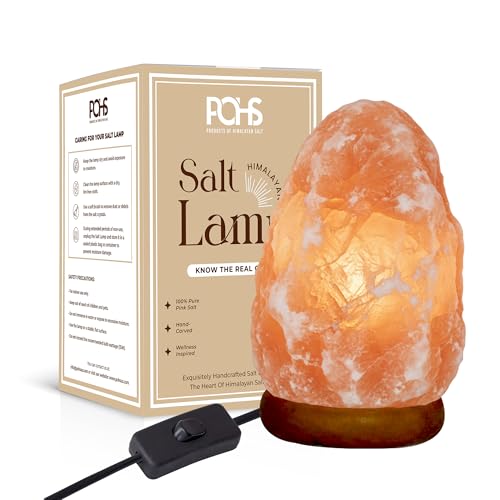
As an Amazon Associate we earn from qualifying purchases at no extra cost to you. Ratings are shown as listed on Amazon.
| Lamp size | Typical height | Typical weight | Common bulb | Best placement |
|---|---|---|---|---|
| Small | 6–8 in | 3–5 lb | 7–15 W incandescent | Bedside table, compact desk, shelf |
| Medium | 8–10 in | 6–9 lb | 15 W incandescent | Side table, dresser, reading-room accent |
| Large | 10–12 in | 10–15 lb | 15–25 W incandescent | Wide console or sturdy side table |
These are accent lights, not substitutes for task lighting. A larger crystal does not automatically make a brighter lamp: the bulb, crystal thickness, and how much light passes through the salt all matter. Check the maker’s maximum-wattage guidance rather than installing a stronger bulb to compensate for a dim-looking stone.
Choose by room and routine
| Your situation | A sensible choice | Why |
|---|---|---|
| Limited table space | 3–5 lb lamp with a compact, wide base | Provides a warm accent without taking over a nightstand or desk. |
| Want adjustable evening light | Medium lamp with an inline dimmer | Lets you lower the glow without moving the lamp or changing bulbs. |
| Prefer the simplest setup | Model with a standard replaceable bulb and on/off switch | Replacement bulbs are easier to source than proprietary light modules. |
| Have pets, children, or a busy household | Heavier lamp, broad base, protected cord placement | Reduces the chance of a bump tipping the crystal or pulling the lamp down. |
| Room is humid or lamp will be near a window | Place it elsewhere, or choose a dry indoor location | Salt absorbs moisture and can become damp or leave residue on the surface beneath it. |
What the crystal, bulb, and base tell you
Crystal appearance
Natural salt ranges from pale peach to deep orange-pink. A lighter, more translucent piece may look brighter at the same bulb wattage; a dense, dark crystal usually gives a more subdued glow. Rough surfaces emphasize the stone’s natural texture, while smoother carving tends to look more finished. Neither appearance guarantees better performance. If color consistency matters, look for product photos of the actual piece or buy from a seller with a clear variation and return policy.
Bulb and dimming
Many traditional lamps use a small incandescent bulb, commonly around 15 watts, with a socket and cord assembly inside the base. These bulbs create the familiar warm glow and can be replaced when they burn out. Some newer designs use LEDs. LEDs generally use less electricity and last longer, but color and dimmer compatibility vary; an LED may not work with an incandescent-style dimmer unless both are specified as compatible. Before buying, confirm the bulb type, socket, included spare bulbs, and whether the dimmer is built into the cord or absent.
A useful ownership estimate: a 15 W bulb left on for 8 hours a day uses 0.12 kWh daily (0.015 kW × 8 hours), or about 3.6 kWh in a 30-day month. Multiply that by your electricity rate to estimate monthly lighting cost. This calculation covers the bulb only, not any separate device.
Base and electrical safety
Wooden bases are common; check that the base sits flat and is wide enough for the crystal. A removable base makes bulb replacement easier, but it should still hold the stone securely. Prefer a cord with an intact plug, strain relief, and a properly fitted socket. Keep the lamp away from water, sinks, damp bathrooms, and places where the cord can be snagged. Follow the manufacturer’s instructions, do not exceed the stated bulb wattage, and unplug the lamp before changing a bulb or cleaning it.
Setup and care that prevent common problems
- Choose a dry, stable surface. Keep the lamp away from humidifiers, open windows, and drinks. Moisture can make salt sweat or dissolve, and dampness may mark wood or other surfaces.
- Use a protective coaster or tray. A waterproof, non-staining surface is especially useful on painted furniture, unfinished wood, or fabric-covered tables.
- Keep the bulb within its rating. A bulb that is too powerful may overheat the socket or cord. Use only the wattage and bulb type specified by the manufacturer.
- Dust gently and keep it dry. Unplug the lamp, let it cool, then wipe the crystal with a dry cloth. Avoid washing or soaking it; water can dissolve the salt.
- Check it after storage. In a damp room, salt can collect moisture even when switched off. Inspect the stone, base, cord, and nearby surface before plugging it in again.
The bulb is usually the first consumable to wear out. The crystal itself has no moving parts, but moisture, chips from a fall, a loose socket, or a frayed cord can end its useful life. If the cord or electrical assembly is damaged, stop using the lamp rather than attempting an improvised repair.
Where a salt lamp works best
For a bedroom, use a small or medium lamp on a clear nightstand, with the cord routed away from the bed. A desk lamp can add atmosphere, but it should not sit where it blocks work light or competes with a monitor. In a living room, a heavier model suits a sturdy side table or console; avoid narrow shelves and high-traffic edges. Skip damp locations, including bathrooms and laundry rooms, unless the manufacturer explicitly rates the lamp for that environment. Salt lamps are decorative lights, not proven treatments for air quality, sleep, or health conditions.
Bottom line
For a flexible all-purpose choice, look for a 6–9 lb natural crystal lamp with a stable wooden base, a replaceable bulb, and a compatible inline dimmer. Choose a compact 3–5 lb model when space and stability matter most, or a 10 lb-plus lamp when you have a broad, sturdy surface and want a larger visual feature. In every case, prioritize safe electrical components, a dry placement, and an easy-to-replace bulb over claims about brightness or special benefits.


Write Your Review
No reviews yet. Be the first to share your experience!