

Key takeaways
- Small bedroom nightstand: Choose a 20–24-inch lamp with a 5–7-inch base diameter and a 10–14-inch shade. A compact cylindrical or softly rounded base leaves space for a phone, book, and water glass.
- Large bedroom nightstand: A 24–28-inch lamp with a 7–9-inch base and a 14–18-inch shade gives better visual balance on a substantial bedside table.
- Compact living-room side table: Look for a 22–26-inch lamp, a base no wider than 8 inches, and a 12–16-inch shade. This supplies useful accent light without crowding the tabletop.
- Deep console or end table: A 27–32-inch lamp with a 9–12-inch base and an 18–22-inch shade can fill the vertical space more effectively.
- Rental or low-maintenance home: Select a ceramic lamp with a fully glazed surface, a fabric or paper shade that can be replaced, and a standard E26 socket.
- Reading beside a sofa: Prioritize a taller lamp and an opaque or lined shade that directs light downward. A three-way socket or compatible dimmable LED bulb is more useful than decorative shape alone.
Best Ceramic Table Lamps for Living Room & Bedroom
The best ceramic table lamps are sized to the furniture first: choose a lamp about 24–30 inches tall for most living-room side tables, 20–28 inches for nightstands, and a shade whose diameter is roughly twice the ceramic base’s widest point without extending far beyond the tabletop.
Quick picks by room and situation
- Small bedroom nightstand: Choose a 20–24-inch lamp with a 5–7-inch base diameter and a 10–14-inch shade. A compact cylindrical or softly rounded base leaves space for a phone, book, and water glass.
- Large bedroom nightstand: A 24–28-inch lamp with a 7–9-inch base and a 14–18-inch shade gives better visual balance on a substantial bedside table.
- Compact living-room side table: Look for a 22–26-inch lamp, a base no wider than 8 inches, and a 12–16-inch shade. This supplies useful accent light without crowding the tabletop.
- Deep console or end table: A 27–32-inch lamp with a 9–12-inch base and an 18–22-inch shade can fill the vertical space more effectively.
- Rental or low-maintenance home: Select a ceramic lamp with a fully glazed surface, a fabric or paper shade that can be replaced, and a standard E26 socket.
- Reading beside a sofa: Prioritize a taller lamp and an opaque or lined shade that directs light downward. A three-way socket or compatible dimmable LED bulb is more useful than decorative shape alone.
Size comparison: matching the lamp to the furniture
| Furniture | Recommended lamp height | Base diameter | Shade diameter | Useful bulb range |
|---|---|---|---|---|
| Small nightstand, 18–22 in. wide | 20–24 in. | 5–7 in. | 10–14 in. | 450–800 lumens |
| Standard nightstand, 22–28 in. wide | 24–28 in. | 7–9 in. | 14–18 in. | 600–1,100 lumens |
| Living-room end table, 20–26 in. wide | 22–27 in. | 6–9 in. | 12–17 in. | 800–1,200 lumens |
| Large side table or console, 28+ in. wide | 27–32 in. | 9–12 in. | 18–22 in. | 800–1,500 lumens |
These are starting points rather than rigid rules. The lamp should usually be at least two-thirds as tall as the table is wide, while the top of the shade should sit near eye level when you are seated. For a bedside lamp, measure from the mattress top rather than the floor. If the bottom of the shade is far above eye level, the exposed bulb can cause glare; if it is far below eye level, the lamp may illuminate the wall more than the reading area.
Our top picks
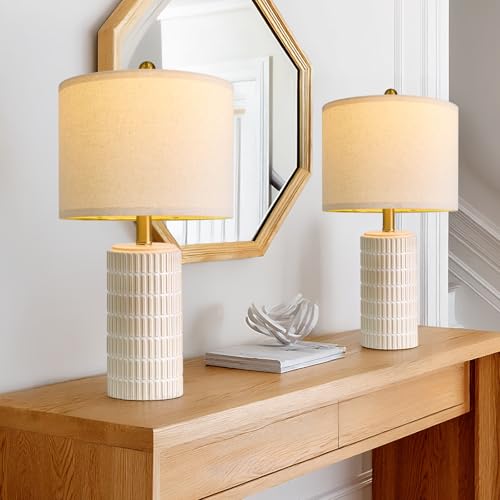
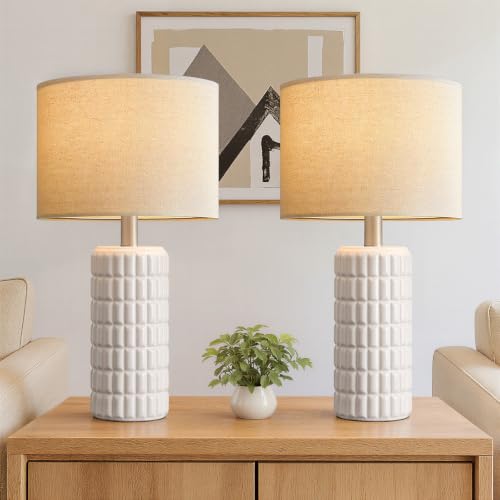


As an Amazon Associate we earn from qualifying purchases at no extra cost to you. Ratings are shown as listed on Amazon.
What makes a ceramic lamp durable?
Ceramic itself is hard and heat-resistant, but the glaze is the part you live with. A glossy glaze generally resists dust, fingerprints, and small liquid spills better than an unglazed or matte porous finish. Matte ceramic can look sophisticated, but it may show oily marks and can be harder to clean without creating streaks.
Inspect the base for an even glaze around the rim, feet, and cord exit. Small variations in handmade ceramic are normal; sharp exposed edges, unstable feet, hairline cracks, and a base that rocks on a flat surface are not desirable. A heavier base improves stability, particularly on a narrow table, but excessive weight can make moving or dusting the lamp awkward.
The most common wear points are usually not the ceramic body. Fabric shades collect dust, finials can loosen, cord insulation can become damaged by repeated bending, and socket switches may eventually feel rough or intermittent. A replaceable shade and a standard socket make the lamp easier to keep for many years.
Glaze and finish guide
| Finish | Strengths | Ownership considerations | Best placement |
|---|---|---|---|
| Glossy glazed ceramic | Easy to wipe; resists everyday marks | Reflects more light and may show fingerprints | Bedrooms, family rooms, busy homes |
| Matte glazed ceramic | Soft appearance; hides minor reflections | Can show oils and require gentle cleaning | Calm, low-traffic rooms |
| Unglazed or textured ceramic | Natural tactile finish; disguises small scratches | May absorb stains; avoid placing beside open drinks | Dry areas and carefully maintained surfaces |
| Hand-painted or reactive glaze | Distinctive variation and decorative character | Color variation is expected; harsh cleaners can dull the surface | Accent tables where appearance is the priority |
Bulb guidance: brightness, color, and heat
For a bedroom, a 450–800-lumen LED bulb is usually enough for ambient light or winding down. For a living-room lamp used beside a chair, 800–1,200 lumens is a more practical range. Choose around 2700K for warm, relaxed light; 3000K can look cleaner while remaining comfortable for general living spaces.
LED bulbs are the safest default because they use less energy and produce less heat than incandescent bulbs. Even so, follow the lamp’s maximum wattage and bulb-shape instructions. A bulb that is technically within the wattage limit can still be unsuitable if it touches the shade or traps heat inside a narrow ceramic neck.
Use an opaque shade for softer, less glaring light and a translucent fabric shade for broader room illumination. If you want reading light, look for a shade that allows light to escape downward rather than a fully lined shade that blocks most of the useful output. A dimmable LED requires both a dimmable bulb and a compatible dimmer; a three-way lamp requires a three-way bulb and socket.
A simple fit calculation before buying
Suppose your side table is 24 inches wide and 20 inches deep. A lamp with a 10-inch base leaves 7 inches of tabletop on each side, but a 20-inch shade would extend almost to the table edges. That may look balanced on a deep table but feel oversized on a narrow one.
For this table, a 7–8-inch base and a 14–16-inch shade is safer. The base uses about one-third of the table width, while the shade remains visually substantial without dominating the surface. If the table sits beside a sofa, also check the shade’s depth: a wide shade can interfere with the sofa arm or walking path even when the base fits.
Buying checklist for the best ceramic table lamps
- Measure the tabletop width, depth, and height from the floor or mattress.
- Check the total lamp height, including the shade and finial, rather than the ceramic base alone.
- Keep the base stable and proportionate; a very narrow base under a wide shade is more likely to look and feel top-heavy.
- Confirm the socket type, maximum wattage, bulb shape, and whether dimming is supported.
- Look for a sufficiently long cord, an intact plug, and a cord exit that does not force a sharp bend.
- Prefer a replaceable shade and readily available bulb type for easier long-term ownership.
- Choose a glaze suited to the room: wipeable glossy finishes for busy areas, textured finishes for drier and more decorative settings.
Cleaning and maintenance that prevent damage
Unplug the lamp before cleaning. Dust the shade with a soft brush or vacuum upholstery attachment, then wipe glazed ceramic with a barely damp microfiber cloth. Dry it immediately, especially around the socket and cord entry. Avoid abrasive pads, bleach, and soaking the base. For unglazed ceramic, test any cleaner on an inconspicuous area first because porous surfaces can darken or absorb residue.
Do not lift a lamp by its shade, and do not pull the plug out by the cord. Periodically check for wobbling, loose hardware, cracked ceramic, frayed insulation, or a switch that sparks or becomes unusually hot. If electrical components are damaged, stop using the lamp and have it assessed or replaced rather than attempting an improvised repair.
Final recommendation
For most homes, the strongest all-purpose choice is a 24–28-inch ceramic lamp with a 7–9-inch glazed base, a 14–18-inch fabric shade, a standard E26 socket, and a dimmable warm-white LED option. Downsize that formula for a crowded nightstand, or increase it for a deep console. The right proportions, a durable finish, and replaceable electrical and shade components matter more than an elaborate ceramic shape.

Write Your Review
No reviews yet. Be the first to share your experience!