

Key takeaways
- Polyester: Usually soft and available in plush, silky textures. It is a strong choice for bedrooms and moderate-use sitting rooms, but oily marks can be stubborn and fibers may compress in busy paths.
- Polypropylene: Practical and generally resistant to many everyday stains. It is often the sensible budget choice, although it can feel less velvety than dense polyester.
- Wool: Naturally resilient, warm, and premium-feeling. Wool rugs can shed during their early months, and they usually require more careful spot cleaning and a higher purchase budget.
- Acrylic or faux-fur blends: Very soft and decorative, but the surface can mat or show directional changes. Treat these as comfort-focused rugs for lower-traffic areas.
- Viscose and rayon blends: Glossy and soft, but often less forgiving around moisture and spills. They are better suited to carefully managed spaces than family rooms.
The best shag rugs combine a dense, comfortable pile with a backing that stays flat, and the right choice depends less on appearance than on how much shedding, vacuuming, and foot traffic your room can handle.
Our top picks
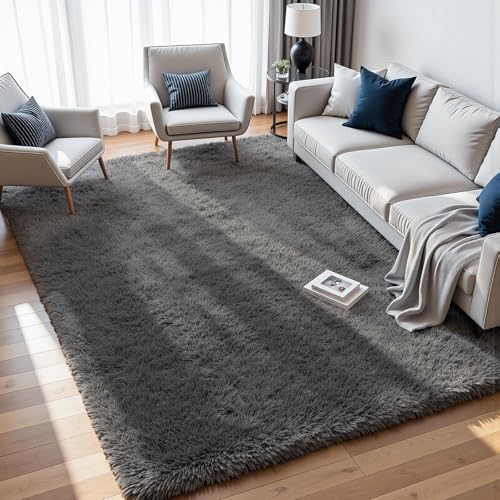


As an Amazon Associate we earn from qualifying purchases at no extra cost to you. Ratings are shown as listed on Amazon.
Quick picks: which shag rug suits your room?
| Shopping situation | Best shag type | Why it works | Typical trade-off |
|---|---|---|---|
| Bedroom or reading corner | Medium-pile polyester or microfiber shag, 1.25–1.75 inches | Soft underfoot without being difficult to vacuum | May show flattened traffic lanes over time |
| Low-budget living room | Polypropylene shag, about 1–1.5 inches | Resists everyday stains and usually costs less | Less silky than premium polyester or wool |
| Maximum softness | Dense polyester, faux-fur, or wool shag | Plush texture and a more luxurious appearance | More lint, compression, or cleaning effort |
| Frequent entertaining | Shorter shag or low-pile textured rug, under 1 inch | Chairs move more easily and crumbs are easier to remove | Not as cushiony as a deep shag |
| Large open-plan room | Large rectangular shag with a dense, stable backing | Defines the seating area and feels substantial | Heavier to move and more expensive to clean |
What to look for in the best shag rugs
Pile height: softness versus practicality
Pile height is the length of the visible fibers, and it is the first specification to compare. A shag under 1 inch is easier to clean and less likely to catch chair legs, while a 1.25- to 1.75-inch pile provides the familiar soft, sink-in feel without becoming exceptionally demanding. Anything around 2 inches or higher looks dramatic and feels very plush, but it can trap more dust, flatten under furniture, and make a standard vacuum difficult to use.
For a bedroom, deep pile can be worthwhile because traffic is usually lighter. In a living room, medium pile is often the better balance, especially if the rug sits beneath a coffee table and sofa. If you regularly pull dining chairs, desk chairs, or ottomans across the rug, choose a shorter pile.
Fiber: softness, shedding, and stain resistance
- Polyester: Usually soft and available in plush, silky textures. It is a strong choice for bedrooms and moderate-use sitting rooms, but oily marks can be stubborn and fibers may compress in busy paths.
- Polypropylene: Practical and generally resistant to many everyday stains. It is often the sensible budget choice, although it can feel less velvety than dense polyester.
- Wool: Naturally resilient, warm, and premium-feeling. Wool rugs can shed during their early months, and they usually require more careful spot cleaning and a higher purchase budget.
- Acrylic or faux-fur blends: Very soft and decorative, but the surface can mat or show directional changes. Treat these as comfort-focused rugs for lower-traffic areas.
- Viscose and rayon blends: Glossy and soft, but often less forgiving around moisture and spills. They are better suited to carefully managed spaces than family rooms.
Shedding is not the same as a rug falling apart. Wool and loosely spun fibers can release excess fibers at first, while synthetic rugs may shed loose strands from the manufacturing process. Frequent gentle vacuuming usually reduces this. Avoid pulling individual tufts; trim a loose strand level with the surface instead.
Best shag rug sizes for bedrooms and living rooms
A rug that is too small can make an otherwise comfortable room look disconnected. For a bedroom, a 5-by-8-foot rug commonly works beside or partly beneath a full or queen bed. An 8-by-10-foot rug gives more visible coverage around a queen bed and can extend beneath nightstands, depending on the room layout. For a king bed, an 8-by-10-foot rug may work at the foot and sides, while a 9-by-12-foot rug provides a more generous frame.
In a living room, a 5-by-8-foot rug generally suits a compact seating arrangement, but furniture may need to sit just outside its edges. A 6-by-9-foot rug can accommodate the front legs of a sofa and chairs. An 8-by-10-foot rug is a versatile choice for a larger seating group, and a 9-by-12-foot rug is preferable when the room allows most or all seating legs to rest on the rug.
A simple sizing calculation
Measure the seating footprint, then add at least 18 to 24 inches on each side where possible. For example, if a sofa-and-chairs arrangement occupies 96 inches by 72 inches, adding 18 inches on each side produces a target of approximately 132 by 108 inches, or 11 by 9 feet. The nearest common size would be 9 by 12 feet. This is more useful than choosing a rug from the coffee table’s dimensions alone.
Rug-pad needs: do not skip this step
A shag rug usually benefits from a rug pad, even when the backing feels substantial. A pad reduces sliding, protects flooring, improves the rug’s cushioning, and helps minimize ripples. Choose a pad made for the floor beneath it, and select a thickness that supports rather than overwhelms the pile. A thin, dense pad is often enough for a medium shag; a thick pad beneath a deep shag can make edges curl or create an unstable, overly soft surface.
For an 8-by-10-foot rug, the pad should normally be slightly smaller—roughly 7 feet 10 inches by 9 feet 10 inches—so it remains hidden. Do not fold excess pad under the rug. If a rug is placed over radiant-heated flooring, confirm that both the rug and pad are approved for that use.
Cleaning effort and ownership reality
Shag rugs look easygoing, but their long fibers hide crumbs and pet hair more effectively than flat rugs. Vacuum at least weekly in a bedroom and more often in a busy living room. Use a vacuum’s upholstery attachment, suction-only setting, or adjustable-height head when possible. A rotating brush can pull or tangle long fibers, particularly on loosely constructed shags.
- Shake or lift the rug outdoors when practical. This loosens dry grit before it is driven deeper into the backing.
- Vacuum the top slowly in two directions. Moving with and against the pile captures more debris than one quick pass.
- Vacuum the floor beneath it. Grit trapped between the rug and floor can abrade the backing and finish.
- Blot spills immediately. Press with a clean, absorbent cloth instead of rubbing, which can mat fibers and spread the stain.
- Check the care label before washing. Some small synthetic rugs are machine washable, but deep or oversized rugs often need professional cleaning or a specialist rug-cleaning service.
Never saturate a thick shag unless the manufacturer specifically permits it. Moisture can remain near the backing, leading to odor, dye transfer, or mildew-like problems. Dry-cleaning recommendations, colorfastness, and cleaning-agent compatibility vary by fiber, so test any solution on an inconspicuous area first.
Durability: what wears first?
On most shag rugs, the first visible change is compression rather than a hole. The areas beneath a sofa, in front of a bed, and along a walking route gradually become flatter. Rotate the rug 180 degrees every few months if the layout permits, and use furniture cups beneath heavy legs to distribute pressure. Avoid placing a wheeled office chair directly on deep shag; the wheels can crush the pile and catch in the backing.
Edges and corners are the next common trouble spots. A good rug pad helps, but a rug that arrives with persistent curling, exposed backing, or unstable seams may not be suitable for a high-traffic room. Keep cords, pet toys, and small objects out of the pile during vacuuming so they do not become caught in the fibers.
Which shag rug should you choose?
Choose a medium-pile synthetic shag if you want the best overall balance of softness, cost, and manageable cleaning. Choose polypropylene for a budget-conscious living room where occasional spills are likely. Choose wool when resilience, natural texture, and long-term appearance matter more than low maintenance. Choose deep faux-fur or high-pile polyester for a bedroom or quiet lounge where softness takes priority over easy vacuuming.
Before buying, confirm the exact dimensions, pile height, fiber content, backing type, care instructions, and whether the rug requires a pad. The best shag rugs are not necessarily the thickest ones; they are the ones whose softness matches the room’s traffic and whose maintenance you will actually keep up with.




Write Your Review
No reviews yet. Be the first to share your experience!