

Key takeaways
- Rectangular runners: best for galley kitchens and the long side of an island. They create a visual path and are usually easiest to wash or replace.
- Small rectangles: best in front of a sink, prep counter, or range. They are easier to reposition and less likely to interfere with appliances.
- Round rugs: useful in a breakfast nook or a square kitchen corner, but less efficient in narrow work zones because they leave unused floor at the sides.
- Contoured mats: can fit a curved peninsula, though their irregular edges are harder to secure and replace.
The best kitchen rugs are chosen by your floor plan first: use a washable runner for a galley kitchen, a compact mat at the sink, and a low-pile area rug only where cabinet doors and appliances can clear it safely.
Our top picks

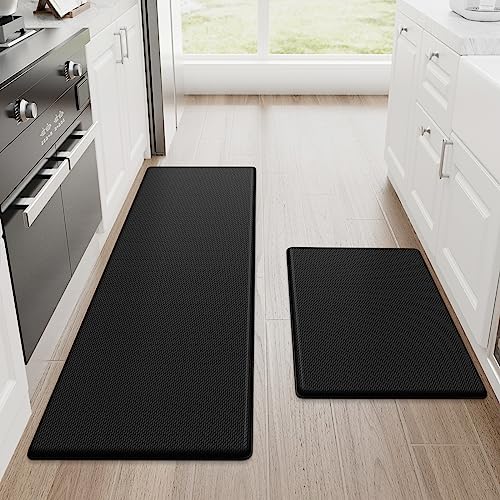

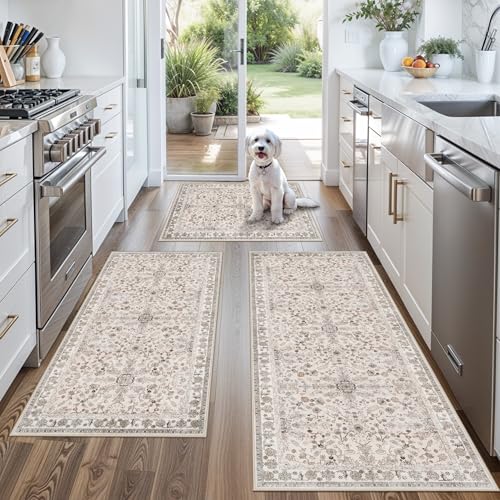
As an Amazon Associate we earn from qualifying purchases at no extra cost to you. Ratings are shown as listed on Amazon.
Quick picks by kitchen situation
| Kitchen situation | Best rug format | Useful size range | Prioritize |
|---|---|---|---|
| Galley kitchen | Runner | 2 to 3 feet wide by 6 to 10 feet long | Nonslip grip, washable surface, low pile |
| Single-wall kitchen | Sink mat or short runner | 2 by 3 feet or 2 by 5 feet | Cushioning, stain resistance, easy spot cleaning |
| Large L-shaped kitchen | Two coordinated runners or one small rectangle | 2 by 3 feet to 3 by 5 feet | Consistent thickness and secure edges |
| Open-plan kitchen | Low-pile area rug | 5 by 7 feet or 6 by 9 feet | Furniture-scale proportion and stain concealment |
| Island workspace | Runner along the working side | 2 to 3 feet wide; length 12 to 24 inches shorter than the island | Washability and clearance from stools |
How to match rug size to your layout
Measure the usable walking zone rather than the entire kitchen. Leave at least 3 inches between a rug and nearby cabinet toes, walls, or appliances so edges do not curl against them. In front of a sink or range, a 2-by-3-foot mat usually gives enough standing coverage without becoming a trip hazard.
For a runner, measure the longest unobstructed path and subtract 12 to 24 inches. For example, an 8-foot clear passage suits a runner about 6 to 7 feet long. A rug that runs tight against both ends tends to collect crumbs and makes cabinet access feel cramped.
Check every door swing before buying. The dishwasher is the most commonly overlooked obstruction: open it fully, then measure the vertical space beneath its door. A thick cushioned mat may prevent the dishwasher from opening or trap moisture underneath it.
Choose shapes according to traffic flow
- Rectangular runners: best for galley kitchens and the long side of an island. They create a visual path and are usually easiest to wash or replace.
- Small rectangles: best in front of a sink, prep counter, or range. They are easier to reposition and less likely to interfere with appliances.
- Round rugs: useful in a breakfast nook or a square kitchen corner, but less efficient in narrow work zones because they leave unused floor at the sides.
- Contoured mats: can fit a curved peninsula, though their irregular edges are harder to secure and replace.
Head-to-head: the features that matter most
| Feature | Thin woven rug | Washable layered rug | Anti-fatigue mat |
|---|---|---|---|
| Typical thickness | 0.15 to 0.3 inch | 0.2 to 0.5 inch | 0.5 to 1 inch |
| Standing comfort | Low to moderate | Moderate | High |
| Cabinet clearance | Usually easiest | Check carefully | Most likely to interfere |
| Typical cleaning | Vacuum and spot clean | Machine wash according to label | Wipe clean |
| Best stain strategy | Pattern and darker color | Removable washable cover | Closed-cell, nonabsorbent surface |
| Typical market range | $25 to $100 | $60 to $250 | $40 to $150 |
Stain resistance
For a kitchen, stain resistance is partly a material decision and partly a design decision. Polypropylene and polyester rugs generally resist everyday spills better than absorbent natural fibers, while flat woven cotton can be convenient to launder but may hold onto oily marks. Multicolored patterns, heathered yarns, and medium-dark backgrounds hide small splashes better than solid pale rugs.
Look for a low pile or flat weave. Long shag fibers catch flour, rice, pet hair, and food particles, making the rug harder to vacuum and more likely to retain moisture. “Stain-resistant” does not mean stain-proof: tomato sauce, cooking oil, and turmeric should still be blotted promptly rather than rubbed into the fibers.
Cushioning and fatigue
A soft rug can make dishwashing more pleasant, but plushness is not automatically better. Thick foam gives the most cushioning, yet it can create a lip at the edge, curl near heat, or block an appliance door. If comfort is the priority, place an anti-fatigue mat only at the main standing station and keep other walking areas flatter.
GelPro is a recognizable option in the anti-fatigue category, while washable layered rugs from brands such as Ruggable and Tumble emphasize removable or washable components. These categories solve different problems: an anti-fatigue mat maximizes support, whereas a washable rug prioritizes appearance and cleanup.
Nonslip backing
A rug that shifts underfoot is a poor kitchen rug regardless of its pattern. Rubber, latex, or textured thermoplastic backing can improve grip, but the backing must match the floor. Some rubber-backed products can mark or discolor certain vinyl, sealed wood, or resilient flooring over time, especially when moisture is trapped underneath.
Do not assume a nonslip backing eliminates maintenance. Sweep beneath the rug every week or two, and lift it after spills. Fine grit acts like sandpaper between the backing and floor, while dampness can cause odor or damage to vulnerable flooring.
Washability
Machine-washable is useful only when the size fits your machine. A 2-by-3-foot cotton mat may be manageable in a household washer; a thick 3-by-8-foot runner may be too heavy when wet. Always check whether the entire rug is washable or only a removable top layer.
Layered systems can be practical because the cover is easier to launder than a thick one-piece rug. Ruggable, for example, sells two-piece rug systems with a washable cover and separate pad. Their extra seam is also an ownership consideration: corners need to stay aligned, and the pad still needs occasional vacuuming and spot cleaning.
Best kitchen rugs by priority
Best for frequent spills: a washable low-pile runner
Choose a patterned polyester or polypropylene runner with a removable cover or a clearly stated machine-washable construction. This is the sensible choice for households that cook daily, have children, or want to clean the rug rather than protect it with constant caution. Keep the pile below about half an inch where cabinet and dishwasher clearance is tight.
Best for long periods of standing: a dedicated anti-fatigue mat
Use a 20-by-32-inch or 24-by-36-inch mat at the sink or main prep area. Choose a sealed, wipe-clean surface and beveled edges. Do not cover the entire kitchen with thick foam unless you have verified every door swing and accept that crumbs may collect around the perimeter.
Best for a rental or modest budget: a thin flat weave
A 2-by-3-foot or 2-by-5-foot polypropylene or cotton-blend rug typically offers the lowest initial cost and the easiest replacement. Add a compatible rug pad only if the floor manufacturer permits it. Thin rugs dry faster and are less likely to interfere with appliances, though they provide less cushioning.
Best for an open-plan kitchen: a low-pile area rug
In a kitchen that opens into a dining or living area, a 5-by-7-foot rug can define the zone, provided chairs and cabinet doors do not sit partly on unstable edges. Select a restrained pattern that connects with nearby upholstery or wood tones. A rug that is too small may look like a loose bath mat rather than an intentional part of the room.
Ownership realities: what wears out first
- Edges: Repeated vacuuming and foot traffic can fray binding before the center looks worn. Avoid aggressive brush rollers on delicate woven edges.
- Backing: Rubber and latex can harden, flake, or transfer marks over time. Inspect the underside every few months.
- Compression: Foam mats may develop a permanent standing impression at the sink. Rotate a movable mat when its shape allows.
- Color: Sunlight and frequent washing can fade dark dyes. A varied pattern usually ages more gracefully than a flat solid color.
- Moisture: Let both rug and floor dry completely after mopping. Trapped dampness is a bigger problem than an isolated spill.
A practical cleaning routine
- Blot liquid immediately with a clean towel; do not scrub outward and enlarge the mark.
- Remove dry crumbs with a vacuum or shake the rug outdoors when the care label permits.
- Spot-test detergent on an inconspicuous corner, particularly on dark or printed rugs.
- Wash only at the labeled temperature and avoid high heat unless the manufacturer allows it.
- Dry the rug completely before returning it to the floor, and clean beneath it at the same time.
The most balanced choice for many homes is a low-pile washable runner with a reliable nonslip base, sized 12 to 24 inches shorter than the clear work zone. Choose a dedicated anti-fatigue mat instead when standing comfort matters more than a decorative look, and always treat dishwasher clearance and backing compatibility as nonnegotiable checks.






Write Your Review
No reviews yet. Be the first to share your experience!