

Key takeaways
- Blankets and quilts: A wood or plywood chest offers a stable, finished look. Look for interior depth that accommodates folded bedding without compressing it against the lid. For wool or other natural fibers, prioritize a dry, clean interior and some air exchange rather than a tightly sealed container.
- Toys: A fabric-covered bench is light enough to move and often has a cushioned top. Check whether the lid is removable or has a slow-close hinge, and avoid relying on it as a seat unless the maker specifies a seating weight limit.
- Clothing: Choose a smooth-lined trunk with rounded or covered hardware so fabric is less likely to snag. Ventilation helps limit stale odors, but store clothes only when fully clean and dry.
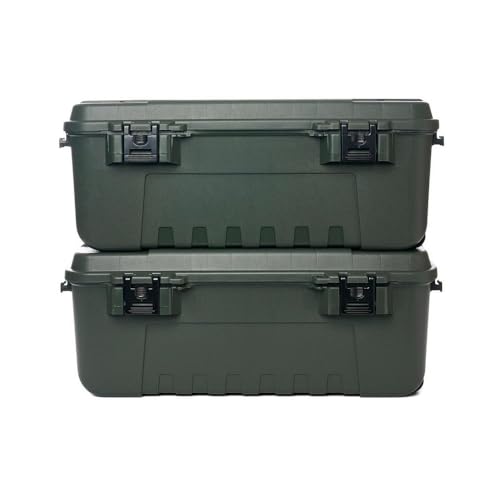
- Seasonal items: Plastic is practical where dust or occasional splashes are a concern. Check for ventilation holes: airflow can help prevent mustiness, but a ventilated trunk is not airtight or waterproof. For dry storage, use sealed garment or storage bags inside it.
Best Storage Trunks for Stylish Organization
The best storage trunk for most homes is a ventilated, lidded model sized to what you’ll store: choose solid wood or plywood for a furniture-like blanket chest, a fabric-covered frame for lightweight toys and clothing, or a lidded plastic trunk for damp-prone spaces and seasonal gear. Before buying, compare usable interior dimensions, ventilation, lid hardware, and the manufacturer’s load limits—especially if anyone might sit on the lid.
Compare trunk types before you choose
Capacities below are approximate estimates calculated from representative interior dimensions, not guarantees of usable space. Hinges, supports, liners, and tapered walls can reduce room. Confirm the exact dimensions and weight limits on the product’s specification sheet.
Our top picks



As an Amazon Associate we earn from qualifying purchases at no extra cost to you. Ratings are shown as listed on Amazon.
| Trunk type | Representative interior size | Approx. capacity | Typical empty weight | Best suited to |
|---|---|---|---|---|
| Solid wood or plywood chest | 36 × 18 × 18 in | 6.75 cu ft | 30–60 lb | Blankets, living-room storage, everyday furniture |
| Fabric-covered storage bench | 30 × 15 × 15 in | 3.9 cu ft | 10–25 lb | Toys, folded clothing, entryway storage |
| Rigid plastic trunk | 30 × 16 × 14 in | 3.9 cu ft | 8–20 lb | Seasonal items, utility rooms, garages |
| Woven rattan or wicker trunk | 30 × 16 × 16 in | 4.4 cu ft | 12–30 lb | Light linens and decorative living-room storage |
Capacity uses length × width × height ÷ 1,728. For example, 36 × 18 × 18 inches gives 11,664 cubic inches, or 6.75 cubic feet. That figure is a sizing aid, not a promise that bulky quilts will pack efficiently.
Pick by what you need to store
- Blankets and quilts: A wood or plywood chest offers a stable, finished look. Look for interior depth that accommodates folded bedding without compressing it against the lid. For wool or other natural fibers, prioritize a dry, clean interior and some air exchange rather than a tightly sealed container.
- Toys: A fabric-covered bench is light enough to move and often has a cushioned top. Check whether the lid is removable or has a slow-close hinge, and avoid relying on it as a seat unless the maker specifies a seating weight limit.
- Clothing: Choose a smooth-lined trunk with rounded or covered hardware so fabric is less likely to snag. Ventilation helps limit stale odors, but store clothes only when fully clean and dry.
- Seasonal items: Plastic is practical where dust or occasional splashes are a concern. Check for ventilation holes: airflow can help prevent mustiness, but a ventilated trunk is not airtight or waterproof. For dry storage, use sealed garment or storage bags inside it.
Materials, ventilation, and hardware: what matters in daily use
Wood and plywood
Wooden trunks are generally the most furniture-like choice and can handle frequent use when well constructed. They are also heavy, and finishes can scratch or water-mark. Inspect corners, the bottom panel, and the way the lid attaches; a thin base may be the weak point even when the exterior looks substantial. Do not assume a wood chest is safe to sit on or stand on.
Fabric, plastic, and woven construction
Fabric-covered trunks are easy to reposition but may sag if their frame or bottom panel is lightly built. They suit soft, lightweight contents better than dense books or tools. Plastic trunks are easy to wipe clean, though lids and latches can crack under rough handling or heavy loads. Woven trunks provide texture and airflow, but gaps can catch delicate fabrics and allow dust through; a removable liner makes them more versatile.
Ventilation and lid support
Ventilation is useful for textiles that may otherwise sit undisturbed for months, but it does not replace dry storage or cleaning. A trunk placed against a damp wall or filled with slightly damp towels can still develop odors. For frequent access, look for sturdy hinges and a lid stay that holds the lid open. A slow-close mechanism can reduce sudden slamming, but it is not a substitute for supervising children around a heavy lid.
Check capacity and load limits before ordering
Measure the place where the trunk will sit, including clearance for the lid to open. Then measure the largest item you plan to store. A chest can have enough cubic feet on paper yet still be too shallow for a folded comforter or too narrow for a large toy.
Separate three different limits in the product specifications:
- Interior capacity: The available storage volume; it says nothing about how much weight the base can support.
- Storage load: The maximum weight the trunk is designed to hold inside. Follow the stated limit and distribute heavy contents across the base.
- Seat or lid capacity: The supported weight when someone sits on the closed trunk. If no seating limit is stated, treat it as storage furniture, not a bench.
For example, a trunk with a 50-pound storage limit should not be filled with a 70-pound stack of books just because it has spare volume. Dense items can stress the floor panel and joints far more than lightweight bedding.
Choose by room, frequency, and budget
| Your situation | Best fit | What to prioritize |
|---|---|---|
| Daily access in a living room | Wood or well-framed fabric bench | Reliable hinges, accessible lid, finish that suits the room |
| Children’s toys and frequent opening | Lightweight fabric trunk or child-appropriate bench | Stable construction, controlled lid movement, smooth edges |
| Low-cost, occasional seasonal storage | Rigid plastic trunk | Secure latches, stackability if needed, easy-clean surface |
| Decorative storage for light linens | Woven trunk with liner | Tight weave, removable washable liner, sturdy bottom |
| Small room or narrow hallway | Compact bench or trunk with a modest footprint | Outer dimensions, lid clearance, handles that do not snag nearby walls |
As a general market guide, simple fabric or plastic trunks often fall around $20–$80, woven or more substantial storage benches around $50–$200, and larger finished wood chests around $150–$500 or more. Size, materials, finish, and hardware account for much of the variation; compare specifications rather than treating price as a load-rating indicator.
Ownership details that help a trunk last
Dust hinges and latches, tighten loose fasteners when the maker permits it, and wipe spills promptly. Use a dry or lightly damp cloth on finished wood, and follow the finish-care instructions rather than applying polish by default. Vacuum fabric and removable liners; check care labels before washing. Clean plastic with mild soap and water, then dry it before storing textiles.
Common causes of early wear are overloading the base, dragging a heavy trunk by its lid, forcing a hinge past its travel, and storing damp items. Keep heavy contents low and spread out, use built-in handles to move the trunk, and leave enough clearance for the lid to open without hitting a wall.
Bottom line
For a visible, frequently used blanket chest, choose a solid wood or plywood trunk with dependable hinges and clearly stated load limits. For lightweight toys and clothing, a framed fabric bench is easier to move; for utility spaces and seasonal gear, a rigid plastic trunk is simpler to clean. Match the interior dimensions to your bulkiest item, and treat ventilation, storage capacity, and seating strength as separate considerations.



Write Your Review
No reviews yet. Be the first to share your experience!