

Key takeaways
- Chill, but don’t over-chill. Cold temperatures sharpen refreshment but can mute aroma. If a beer tastes bland straight from the fridge, let it warm for a few minutes before deciding.
- Use a clean glass. Grease and detergent residue can flatten the head. Rinse thoroughly, and avoid serving in a glass that has held oily food.
- Pour to suit the style. A gentle pour preserves more carbonation in a crisp lager; a more deliberate pour can build the head expected in a stout. Follow any can-specific directions.
- Check the date and keep it cool. Hop aromas can fade, and heat speeds flavor changes. Store cans and bottles in a cool, dark place, and follow the producer’s date guidance.
Best Tasting Non-Alcoholic Beers to Try in 2026
The best-tasting non-alcoholic beers depend on the flavor you want: Athletic Brewing Run Wild suits fans of crisp, hop-forward pale ales; Guinness 0.0 brings a dark, roasty stout profile; and Heineken 0.0 offers a familiar, lightly bitter lager. Compare bitterness, carbonation, brewing style, and food pairing—not just the alcohol-free label—to find one you’ll want to drink with a meal.
Quick comparison: choose by flavor
The figures below are practical comparison points, not lab tests. ABV and can size can vary by market, so check the package where you shop. The bitterness descriptions are relative tasting guidance; brands do not consistently publish comparable IBU figures for these beers.
Our top picks



As an Amazon Associate we earn from qualifying purchases at no extra cost to you. Ratings are shown as listed on Amazon.
| Beer | Style and flavor | Bitterness and carbonation | Typical package | Good with |
|---|---|---|---|---|
| Athletic Brewing Run Wild | Non-alcoholic IPA; citrus, pine, and grain | Medium-high bitterness; lively fizz | 12 fl oz (355 mL) can; under 0.5% ABV | Burgers, tacos, sharp cheddar |
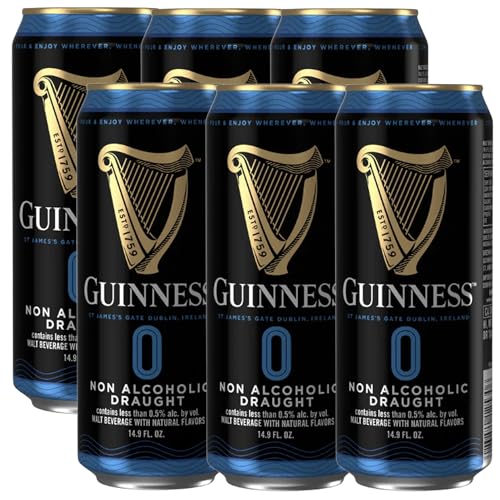
| Guinness 0.0 | Non-alcoholic stout; roasted malt, coffee, and cocoa notes | Low-medium bitterness; creamy, fine bubbles | 14.9 fl oz (440 mL) can; 0.0% ABV | Mushroom dishes, stew, chocolate desserts |
| Heineken 0.0 | Non-alcoholic pale lager; grainy malt and light herbal hops | Low-medium bitterness; crisp, brisk fizz | 11.2 fl oz (330 mL) bottle; 0.0% ABV | Pizza, fries, grilled chicken |
| Clausthaler Original | Non-alcoholic lager; biscuit-like malt and gentle hops | Low bitterness; moderate carbonation | 11.2 fl oz (330 mL) bottle; under 0.5% ABV | Sausages, pretzels, mild cheeses |
| Brooklyn Brewery Special Effects | Non-alcoholic hoppy lager; citrus and toasted grain | Medium bitterness; bright carbonation | 12 fl oz (355 mL) can; under 0.5% ABV | Spicy noodles, barbecue, fried food |
| Guinness Draught (alcoholic reference) | Stout; roasted barley, coffee, and cocoa notes | Low-medium bitterness; creamy nitrogen-style pour | 14.9 fl oz (440 mL) can; contains alcohol | Stew, oysters, chocolate desserts |
For products labeled non-alcoholic, ABV rules differ by country, and “0.0%” and “under 0.5%” are not interchangeable. If avoiding every trace of alcohol matters, check the specific package and local labeling rules.
Which beer fits your palate?
For hop aroma and a drier finish: Athletic Brewing Run Wild
Run Wild is a useful starting point if you like American pale ales but want a non-alcoholic option. Citrus and pine-like hop character lead, with enough malt to keep the beer from tasting like hop-flavored sparkling water. Its bitterness is more noticeable than in the lager choices here, and its lively carbonation helps cut through rich, salty food.
Pair it with a burger, grilled vegetables, or tacos with lime. If you’re sensitive to bitterness, try it cold with a meal rather than sipping it alone; food can make the hop edge feel less sharp. Athletic describes its beers as brewed without alcohol, but its standard labeling is under 0.5% ABV, so verify the current can if that distinction matters.
For roasted depth and a softer pour: Guinness 0.0
Guinness 0.0 is the pick for drinkers who want a dark beer rather than a pale lager substitute. Roasted malt brings coffee and cocoa-like notes, while the creamy texture and fine bubbles create a rounder impression than the brisk fizz of a conventional lager. It works especially well with savory dishes, where its roast character complements browned or earthy flavors.
Serve it with mushroom pie, beef stew, or a chocolate dessert. Follow the can’s pouring instructions if it uses a widget; pouring too quickly or into a narrow glass can make the foam less satisfying. The 0.0% designation is distinct from beers labeled under 0.5%.
For a familiar, easy-drinking lager: Heineken 0.0
Heineken 0.0 favors balance over boldness. Expect light malt, a restrained herbal hop note, and crisp carbonation—not the resinous intensity of an IPA or the richness of a stout. That approachable profile makes it an easy choice for a cookout or a casual meal where the beer should refresh rather than dominate.
Try it with pizza, fries, or grilled chicken. A cold bottle emphasizes the crispness; as it warms, the grain and hop notes become easier to notice. Like Guinness 0.0, it is labeled 0.0% ABV.
For malt-first flavor: Clausthaler Original
Clausthaler Original is worth considering if you find hop-forward alcohol-free beers too bitter. Its lager profile leans toward grain, biscuit, and gentle hops, with moderate carbonation rather than an aggressive sparkle. It is less aromatic than an IPA, but that restraint suits simple meals and snacks.
Pair it with pretzels, sausages, or mild cheese. Its label commonly indicates less than 0.5% ABV; check the bottle for the market-specific figure.
For a zippy middle ground: Brooklyn Brewery Special Effects
Special Effects sits between a mild lager and an IPA: hoppy enough to bring citrus and a little bite, but generally less forceful than a full-strength, intensely bitter IPA. Toasted grain gives the hops some balance. This makes it a good option when one person at the table wants a lager and another wants more aroma.
Try it with barbecue, fried food, or spicy noodles. Carbonation helps lift oily or salty flavors, while the hop character can stand up to stronger seasoning.
What brewing style changes in the glass
Alcohol-free beer makers typically use one of two broad approaches: limit alcohol formation during fermentation, or brew a conventional beer and remove much of the alcohol afterward. Methods and recipes vary by producer, and the process alone does not tell you whether a beer will taste good. Malt selection, hops, yeast, and carbonation matter too.
Alcohol contributes body and carries aroma, so removing or limiting it can leave a beer feeling thinner than its alcoholic counterpart. Brewers may adjust the recipe to compensate. That is why two beers called “lager” can differ substantially: one may taste grainy and crisp, another sweeter, more aromatic, or more bitter. Read the style description and ingredient list, then choose based on the flavors you enjoy rather than expecting an exact copy of a familiar alcoholic beer.
Match the choice to the occasion
| Your situation | A good place to start | Why |
|---|---|---|
| You like IPA bitterness | Athletic Brewing Run Wild | More pronounced hop character and a dry, lively finish |
| You want dark, roasted flavors | Guinness 0.0 | Stout-like roast notes and a creamy texture |
| You’re serving a mixed crowd | Heineken 0.0 | A familiar, restrained lager profile |
| You dislike strong bitterness | Clausthaler Original | Malt-forward flavor with gentler hops |
| You want hops without a full IPA punch | Brooklyn Brewery Special Effects | A middle-ground blend of citrusy hops and toasted grain |
Serving and storage tips that make a difference
- Chill, but don’t over-chill. Cold temperatures sharpen refreshment but can mute aroma. If a beer tastes bland straight from the fridge, let it warm for a few minutes before deciding.
- Use a clean glass. Grease and detergent residue can flatten the head. Rinse thoroughly, and avoid serving in a glass that has held oily food.
- Pour to suit the style. A gentle pour preserves more carbonation in a crisp lager; a more deliberate pour can build the head expected in a stout. Follow any can-specific directions.
- Check the date and keep it cool. Hop aromas can fade, and heat speeds flavor changes. Store cans and bottles in a cool, dark place, and follow the producer’s date guidance.
Bottom line
For the most hop-forward option in this selection, start with Athletic Brewing Run Wild. Choose Guinness 0.0 for roast and creaminess, Heineken 0.0 for an uncomplicated lager, Clausthaler Original for softer malt flavor, or Brooklyn Brewery Special Effects for a more aromatic middle ground. The most satisfying pick is the one whose bitterness, fizz, and malt character suit both your palate and the food on the table.




Write Your Review
No reviews yet. Be the first to share your experience!