

Key takeaways
- Choose manual soap-and-water cleaning when compatibility, cost, and thorough residue removal matter most. Choose UV-C when you want short, water-free treatment for small hard accessories and accept its limited hose coverage. Choose an ozone cleaner only when your specific CPAP system permits it and you…
The best CPAP cleaner for most people is a simple soap-and-water routine, while an automated cleaner makes sense only if you want a repeatable maintenance aid and your CPAP manufacturer permits that cleaning method.
Our top picks


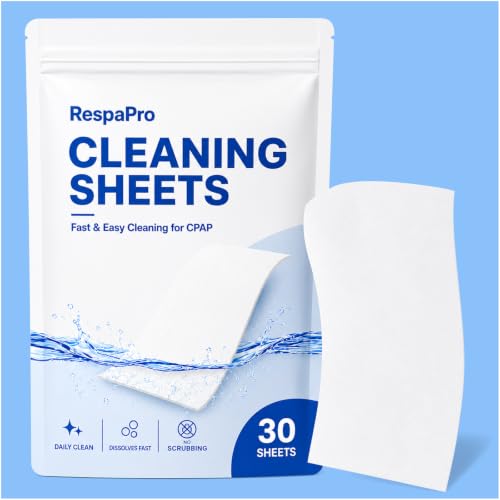
As an Amazon Associate we earn from qualifying purchases at no extra cost to you. Ratings are shown as listed on Amazon.
Best CPAP cleaners at a glance
| Cleaner or method | Sanitizing method | Typical cycle time | Water needed | Best fit | Important limitation |
|---|---|---|---|---|---|
| Soap and lukewarm water | Manual washing | 5–10 minutes, plus air-drying | Yes | Lowest cost and universal compatibility | Requires regular hands-on cleaning |
| SoClean 3 | Activated oxygen (ozone) | About 7 minutes, followed by an airing period | No | Users seeking an automated, enclosed cycle | Requires an adapter for some CPAP systems and may conflict with manufacturer guidance |
| Sleep8 | Activated oxygen (ozone) | Approximately 60 minutes, depending on the selected program | No | People who want a portable rechargeable design | Replacement filters and compatible masks or adapters may be required |
| VirtuCLEAN 2.0 | Activated oxygen (ozone) | About 30 minutes, plus airing time | No | Users who prefer a compact automated cycle | Not a substitute for washing dirt, oils, or mineral deposits away |
| Lumin | UV-C light | About 5 minutes per cycle | No | Hard accessories that fit inside a UV chamber | Cannot treat the inside of a CPAP hose effectively and requires an electrical outlet |
Cycle times and accessory requirements can vary by model, adapter, and firmware. Check the current manufacturer specifications before purchasing, particularly for mask materials, heated tubing, and water chambers.
How the main CPAP cleaning methods compare
Manual cleaning: the safest compatibility choice
Manual cleaning uses warm, not hot, water and a small amount of mild, fragrance-free dish soap. Wash the mask cushion, tubing, water chamber, and detachable headgear according to the equipment manufacturer’s instructions. Rinse thoroughly and allow everything to air-dry away from direct sunlight.
This method removes skin oil, dust, dried moisture, and other residue instead of merely treating a surface. It also costs very little: a bottle of mild soap may last for months. The trade-off is time and consistency. If you clean a mask every day, hose and water chamber weekly, and replace parts on schedule, the routine may be more practical than buying an automated device.
Ozone cleaners: fast, enclosed, and more complicated
Ozone cleaners use activated oxygen in a sealed bag or chamber. They generally need no water and can treat a connected mask, hose, and selected CPAP accessories. The machine may finish its active cycle quickly, but the equipment usually needs additional time to air out before use. Ozone’s smell can linger, particularly in silicone components.
Ozone cleaners also raise the most compatibility questions. ResMed, Philips, and other CPAP manufacturers have published warnings or restrictions concerning unauthorized ozone use on some equipment. Potential concerns include residual ozone, material aging, corrosion, and warranty coverage. Never assume that a cleaner is approved merely because an adapter fits. Check the CPAP, mask, and cleaner manufacturers’ current instructions.
UV-C cleaners: short cycles with a smaller treatment area
UV-C devices expose items to ultraviolet light inside a closed chamber. The short cycle is convenient, and there is no ozone residue or water to empty. A product such as Lumin is designed around a chamber for items such as masks, water chambers, and small accessories.
UV-C has an important physical limitation: light must reach the surface. It does not reliably treat the shaded interior of an opaque hose, narrow connector, or folded mask seal. A UV cleaner therefore works best as an accessory treatment for items that have already been washed and dried, not as a replacement for rinsing the inside of tubing.
Best CPAP cleaner by situation
| Your situation | Most sensible choice | Why |
|---|---|---|
| Lowest budget | Manual soap-and-water cleaning | No appliance, adapters, filters, or replacement cartridges |
| First-time CPAP user | Manual cleaning first | It teaches the care routine and avoids compatibility problems while you learn the equipment |
| Very limited counter space | Small ozone unit, only if approved | Usually takes less space than a larger UV chamber, but requires careful airing and storage |
| Several accessories at once | Large UV chamber or compatible ozone system | Check internal dimensions rather than relying on the advertised cycle time |
| Frequent travel | Portable rechargeable ozone cleaner or manual cleaning | A battery-powered unit can avoid a daily outlet search; manual cleaning remains the lightest option |
| Heated tubing or a water chamber | Manufacturer-approved manual care | Heat-sensitive electronics and seals need specific instructions |
What to check before buying
1. Compatibility with the complete system
Identify the exact CPAP machine, mask, hose, humidifier chamber, and any heated tubing. Some cleaners connect through the CPAP air outlet; others treat parts separately. A universal-looking hose connector may not protect an internal blower, and a chamber may be too large for a UV cabinet.
2. The real time commitment
Compare the complete process, not just the active cycle. For example, a seven-minute ozone cycle may require another two hours of airing. A five-minute UV cycle may need several separate loads because the chamber cannot hold a long hose. Manual cleaning may take eight minutes but leave the equipment drying overnight.
3. Consumables and ownership cost
Ozone devices can need replacement filters, cartridges, seals, bags, or adapters. UV devices may have a finite lamp or LED module life, although the replacement interval varies. A useful calculation is:
Annual operating cost = consumables used per year × cost per consumable.
Suppose an ozone unit uses two replacement filters annually at a general market cost of $15–$30 each. That adds roughly $30–$60 per year before considering the appliance purchase price. By comparison, manual cleaning may use only a fraction of a bottle of mild soap. The automated machine is paying for convenience, not necessarily saving money.
4. Noise and placement
Small pumps and fans can make an automated cleaner audible in a bedroom or office. Place it on a stable, ventilated surface rather than inside a closed cabinet. Ozone models should be used in accordance with their ventilation instructions, and neither type should be operated where children or pets can open the treatment compartment.
A practical cleaning routine that avoids common mistakes
- Disconnect the equipment. Remove the mask, hose, water chamber, and any detachable accessories. Do not immerse electrical components or the CPAP machine.
- Wash away residue first. Use mild soap and lukewarm water. Automated cleaners are not good at removing oily film, visible dust, or mineral scale.
- Rinse completely. Soap left in the mask cushion or tubing can cause odor and irritation.
- Dry fully. Hang the hose or place components where air can circulate. Reassembling damp parts encourages lingering moisture.
- Use an automated cleaner only as directed. Observe its load limits, adapter instructions, cycle duration, and required airing period.
- Inspect before reassembly. Look for cloudy plastic, stretched seals, cracks, discoloration, or a mask cushion that no longer seals normally.
Do not use bleach, alcohol, essential oils, scented detergents, boiling water, or household disinfectants unless the equipment manufacturer specifically permits them. These substances can damage silicone, plastics, coatings, or internal components.
Durability and replacement realities
The parts that commonly wear first are mask cushions, headgear, hose ends, swivel connectors, water-chamber seals, and small filter media. Automated cleaning does not stop silicone from losing elasticity or prevent mineral deposits from forming in a humidifier chamber. It can also make a deteriorating part easier to overlook because the routine feels automated.
Keep the original care schedule for your CPAP equipment even if you buy a cleaner. Replace damaged or degraded parts according to the manufacturer’s guidance, and contact the equipment provider or a qualified clinician if you notice persistent odor, skin irritation, unusual airflow, or equipment alarms.
Bottom line
Choose manual soap-and-water cleaning when compatibility, cost, and thorough residue removal matter most. Choose UV-C when you want short, water-free treatment for small hard accessories and accept its limited hose coverage. Choose an ozone cleaner only when your specific CPAP system permits it and you are willing to manage adapters, filters, residual odor, and airing time. The best CPAP cleaner is the one that fits your equipment and makes the correct cleaning routine easier rather than replacing it.





Write Your Review
No reviews yet. Be the first to share your experience!