

Key takeaways
- Inspect the rim first. The rim and handle attachments usually show wear before the basket body. Avoid sharp ends, loose stitching, or exposed wire.
- Use a liner for oily foods. Buttered rolls and pastry leave stains that are difficult to remove from natural fibers.
- Do not overload by height. A basket rated visually for 12 rolls may hold only 8 comfortably if the rolls are large or still warm.
- Rotate liners. If the set includes two baskets but only one liner, buying a second washable liner can make frequent use more convenient.
- Store dry and uncovered. Closed cupboards can trap residual moisture in cotton and natural grass.
- Keep baskets away from candles and stovetops. Dry plant fibers and cotton are combustible materials.
Best Bread Basket Set for Dining Table: Woven & Linen Picks
The best bread basket set for dining table use is usually a medium, 10–12-inch seagrass or cotton-rope basket with a washable linen liner: it holds a standard loaf or 8–12 dinner rolls without crowding, fits most table settings, and is easier to maintain than a deep decorative basket.
The right choice changes with what you serve. Seagrass is the best value for a rustic table and occasional rolls, cotton rope is softer and more washable for frequent family use, while a linen-lined basket gives sliced bread the neatest presentation and makes crumbs easier to manage. Before buying a set, compare usable dimensions rather than the outside diameter alone.
Our top picks
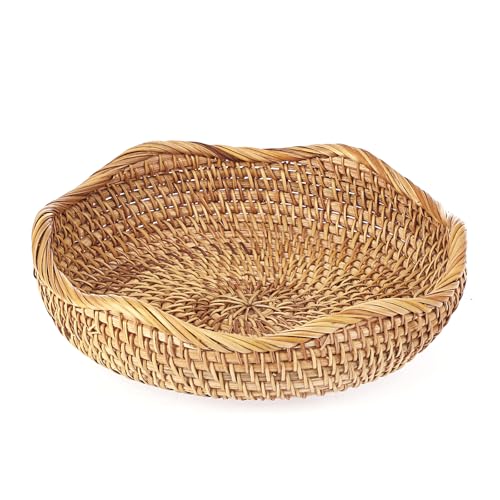

As an Amazon Associate we earn from qualifying purchases at no extra cost to you. Ratings are shown as listed on Amazon.
Quick comparison: seagrass, cotton rope, and linen-lined baskets
| Basket type | Typical size | Approximate capacity | Best for | Cleaning | Heat and moisture behavior |
|---|---|---|---|---|---|
| Seagrass, open weave | 10–12 in. diameter; 3–5 in. high | 8–12 rolls or one small round loaf | Rustic tables, entertaining, low-cost sets | Dry brushing and spot cleaning; do not soak | Breathes well, but offers little insulation |
| Cotton rope, soft-sided | 10–14 in. diameter; 3–6 in. high | 10–16 rolls or several sliced pieces | Families, frequent use, casual dining | Often machine washable on a gentle cycle; check label | Moderate insulation; can retain dampness if packed tightly |
| Linen-lined woven basket | 10–12 in. diameter; 3–5 in. high | 8–12 rolls or half a sliced loaf | Formal place settings and crumb control | Remove liner and wash separately; basket is usually spot-clean only | Liner reduces direct drafts but is not a thermal container |
| Large rectangular basket | 12–16 in. long; 7–10 in. wide | One full sliced loaf or 16–20 rolls | Buffets, large households, family-style meals | Depends on material and removable liner | Good access, but takes more table space |
These figures describe common basket dimensions, not a guarantee for every set. Thick rims, tapered walls, handles, and a padded liner can reduce the usable interior by 1–2 inches.
Which material is the better match?
Choose seagrass for ventilation and value
Seagrass baskets have a firm structure and visible texture that suits farmhouse, coastal, and natural wood decor. Their open weave allows steam to escape from warm rolls, reducing the chance of a damp underside. That ventilation is useful when bread goes from oven to table, although the basket should not be used as a hot pan holder.
The trade-off is maintenance. Seagrass can shed small fibers, absorb food oils, and develop a musty odor if soaked or stored while damp. Use a dry pastry brush or vacuum crevice attachment for crumbs, then wipe stains with a barely damp cloth and mild soap. Let the basket dry completely in an airy place.
Choose cotton rope for frequent family meals
Cotton rope baskets are softer against a dining table and less likely to scratch a wood or glass surface. They can also be folded or reshaped more easily than rigid seagrass. A removable cotton liner or a fully washable rope construction is especially practical when the basket holds buttered rolls, children’s snacks, or bread with a loose crumb.
Cotton is more absorbent than seagrass. Do not close a basket around very hot bread, and avoid storing bread in it overnight unless the basket is completely dry. A damp liner can make the crust soften and may encourage odors. Wash according to the care label, use a low-spin or gentle setting where permitted, and reshape the basket while damp.
Choose a linen-lined basket for presentation and sliced bread
A linen-lined basket creates a clean border around sliced bread and keeps small crumbs from falling directly through an open weave. It is the most polished option for a dining room table, holiday meal, or buffet. The liner can also be folded over the bread to reduce exposure to drafts during a meal.
However, linen is not a substitute for a bread-storage bag. It slows drying and protects the surface, but it does not seal in moisture. For sliced bread, select a liner deep enough to cover at least two-thirds of the interior without dragging across the slices. A liner that is too shallow slips down and leaves bread touching the basket.
Size and shape: measure the table before the basket
For most four-person dining tables, a round basket measuring 10–12 inches across is the easiest fit. It leaves room for plates, serving dishes, and glasses while holding a typical batch of dinner rolls. A 14-inch round basket is more generous but can compete with the centerpiece.
Rectangular baskets make better use of a narrow table or buffet. A basket about 14 inches long and 8 inches wide can hold sliced bread in a single layer, whereas a round basket often forces slices to overlap or stand upright. For a table narrower than 36 inches, keep the basket’s longest dimension under roughly one-third of the table width so guests can still reach across it.
Low-sided baskets, around 2.5–3.5 inches high, make rolls easy to reach and look less bulky. Deeper baskets, around 4–6 inches high, hold more food but encourage stacking, which can compress soft rolls and trap steam. If accessibility matters, prioritize a broad opening and low front edge over maximum capacity.
Best choice by dining situation
| Your situation | Recommended choice | Why | Watch out for |
|---|---|---|---|
| Budget-conscious occasional use | Two medium seagrass baskets, 10–12 in. | Good appearance, ventilation, and low replacement cost | Do not soak; inspect for loose strands |
| Daily family dinners | Washable cotton-rope set with removable liners | Soft surface and simpler crumb cleanup | Dry fully after washing |
| Formal meals or holiday hosting | Linen-lined round or oval set | Neater presentation and controlled crumbs | Keep spare liners available |
| Narrow table or buffet | Low rectangular basket, 12–16 in. long | Uses linear space efficiently and suits sliced bread | Measure handles and rim overhang |
| Mostly hot dinner rolls | Open-weave seagrass or shallow cotton basket | Allows steam to escape and prevents deep stacking | Line only after rolls stop steaming heavily |
| Mostly sliced sandwich bread | Linen-lined rectangular basket with a cover flap | Supports slices and contains crumbs | Do not expect all-day freshness from linen alone |
Heat retention: what a basket can and cannot do
Bread baskets provide presentation and limited protection from drafts, not true heat retention. An open seagrass basket lets heat escape quickly, which is helpful for fresh rolls but means they cool sooner. A cotton basket with a thick liner holds warmth slightly longer, while a linen cover reduces airflow around the bread without creating an airtight seal.
For the best texture, place hot rolls in a shallow basket only after visible steam has reduced. Cover them loosely with a clean linen napkin. Sealing very hot bread under a dense cloth or in a deep basket traps condensation, making the crust chewy and the bottom damp. Never place a basket directly on a hot baking sheet or use it to carry bread from the oven.
Ownership details that matter after purchase
- Inspect the rim first. The rim and handle attachments usually show wear before the basket body. Avoid sharp ends, loose stitching, or exposed wire.
- Use a liner for oily foods. Buttered rolls and pastry leave stains that are difficult to remove from natural fibers.
- Do not overload by height. A basket rated visually for 12 rolls may hold only 8 comfortably if the rolls are large or still warm.
- Rotate liners. If the set includes two baskets but only one liner, buying a second washable liner can make frequent use more convenient.
- Store dry and uncovered. Closed cupboards can trap residual moisture in cotton and natural grass.
- Keep baskets away from candles and stovetops. Dry plant fibers and cotton are combustible materials.
As a simple value calculation, a $24 set used twice each week for two years provides about 208 uses, or approximately 12 cents per use before replacement liners. A cheaper set may cost less initially, but a washable liner and a sturdy rim can matter more than a small difference in purchase price.
Bottom line
For the broadest range of dining-table needs, choose a two-piece set of 10–12-inch medium baskets with a removable linen or cotton liner. Pick seagrass when ventilation, rustic style, and price lead the decision; cotton rope when washability and everyday softness matter most; and linen-lined construction when sliced bread, formal presentation, and crumb control are priorities. Match the basket’s shape to the bread you serve and leave enough table space for people to pass plates comfortably.



Write Your Review
No reviews yet. Be the first to share your experience!