

Key takeaways
- 16 to 18 inches: good for chairs, small sofas and kids’ rooms.
- 20 inches: the most versatile size for standard sofas and beds.
- 22 to 24 inches: best for deep sectionals and as back pillows on a bed.
- Lumbar (12 x 20 or 14 x 22 inches): ideal as a front accent in the center or on armchairs.
The best throw pillows in 2026 are 20 x 20 inch covers in a durable woven fabric such as linen blend, cotton canvas or performance velvet, paired with a down-alternative or feather-blend insert sized one to two inches bigger than the cover. That oversize rule gives the full, crisp look you see in showrooms, while removable covers let you refresh a sofa for the price of a few zippered cases. Below is how to choose the fabric, fill, size and number of pillows, with specific numbers and care notes.
Our top picks


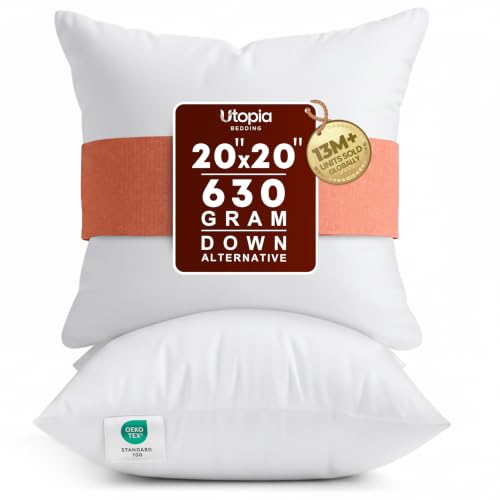

As an Amazon Associate we earn from qualifying purchases at no extra cost to you.
Quick comparison of throw pillow options
| Option | Best for | Common sizes | Fill or fabric | Care | Price tier |
|---|---|---|---|---|---|
| Linen-blend covers | Relaxed, textured looks | 18, 20 and 22 in square | Linen-cotton blend, zipper closure | Machine wash cold, line dry | Budget to mid |
| Velvet covers | Rich color, formal rooms | 18 to 22 in square, 12 x 20 in lumbar | Polyester velvet, hidden zipper | Spot clean or gentle wash | Budget to mid |
| Bouclé and chenille covers | Cozy, modern textures | 18 to 20 in square | Loop-woven polyester | Spot clean, avoid heat | Mid-range |
| Outdoor performance covers | Patios and sun rooms | 16 to 22 in square | Solution-dyed acrylic or polyester | Wipe or wash, UV resistant | Mid to upper-mid |
| Polyester fiber insert | Budget, allergy-friendly use | 16 to 26 in square | Hollow-fiber fill, 100 percent polyester shell | Machine washable on many models | Budget |
| Feather-down blend insert | Soft, sculpted, karate-chop style | 18 to 24 in square | Feather and down in cotton shell | Spot clean or dry clean | Mid to premium |
| Shredded memory foam insert | Support and shape retention | 16 to 22 in square | Foam crumbs in cotton casing | Spot clean only | Mid-range |
Sizes and materials are typical specifications seen across manufacturer listings from brands such as Utopia Bedding for inserts and Hofdeco or IKEA for covers. Always check each product’s fill weight, fabric content and care label.
Start with size: the oversize rule
The most important number is the difference between the cover and the insert. An insert exactly the size of the cover looks flat at the corners. Choose an insert 1 to 2 inches larger, for example a 22 inch insert in a 20 inch cover, so the pillow fills the corners and holds its shape.
- 16 to 18 inches: good for chairs, small sofas and kids’ rooms.
- 20 inches: the most versatile size for standard sofas and beds.
- 22 to 24 inches: best for deep sectionals and as back pillows on a bed.
- Lumbar (12 x 20 or 14 x 22 inches): ideal as a front accent in the center or on armchairs.
Best fabric for everyday living rooms: linen blend and cotton canvas
Linen-cotton blends and cotton canvas have a woven structure that hides wear and washes well. They suit families, pets and anyone who dislikes fussy care. Look for a tight weave and a hidden zipper, and prewash if the label allows it because natural fibers can shrink a little.
Main trade-off: they wrinkle, and lighter colors show stains. A pattern or mid-tone hides everyday wear best.
Best for rich color: velvet
Velvet gives color depth and softness, and it photographs beautifully. Polyester velvet is more stain resistant than cotton velvet and hard-wearing for sofas that get used daily.
Main trade-off: pile can crush or show marks where it is rubbed, and pet hair clings. Brush the pile in one direction and keep a lint roller handy.
Best for texture: bouclé and chenille
These loop and tufted weaves add tactile interest to simple sofas, especially in neutral rooms. Mixing one textured cover with a smooth one keeps the arrangement from looking busy.
Main trade-off: loops can snag on jewelry, claws or Velcro, so they are better for adults’ sofas than for homes with cats.
Best for outdoors: solution-dyed performance covers
For patios, choose covers made from solution-dyed fabric, where the color is added before the fiber is spun, which resists fading in sun. Pair them with quick-drying inserts that will not hold water.
Main trade-off: they feel a bit stiffer than indoor fabrics. Store them inside in winter to extend their life.
Choosing the insert fill
- Polyester fiber: budget-friendly, hypoallergenic for many people and washable. It compresses with time and may need fluffing every few weeks.
- Feather and down blends: the soft, sculpted look. A 5 percent down and 95 percent feather mix holds shape at a modest cost, while higher down percentages feel plusher but cost more. They need occasional fluffing and are not ideal for people with feather allergies.
- Down alternative: imitates down using fine polyester fibers, good for allergy-conscious buyers.
- Shredded memory foam: supportive and moldable, but heavier and warmer.
How many pillows and what combinations?
A simple formula works for most sofas.
- A standard 3-seat sofa: 3 to 5 pillows.
- A sectional: 5 to 7, grouped at each corner.
- A queen bed: 2 sleeping pillows, 2 Euro shams and 2 to 3 decorative pillows.
Combine three sizes (for example two 20 inch squares, one 18 inch square and one lumbar), mix one pattern with two solids, and repeat a color from the room in at least two pillows. Odd numbers feel relaxed, while pairs feel formal.
Worked example: cost per year of a cover refresh
Imagine you spend a mid-range amount on two 22 inch inserts that last four years, and swap covers each year because you tire of colors. If each cover costs one unit and a set of two inserts costs three units, the first year costs 2 + 3 = 5 units. Each later year costs only 2 units for new covers. Over four years that is 5 + 2 + 2 + 2 = 11 units, or about 2.75 units per year, compared with 5 units each year if you replaced complete pillows. Reusable inserts are the reason cover swaps are a thrifty way to update a room.
Durability and ownership realities
- Zippers fail first. Choose covers with a hidden, sturdy zipper and sewn-in seams.
- Sunlight fades dyes. Rotate pillows seasonally if they sit by a window.
- Fluff regularly. Shake and punch inserts weekly so they keep shape.
- Wash correctly. Use the gentle cycle, cool water and low heat, and wash covers inside out to protect prints.
- Replace tired inserts. If an insert does not spring back after a firm squeeze, it is time for a new one, typically after 2 to 4 years of daily use.
Decision matrix
| Your situation | Choose |
|---|---|
| Kids and pets | Cotton canvas or performance fabric covers, washable polyester inserts |
| Formal living room | Velvet covers with feather-blend inserts |
| Neutral room that needs texture | Bouclé or linen-blend covers |
| Patio or porch | Solution-dyed outdoor covers |
| Allergy-sensitive household | Down-alternative inserts with washable covers |
| Small chair or reading nook | Lumbar 12 x 20 in cover with a matching insert |
Frequently Asked Questions
What size throw pillows are best for a sofa?
Twenty-inch squares work for most sofas, with 18 inch squares or lumbar pillows added for variety. Large sectionals can use 22 to 24 inch pillows at the back.
Should the insert be bigger than the cover?
Yes. Choose an insert 1 to 2 inches larger than the cover for a full, crisp shape. Same-size inserts look limp at the corners.
How do I wash throw pillows?
Remove the cover and follow its care label, usually cold water on a gentle cycle. Many polyester inserts are machine washable, but feather and foam inserts often need spot cleaning only.
How many throw pillows are too many?
If people cannot sit comfortably, it is too many. Three to five on a standard sofa is plenty, and fewer in smaller spaces.
How often should I replace throw pillow inserts?
Replace them when they stay flat after fluffing, usually every two to four years of daily use. Covers can last longer if washed gently.



Write Your Review
No reviews yet. Be the first to share your experience!