

Key takeaways
- The best graphics tablets depend on whether you want a low-cost drawing surface, a professional pen tablet with customizable controls, or a screen you can draw on directly: for most beginners, the Wacom Intuos Small or medium-size Huion Inspiroy 2…
The best graphics tablets depend on whether you want a low-cost drawing surface, a professional pen tablet with customizable controls, or a screen you can draw on directly: for most beginners, the Wacom Intuos Small or medium-size Huion Inspiroy 2 is the sensible starting point, while experienced artists should compare the Wacom Intuos Pro, Huion Kamvas, and XP-Pen Artist ranges.
Our top picks
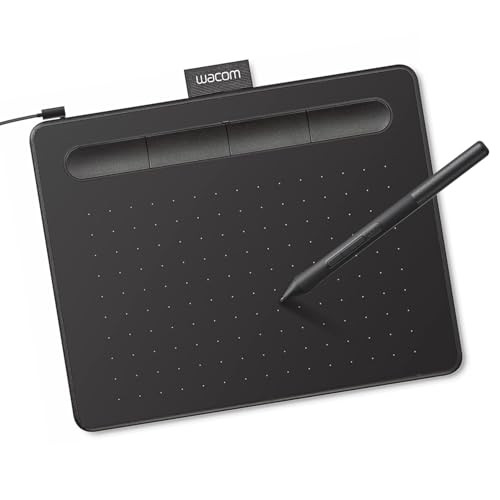
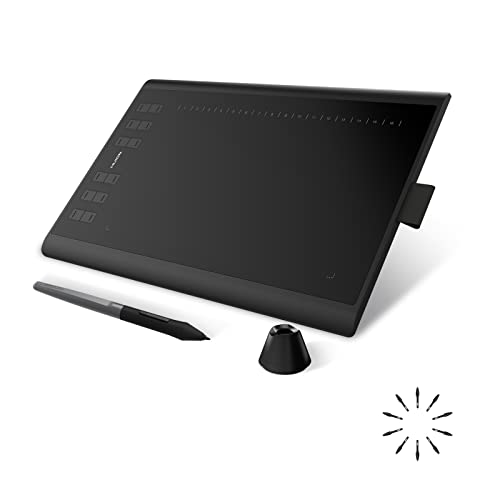
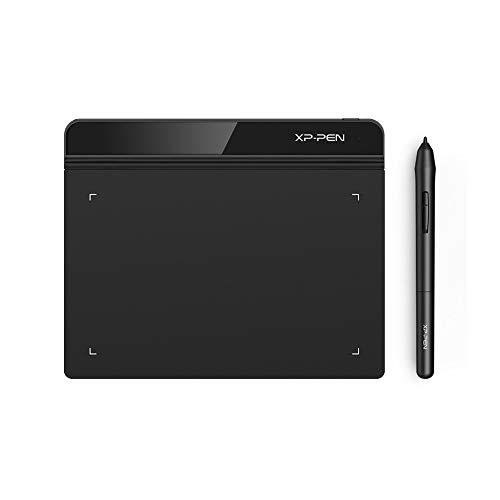

As an Amazon Associate we earn from qualifying purchases at no extra cost to you. Ratings are shown as listed on Amazon.
Quick picks by artist and workspace
| Situation | Best fit | Why it makes sense | Typical market range in 2026 |
|---|---|---|---|
| First tablet, limited desk space | Wacom Intuos Small | Compact, dependable drivers, battery-free stylus | $60–$100 |
| Beginner wanting more drawing room | Huion Inspiroy 2 Medium | Large active area, shortcut keys, good value | $60–$100 |
| Professional non-screen workflow | Wacom Intuos Pro Medium | Excellent pen control, premium build, Bluetooth and dial controls | $300–$400 |
| Artist who wants to draw directly on glass | Huion Kamvas 13 or XP-Pen Artist 13.3 Pro | Portable pen displays with laminated screens | $200–$350 |
| Large screen for illustration or design | Huion Kamvas 16 or XP-Pen Artist 16 | More comfortable canvas area for long sessions | $350–$700 |
What makes the best graphics tablets different?
A tablet’s active area is the part that responds to the stylus, not the tablet’s full outer dimensions. Small models are easier to carry but can make broad arm movements feel cramped. Medium tablets are usually the best compromise for illustration, photo editing, and graphic design. Large tablets are comfortable when your monitor is large or you draw from the shoulder, but they consume more desk space.
Pressure sensitivity matters, but the advertised maximum is not the whole story. Many current tablets offer 8,192 pressure levels, which is more than enough for controlled line-weight changes. Pen calibration, initial activation force, surface texture, and driver quality often affect the experience more than the difference between 4,096 and 8,192 levels.
Screen tablets add visual immediacy: the cursor appears beneath the nib, so they are often easier for beginners and artists who prefer traditional paper-like hand-eye coordination. They also cost more, generate heat, require extra cables or power, and place the display surface close to your hand oils and scratches. A screenless tablet can be faster for experienced users, especially when paired with a large monitor or multiple displays.
Wacom Intuos: the reliable starting point
The Wacom Intuos remains one of the safest choices for a first tablet. The Small model has an active area of approximately 152 × 95 mm, while the Medium model provides roughly 216 × 135 mm. Both use a battery-free stylus with 4,096 pressure levels and support Windows and macOS through Wacom’s driver software. Some versions also support ChromeOS, although feature support can vary by operating system.
The Small version is a strong choice for occasional sketching, retouching, and cramped desks. Choose Medium if you expect to draw frequently or use a high-resolution monitor. A common mistake is buying Small because it is cheaper, then compensating by making tiny wrist movements all day. The medium model is usually the better long-term value for regular illustrators.
Wacom tablets work with major creative applications such as Adobe Photoshop, Illustrator, Lightroom, Corel software, Clip Studio Paint, Krita, and many browser-based art tools. Shortcut customization is less extensive than on some larger professional models, but the driver ecosystem is mature and widely supported.
Huion Inspiroy 2: more controls for less money
The Huion Inspiroy 2 range is attractive when you want a generous active area and physical shortcut controls without moving into professional pricing. The Medium model offers an active area of about 221 × 138 mm, 8,192 pressure levels, a battery-free pen, multiple programmable keys, and a dial-style control on selected configurations.
That combination is useful for zooming, changing brush size, rotating a canvas, or undoing without reaching for the keyboard. The tablet supports Windows, macOS, Android, and some other platforms depending on the specific model and driver version. Check the application and operating-system support before buying if you use Linux, an iPad, or a Chromebook, because compatibility is not identical across every Huion product.
Inspiroy 2 is a particularly good fit for students and hobbyists who draw several times a week. Its trade-off is that driver behavior and application integration can require more troubleshooting than Wacom’s. Keep the official driver installer available, and avoid installing multiple brands’ tablet drivers on the same computer.
Wacom Intuos Pro: the premium screenless option
For frequent professional work, the Wacom Intuos Pro offers a more refined screenless experience. Current Intuos Pro models are available in different sizes, with the Medium version offering an active area around 224 × 148 mm. The Pro Pen 3 uses 8,192 pressure levels, supports tilt, and can be configured with interchangeable grips and buttons. The tablet also includes customizable ExpressKeys and a Touch Ring, with wired and wireless connectivity depending on configuration.
The advantage is not simply pressure sensitivity. It is the combination of low-latency tracking, a rigid surface, dependable calibration, customizable controls, and a stylus that can be tailored to different grips. These features matter when a tablet is used for many hours each week. For occasional drawing, however, the price premium is difficult to justify.
Designers who spend more time editing vectors, laying out pages, or retouching photographs may prefer Medium. Concept artists who use expansive gestures and large monitors may prefer Large, provided they have sufficient desk depth and a suitable monitor distance.
Huion Kamvas and XP-Pen Artist: screen tablets for direct drawing
Huion Kamvas and XP-Pen Artist pen displays compete closely on price and features. Models around 13 inches generally offer a 1920 × 1080 display, laminated glass, battery-free pens, tilt support, and 8,192 pressure levels. Larger 16-inch models provide a more comfortable canvas while remaining easier to transport than a 22-inch studio display.
A laminated display reduces the visible gap between the pen tip and the pixels. This improves parallax, particularly near the corners, but it does not make the tablet identical to paper. Screen color accuracy, brightness, viewing angle, and the quality of the included stand vary by model. A 13-inch display is portable, but the interface can feel crowded when using Photoshop panels. A 16-inch model is often the better choice for primary illustration work.
XP-Pen Artist models often emphasize shortcut keys and a slim form factor, while Huion Kamvas models span a broad range from entry-level full-HD displays to larger, higher-resolution professional screens. Compare the exact model rather than assuming every Artist or Kamvas tablet has the same screen, pen, or connection system.
Decision matrix: match the tablet to your routine
| Your priority | Recommended type | Target specification | What to avoid |
|---|---|---|---|
| Drawing once or twice a month | Small screenless tablet | 150 mm or wider active area, battery-free pen | Paying for a large display you rarely use |
| Daily digital illustration | Medium screenless or 13–16-inch display | At least 200 mm active width or a 13-inch screen | Small active areas that encourage wrist-only movement |
| Professional design production | Premium screenless tablet | Programmable controls, Bluetooth, tilt, strong driver support | Choosing by pressure-level number alone |
| Travel between home and studio | Small tablet or 13-inch pen display | Under about 1 kg for screenless models; one-cable setup if possible | Large displays requiring separate power bricks and stands |
| Large monitor or ultrawide setup | Medium or large screenless tablet | Adjustable mapping and a broad active area | A tiny tablet mapped to a very wide display |
How to set up a tablet for better control
First, install only the manufacturer’s current driver and restart the computer if requested. Next, map the tablet to the monitor on which you draw. If you use two screens, test full-display mapping against single-monitor mapping; full-display mode can make the cursor travel farther than expected.
Set the pen pressure curve so a light touch produces a visible line without requiring excessive force. Then assign only the shortcuts you use repeatedly: undo, brush size, hand tool, zoom, and canvas rotation are usually more useful than filling every button. Finally, spend ten minutes drawing straight lines, circles, and gradually heavier strokes. This exposes calibration or pressure problems before you begin a serious project.
Ownership, wear, and common mistakes
On screenless tablets, the nib usually wears first. Rough textured surfaces accelerate wear, especially when the pen is held at a steep angle. Keep spare nibs available, replace them when the tip becomes visibly rounded, and wipe the surface with a soft, slightly damp microfiber cloth. Do not use abrasive cleaners or spray liquid directly onto the tablet.
Screen displays need more care: use the supplied or a compatible cleaning cloth, avoid pressing hard while drawing, and protect the screen during transport. Cables are another failure point, particularly on portable pen displays. Avoid sharp bends at the tablet connector and use the included cable arrangement where possible.
For a simple value calculation, suppose a $240 tablet is used twice a week for three years: 2 × 52 × 3 equals 312 sessions, or about $0.77 per session before accessories. A $70 tablet used only ten times costs $7 per session. The more frequently you draw, the more sense it makes to pay for comfortable sizing, durable controls, and reliable drivers rather than the highest pressure specification.
Final recommendation
Choose the Wacom Intuos Small for occasional use and limited space, the Wacom Intuos Medium or Huion Inspiroy 2 Medium for the best balance of area and price, and the Wacom Intuos Pro Medium for demanding screenless work. If drawing directly on the artwork is your priority, compare 13-inch and 16-inch Huion Kamvas or XP-Pen Artist displays, giving particular attention to screen size, cable requirements, stand quality, and software compatibility rather than pressure levels alone.





Write Your Review
No reviews yet. Be the first to share your experience!