

Key takeaways
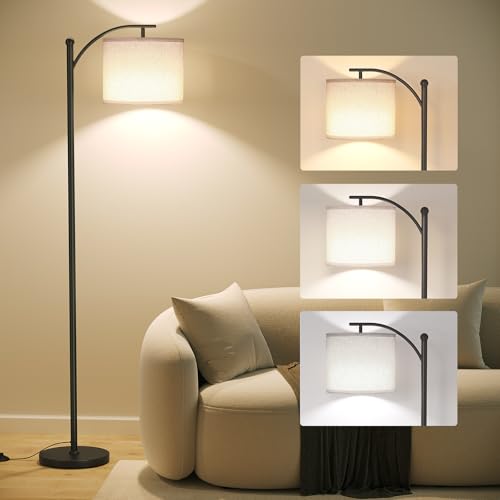
- Best for a sofa reading corner: a medium-reach arc lamp with a 60–66-inch arm, downward-facing shade, and a 10–12-inch weighted base.
- Best for a sectional: a long-reach lamp extending at least 70 inches over the seating, preferably with a counterweighted or broad metal base.
- Best for renters and smaller rooms: a slim, adjustable arc lamp with a base under 12 inches wide and a total height below 70 inches.
- Best for frequent use: a metal lamp using a replaceable LED bulb, an accessible foot switch, and a standard socket rather than a sealed light source.
- Best for decorative ambient light: a globe or drum-shade arc lamp with a diffusing shade, though it will usually provide less concentrated reading light.
The best arc floor lamps for most living rooms are tall, weighted lamps with a reach of 55–75 inches, a shade that aims downward or swivels, and a dimmable LED bulb or integrated dimmer; the right choice depends more on clearance and base stability than on appearance alone.
Our top picks



As an Amazon Associate we earn from qualifying purchases at no extra cost to you. Ratings are shown as listed on Amazon.
Best arc floor lamps by situation
- Best for a sofa reading corner: a medium-reach arc lamp with a 60–66-inch arm, downward-facing shade, and a 10–12-inch weighted base.
- Best for a sectional: a long-reach lamp extending at least 70 inches over the seating, preferably with a counterweighted or broad metal base.
- Best for renters and smaller rooms: a slim, adjustable arc lamp with a base under 12 inches wide and a total height below 70 inches.
- Best for frequent use: a metal lamp using a replaceable LED bulb, an accessible foot switch, and a standard socket rather than a sealed light source.
- Best for decorative ambient light: a globe or drum-shade arc lamp with a diffusing shade, though it will usually provide less concentrated reading light.
What separates a good arc lamp from a frustrating one?
Arc lamps trade a larger footprint above the floor for the convenience of placing light over a sofa, chair, or side table without installing a ceiling fixture. Their weak points are predictable: a narrow base can tip, a long arm can sag, and a shade aimed at eye level can create glare rather than useful task lighting.
Before choosing a finish or shade, measure four things: the distance from the intended base position to the center of the seating area, the ceiling height, the clearance around the arm, and the usable floor area around the base. These measurements determine whether an attractive lamp will actually fit.
| Arc-lamp type | Typical reach | Typical height | Base footprint | Best use | Main compromise |
|---|---|---|---|---|---|
| Compact reading arc | 45–58 in | 58–68 in | 9–13 in diameter | Single chair or small sofa | Limited coverage |
| Medium curved arc | 55–70 in | 65–78 in | 11–16 in diameter | Two-seat sofa or reading zone | Needs more clearance |
| Long-reach statement arc | 70–90 in | 70–85 in | 14–20 in diameter | Sectional or central seating area | Higher tipping risk and visual bulk |
| Globe or drum-shade arc | 50–75 in | 62–80 in | 11–18 in diameter | Soft ambient lighting | Less precise task lighting |
Head-to-head: short, medium, and long arc reach
Short-reach lamps
A short arc is the safest choice when the lamp will sit beside one chair or at the end of a compact loveseat. Its arm is less likely to flex, and its base can remain relatively small. The light usually lands within a 20–30-inch circle, so it is well suited to reading but not to illuminating an entire seating group.
Choose a short reach when the lamp base must share space with a side table or when the ceiling is under 8 feet. The limitation is coverage: moving your chair even a foot or two may put the useful light behind your shoulder.
Medium-reach lamps
Medium arcs are the best all-rounders. A 55–70-inch reach can place the shade above the front half of a sofa while keeping the base against a wall. This size works particularly well for a reading chair beside a sofa because it can serve either position when the shade swivels.
Look for a lower arm joint or adjustable upper section. That allows you to raise the shade above head height while keeping the light directed toward a book or tabletop. A fixed arm may look cleaner, but it gives you fewer options if furniture changes.
Long-reach statement lamps
Long arcs make sense over a sectional, conversation area, or open-plan room where a floor lamp needs to reach well beyond the wall. They should not be selected by arm length alone. The farther the shade projects, the more leverage it places on the base.
For a 75-inch or longer reach, favor a base at least 14 inches wide or a heavy marble, steel, or cast-metal base. A lamp with a light hollow base may wobble whenever the cord is moved. If children, pets, or narrow walkways are involved, a long arc may be less practical than two shorter lamps.
Ceiling clearance and shade direction
Measure from the floor to the highest point of the assembled lamp, then leave at least 2–4 inches below the ceiling. This allowance matters because an arm that nearly touches the ceiling is difficult to assemble, clean, or reposition. In an 8-foot room, a lamp around 72–76 inches tall is usually easier to live with than an 82-inch model.
Shade direction determines whether the lamp is task lighting or merely decoration:
- Downward metal shade: produces the most concentrated light for reading and crafts, but may create a hard pool of light.
- Swiveling shade: the most flexible option for changing between a chair, sofa, and side table.
- Fabric drum shade: softens glare and looks furniture-like, but spreads light less efficiently.
- Opaque upward shade: contributes atmosphere but is a poor choice as the only reading light.
- Globe shade: distributes light broadly; choose frosted glass or diffused acrylic if the bulb will be visible from seating.
Bulb compatibility and dimming
A replaceable E26 socket is the most useful configuration in North American homes because it accepts common LED bulbs. Check the fixture’s maximum wattage and physical bulb clearance rather than assuming every LED will fit. A large decorative globe can collide with a shallow shade or make the lamp top-heavy.
For reading, a dimmable LED between 800 and 1,100 lumens is a sensible starting point. Use a warm-white 2700K bulb for relaxed living-room light, or 3000K if you want pages and craft materials to appear slightly clearer. A 1600-lumen bulb may illuminate a larger area, but it can produce glare in an open shade.
There are three common dimming arrangements:
- Inline rotary or touch dimmer: convenient and inexpensive, but the control may hang visibly on the cord.
- Foot dimmer: best for a lamp behind a sofa or chair; verify that it is compatible with dimmable LED bulbs.
- Integrated electronic dimmer: neat and often smooth, but replacement parts may be harder to find.
If you use smart bulbs, select a lamp with a simple on/off switch and leave that switch on. Do not combine a smart bulb with a wall dimmer or inline dimmer unless the bulb manufacturer specifically permits it.
A practical coverage calculation
Suppose a sofa is 78 inches wide and the lamp base can sit 12 inches beyond its right arm. To place the shade over the sofa’s center, the required horizontal reach is approximately:
39 inches to the sofa center + 12 inches from the sofa edge to the base = 51 inches.
A 55-inch arc should reach the target with a little adjustment room. A 45-inch model probably will not. If you want the same lamp to cover a nearby reading chair another 18 inches away, choose a swivel shade and at least 65 inches of reach, or expect the light to become less centered.
Stability, durability, and ownership details
The base usually determines long-term satisfaction. A heavy stone or metal base resists tipping but can scratch hardwood when dragged. A lighter base is easier to move but may need a felt pad or a position against furniture. Never rely on a sofa to hold an unstable lamp; it can shift as people sit down.
The parts most likely to wear first are the cord switch, arm joint, socket contacts, and shade fasteners. Avoid repeatedly tightening a joint with excessive force, which can strip threads. Keep the arm supported while adjusting it, and route the cord along the wall side of the base to reduce trip risk.
Dust fabric shades with a soft brush or vacuum upholstery attachment on low suction. Wipe painted or plated metal with a barely damp microfiber cloth and dry it immediately. For glass shades, remove the bulb and let the shade cool before cleaning. Do not spray cleaner into the socket, switch, or dimmer.
Final buying checklist
- Measure the required base-to-seat distance before shopping.
- Confirm the assembled height leaves 2–4 inches of ceiling clearance.
- Match long reaches with a broad or heavy base.
- Choose a swiveling, downward shade for genuine task lighting.
- Prefer a replaceable E26 LED socket if you want easy bulb changes.
- Check whether the dimmer supports LED bulbs and the brightness you need.
- Allow at least 24 inches of clear walking space around a prominent base where possible.
- Use a cord cover or wall-side routing in high-traffic areas.
The best arc floor lamps are not necessarily the tallest or most dramatic. For most homes, a stable medium-reach design with a swiveling shade, 800–1,100-lumen dimmable LED compatibility, and enough ceiling clearance will deliver the strongest balance of coverage, comfort, and everyday practicality.



Write Your Review
No reviews yet. Be the first to share your experience!