

Key takeaways
- Low back: usually around 6–10 inches above the seat; visually light and easier to store.
- Mid-height back: around 10–16 inches above the seat; a practical balance for regular entertaining.
- High back: more than 16 inches above the seat; comfortable for long sitting but bulkier and more exposed to wind.
The best outdoor bar stools for comfortable entertaining are typically 28–30-inch counter-height stools with rust-resistant frames, UV-stable finishes, a genuinely supportive back, and cushions that can dry quickly after rain.
Choosing the right pair is less about appearance than matching the stool to your counter height, exposure, and cleaning tolerance. A beautiful stool can become uncomfortable if its footrest is too low, its cushion traps water, or its frame is not designed for outdoor moisture.
Our top picks


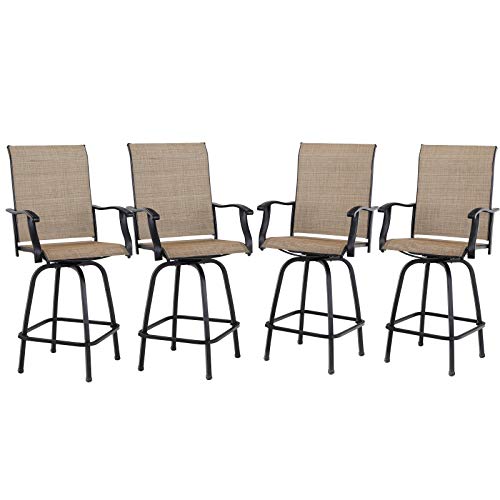

As an Amazon Associate we earn from qualifying purchases at no extra cost to you. Ratings are shown as listed on Amazon.
First, match the stool to your outdoor counter
Measure from the finished floor to the top of the counter—not to the underside of the overhang. Then leave enough vertical space for your legs and enough horizontal space for each person to sit without bumping elbows.
| Counter or bar height | Recommended seat height | Typical stool category | Comfortable seat spacing |
|---|---|---|---|
| 34–36 inches | 24–26 inches | Counter-height stool | 22–24 inches per stool |
| 40–42 inches | 28–30 inches | Bar-height stool | 24–26 inches per stool |
| 44–48 inches | 32–36 inches | Extra-tall or spectator stool | 26–28 inches per stool |
A useful rule is to allow 10–12 inches between the seat and the underside of the counter. For example, a 41-inch outdoor bar counter generally suits a 29–30-inch seat. If the counter has a thick apron, drawers, or a structural support underneath, measure the usable leg clearance as well.
For a 72-inch-wide counter, three 24-inch-wide seating spaces equal 72 inches exactly, leaving no practical elbow room. Two 22-inch-wide stools provide more generous spacing, while three narrower stools around 19–20 inches wide may work if the counter is used for short meals rather than long conversations.
Best outdoor bar stools by entertaining situation
Best for a covered patio: cushioned metal or woven seating
A covered patio gives you more flexibility because the stools receive less direct ultraviolet light and standing water. Powder-coated aluminum frames paired with solution-dyed acrylic cushions are a strong combination for long meals. They offer back support without requiring the heavier construction of steel.
For this setting, look for a seat at least 17 inches wide, a backrest rising 10–14 inches above the seat, and a footrest positioned where your feet naturally land. A removable cushion is preferable to permanently attached foam because it can be stored during storms and replaced later.
Best for an uncovered deck: quick-drying, low-maintenance construction
Open-air seating should prioritize drainage over plushness. Powder-coated aluminum, marine-grade polymer, HDPE lumber, and synthetic woven materials usually demand less maintenance than untreated wood or ordinary indoor upholstery. Choose cushions with mesh bottoms, drainage channels, or quick-dry foam if the stools will remain outside.
For a fully exposed location, a breathable cover is more useful than an airtight plastic cover. Non-breathable covers can trap condensation against the frame and cushion, encouraging mildew and finish deterioration.
Best for a windy or coastal location: weighted, corrosion-resistant frames
Near salt air, stainless steel hardware, aluminum frames, and corrosion-resistant fasteners are safer choices than ordinary steel. Look for wide feet, a low center of gravity, and enough weight to resist tipping. A light folding stool may be convenient, but it can slide or overturn in strong wind.
Rinse exposed frames with fresh water periodically, especially after salty or dusty weather. Salt deposits can remain active even when the surface looks dry.
Material comparison: what you gain and what wears first
| Frame or seat material | Typical outdoor strengths | Common ownership issue | Maintenance expectation |
|---|---|---|---|
| Powder-coated aluminum | Lightweight, rust-resistant, easy to move | Finish can chip at joints or corners | Wash every few weeks in heavy use; touch up chips |
| Stainless steel | Strong, stable, suitable for damp climates | Surface tea staining or corrosion near salt water | Rinse and dry; use a suitable stainless cleaner |
| HDPE or recycled plastic lumber | Moisture-resistant, no splinters, easy to clean | Can become hot in direct sun and may fade over time | Soap-and-water cleaning; avoid abrasive pads |
| Teak or other outdoor hardwood | Warm appearance, substantial feel | Graying, checking, and fastener staining | Clean seasonally; oil only if that look is desired |
| Synthetic wicker | Comfortable texture and many styles | Strands can fray or split where arms and edges are stressed | Brush debris out; avoid pressure-washing close up |
The frame is rarely the first part to feel uncomfortable. Cushions flatten, woven seats loosen, footrest welds become noisy, and rubber or plastic feet wear through. Before buying, inspect whether the cushion cover can be replaced, whether the feet are standard screw-in glides, and whether the footrest is welded or merely attached with small screws.
Back support and seat shape matter more than extra padding
A backless stool is attractive and easy to tuck away, but it is best for brief use. For dinners, games, or long conversations, choose a stool with a back that supports the lower and middle back without forcing the shoulders forward.
- Low back: usually around 6–10 inches above the seat; visually light and easier to store.
- Mid-height back: around 10–16 inches above the seat; a practical balance for regular entertaining.
- High back: more than 16 inches above the seat; comfortable for long sitting but bulkier and more exposed to wind.
A waterfall-style front edge can reduce pressure behind the knees, while a sharply squared wooden or metal edge may become uncomfortable after an hour. A contoured seat is useful, but deep bucket shapes can make it harder for different guests to sit comfortably. Arms add support but require additional clearance: allow roughly 26–30 inches of counter length per armchair-style stool rather than assuming three will fit across a six-foot counter.
Cushion care: the difference between weather-resistant and weatherproof
Most outdoor cushions are weather-resistant, not permanently waterproof. The cover may repel light rain while the seams, zipper, and foam core still absorb water. Even quick-dry foam needs airflow to dry fully.
- Brush off leaves and grit before they work into the fabric.
- Blot spills rather than rubbing them deeper into the cushion.
- Clean covers with mild soap, lukewarm water, and a soft brush according to the care label.
- Rinse thoroughly so detergent residue does not attract dirt.
- Stand cushions on their edge in shade until completely dry before storing or covering them.
Do not put outdoor cushion covers in a dryer unless the manufacturer specifically permits it. High heat can shrink fabric, damage water-resistant treatments, or distort zipper panels. Store cushions in a dry, ventilated container—not directly on a damp garage floor.
A practical decision matrix
| Your situation | Prioritize | Best stool type | Trade-off |
|---|---|---|---|
| Limited budget and occasional use | Aluminum frame, washable sling or mesh seat | Stackable, back-supported stool | Less plush than a thick cushion |
| Frequent meals and long gatherings | Mid-height back, footrest, 17-inch or wider seat | Cushioned bar-height stool | More storage and cushion care |
| Small balcony or narrow counter | Under 20-inch width, armless design, stackability | Compact counter-height stool | Less elbow room and back width |
| Uncovered, rainy location | Drainage, quick-dry materials, removable cushions | Sling, mesh, or quick-dry cushioned stool | May feel firmer than indoor-style upholstery |
| Coastal or high-wind location | Corrosion resistance, sturdy feet, greater weight | Aluminum or stainless steel stool with wide base | Harder to move and usually more expensive |
Price expectations and ownership value
In 2026, basic outdoor stools commonly fall around $60–$130 per seat, midrange cushioned or woven models around $130–$300, and premium hardwood, stainless steel, or replacement-cushion systems above $300. The lowest purchase price is not always the lowest cost over time.
For example, a $90 stool used for 30 gatherings per year over four years costs about $0.75 per use before maintenance. A $240 stool used 60 times per year for eight years costs about $0.50 per use. That calculation is not a guarantee of lifespan, but it shows why frame quality, replaceable cushions, and everyday comfort can matter more than the initial price.
Final buying checklist
- Confirm the seat height against the finished counter and underside clearance.
- Allow 22–26 inches of counter width per ordinary stool.
- Choose aluminum, stainless steel, HDPE, or properly finished hardwood for exposed areas.
- Look for a useful footrest, stable feet, and a back height suited to the length of each gathering.
- Check whether cushions are removable, washable, replaceable, and designed to drain.
- Inspect welds, fasteners, glides, hinges, and woven edges—the parts that often show wear first.
- Plan covered, ventilated storage for cushions and severe-weather protection for the stools.
The best outdoor bar stools are the ones that fit the counter precisely, support guests comfortably, and remain manageable after months of sun, rain, spills, and cleaning. Start with measurements and exposure conditions, then choose the style and finish that you will realistically maintain.






Write Your Review
No reviews yet. Be the first to share your experience!