

Key takeaways
- The best drawing tablets for beginners and artists depend less on maximum pressure sensitivity than on four practical choices: active-area size, display versus non-display design, software compatibility, and how often you need to carry the tablet. Our top picksTop pickWacom…
The best drawing tablets for beginners and artists depend less on maximum pressure sensitivity than on four practical choices: active-area size, display versus non-display design, software compatibility, and how often you need to carry the tablet.
Our top picks
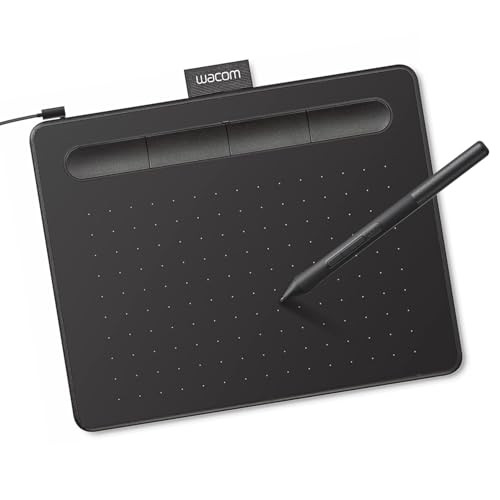
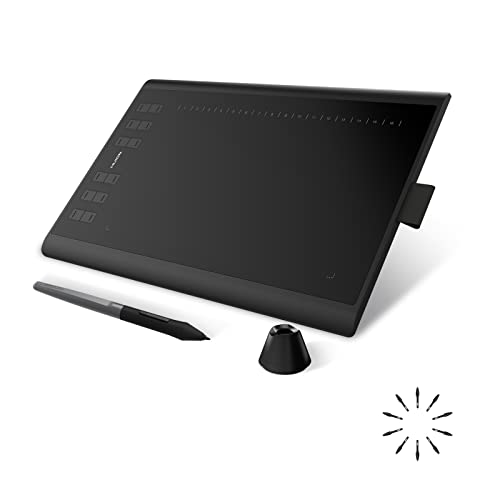


As an Amazon Associate we earn from qualifying purchases at no extra cost to you. Ratings are shown as listed on Amazon.
Quick picks by drawing situation
| Situation | Best fit | Why it makes sense | Typical market range in 2026 |
|---|---|---|---|
| Lowest-cost introduction | One by Wacom Small | Compact, dependable, battery-free pen, simple controls | $40–$70 |
| Regular digital art on a laptop or desktop | Wacom Intuos Medium | Comfortable 8.5 × 5.3-inch active area and broad software support | $180–$250 |
| Larger non-display workspace on a budget | XP-Pen Deco 01 V3 | 11 × 6.9-inch active area, shortcut keys, high-resolution tracking | $60–$100 |
| First pen display | Huion Kamvas 13 | 13.3-inch laminated screen with a manageable desk footprint | $200–$300 |
| Portable screen-based drawing | Wacom One 12 | Small 11.6-inch display, battery-free pen, USB-C connectivity | $400–$600 |
| Established artist wanting a larger display | Wacom Cintiq 16 | 15.6-inch screen and comfortable illustration size | $600–$800 |
Prices are broad market ranges rather than fixed recommendations. Bundles, sales, regional pricing, and included accessories can change the total considerably.
Non-display versus display tablets
A non-display tablet has a blank drawing surface while the cursor appears on your monitor. This takes a few days of hand-eye adjustment, but it is usually the better value. The tablet stays relatively cool, consumes little power, and leaves your posture less hunched than a screen placed flat on a desk. It is also the safer choice if you mainly use Photoshop, Krita, Clip Studio Paint, Illustrator, or other desktop software.
A pen display shows the artwork directly beneath the stylus. The learning curve is shorter because the hand and line appear in the same place, making it attractive for beginners, painters, and artists who frequently zoom, rotate, and refine details. The trade-offs are higher cost, more cables, screen glare, heat, and the possibility of scratches or dead pixels. Most pen displays are not standalone computers: they need a compatible Windows, macOS, or sometimes Android device.
For a first purchase, choose a non-display model if your budget is under roughly $150, your desk is small, or you already have a good monitor. Choose a display if direct-on-screen drawing is central to your enjoyment and you can accommodate a second screen and its cables.
Active area: how much space do you actually need?
The active area is the part of the tablet that responds to the pen; the outside border and shortcut-key section do not count. Small tablets around 6 × 4 inches are easy to pack and work well with a laptop or a single monitor. Medium models around 8–9 × 5–6 inches offer a more natural arm movement for illustration without taking over a desk. Large models above 10 inches suit detailed work and large monitors, but they require more desk space and larger hand movements.
Screen size and active area should be considered together. A large non-display tablet mapped to a small laptop screen may feel overly sensitive, while a small tablet mapped across a wide 4K monitor can make long strokes feel cramped. Most drivers let you map the tablet to one monitor or a selected portion of the screen.
A useful sizing rule is to compare the tablet’s aspect ratio with your monitor’s. For example, a 16:10 tablet mapped to a 16:9 display will either leave unused strips or require a small crop. Cropping does not damage the tablet, but it reduces usable drawing width. If a 10-inch-wide active area is cropped by 6%, the usable width becomes 9.4 inches. That is minor, but the mismatch can be noticeable during diagonal strokes.
Pressure sensitivity, tilt, and pen feel
Pressure sensitivity controls how line width, opacity, or brush size changes as you press. Current entry-level tablets commonly advertise 4,096 or 8,192 pressure levels. In practice, driver tuning, pen nib friction, and the application’s pressure curve matter more than the headline number. A well-calibrated 4,096-level pen can feel more predictable than a poorly tuned 8,192-level pen.
Tilt recognition is more important for artists who use pencil, charcoal, shading, or textured brushes. It lets the software respond to the angle of the pen, but it will not automatically make every brush behave naturally; the application and brush must support tilt.
Battery-free pens are preferable for most buyers. They do not need charging and are usually lighter. Check whether replacement nibs are readily available and whether the pen includes an eraser or side buttons. Two programmable buttons can handle undo and right-click, reducing the need to reach for the keyboard.
Head-to-head: popular non-display choices
| Model | Active area | Pressure levels | Shortcut controls | Approximate weight | Best for |
|---|---|---|---|---|---|
| One by Wacom Small | 6.0 × 3.7 in | 2,048 | None on tablet | Approximately 0.4 lb | Beginners, note-taking, small desks |
| Wacom Intuos Medium | 8.5 × 5.3 in | 4,096 | 4 ExpressKeys | Approximately 0.9 lb | Frequent illustration and photo editing |
| Huion Inspiroy 2 Medium | 8.8 × 5.5 in | 8,192 | 6 keys plus control dial | Approximately 1.1 lb | Artists wanting more physical shortcuts |
| XP-Pen Deco 01 V3 | 11.0 × 6.9 in | 16,384 | 8 keys | Approximately 1.3 lb | Large strokes and value-focused upgrades |
For many beginners, the Intuos Medium is the balanced option: it is large enough for controlled strokes but not so large that it dominates a desk. The One by Wacom Small is better when portability and price come first. The Huion and XP-Pen alternatives are compelling when shortcut controls and a larger surface matter more than having the most established driver ecosystem.
Pen displays: what the specifications leave out
Display resolution is only one part of the experience. A 13.3-inch 1,920 × 1,080 screen is sufficient for learning and illustration, while a 15.6-inch model gives more room for palettes and reference images. Laminated displays reduce the gap between the pen tip and the image, improving perceived precision. Matte coatings reduce reflections but can create more nib wear.
Color coverage matters if you deliver finished work for print or clients. Look for a model that states its color gamut, such as a high percentage of sRGB, and calibrate it if color accuracy is important. Brightness and viewing angle also affect comfort. A glossy screen may appear more vivid but can be tiring near a window.
Connectivity is a common source of frustration. Some displays use one USB-C cable, while others require a three-in-one cable carrying power, video, and data. A USB-C port on a computer does not always support video output, so confirm that the port supports DisplayPort Alt Mode or use the required adapter. A display tablet that lacks adequate power may flicker, disconnect, or fail to reach full brightness.
Software and operating-system compatibility
Before buying, check compatibility for your actual computer rather than relying only on the tablet’s product page. Windows and macOS support is common, but driver behavior can differ between major operating-system updates. Android support may be limited to particular USB-C phones or tablets and may not include every shortcut or pressure feature.
Common drawing applications—including Krita, Clip Studio Paint, Photoshop, Corel Painter, and ibisPaint—generally work with modern pressure-sensitive tablets, but setup varies. Install the manufacturer’s driver, restart if requested, then select the tablet in the application’s tablet-input settings. If pressure does not work, test the driver utility first before changing multiple settings at once.
Portability and ownership costs
A small non-display tablet is easiest to carry because it weighs little and needs only one USB cable. A pen display may require a power adapter, video cable, stand, and protective sleeve. That turns a nominally portable 13-inch display into a considerably larger kit.
Consumables are modest but real. Nibs usually wear first, especially with textured matte surfaces or heavy pressure. Keep a few replacements in the original case, clean the surface with a soft dry or lightly damp microfiber cloth, and avoid abrasive cleaners. Do not press hard to compensate for a poorly configured pressure curve; adjust the curve in the driver instead.
For a simple ownership calculation, suppose a $240 tablet is used four times per week for three years: 4 × 52 × 3 equals 624 sessions, or about $0.38 per session before replacement nibs. A $600 display used once per week for the same period costs about $3.85 per session. The display may still be the better choice if direct drawing makes you practice more often, but frequency should be part of the decision.
Final recommendation
Choose a small One by Wacom for occasional sketching and basic tablet skills, a medium Wacom Intuos or Huion Inspiroy 2 for regular desktop art, and the XP-Pen Deco 01 V3 when you want the largest affordable non-display surface. Move to a Huion Kamvas 13 or Wacom One 12 when drawing directly on the image is worth the extra cables and screen maintenance. For advanced, frequent illustration, a 15.6-inch display such as the Wacom Cintiq 16 provides a more spacious working view—provided your desk, computer ports, and budget can support it.



Write Your Review
No reviews yet. Be the first to share your experience!